Back to blog
Article
Installing Ceiling Fans in Container Houses
Admin September 15, 2026
Container houses can be equipped with ceiling fans, but the feasibility of installation must be comprehensively evaluated based on the house structure, spatial dimensions, and electrical conditions.

1. Compatibility Between Container House Structure and Ceiling Fans
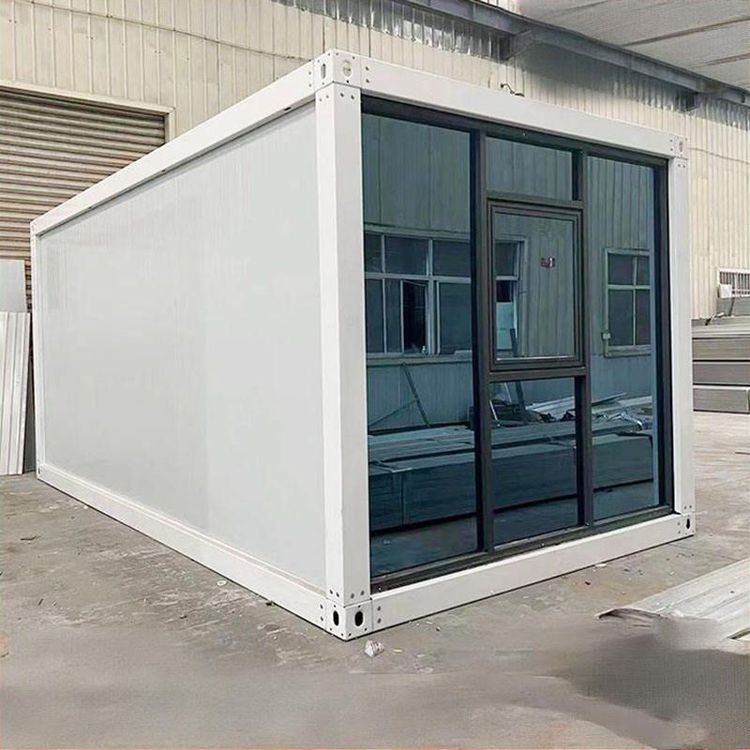
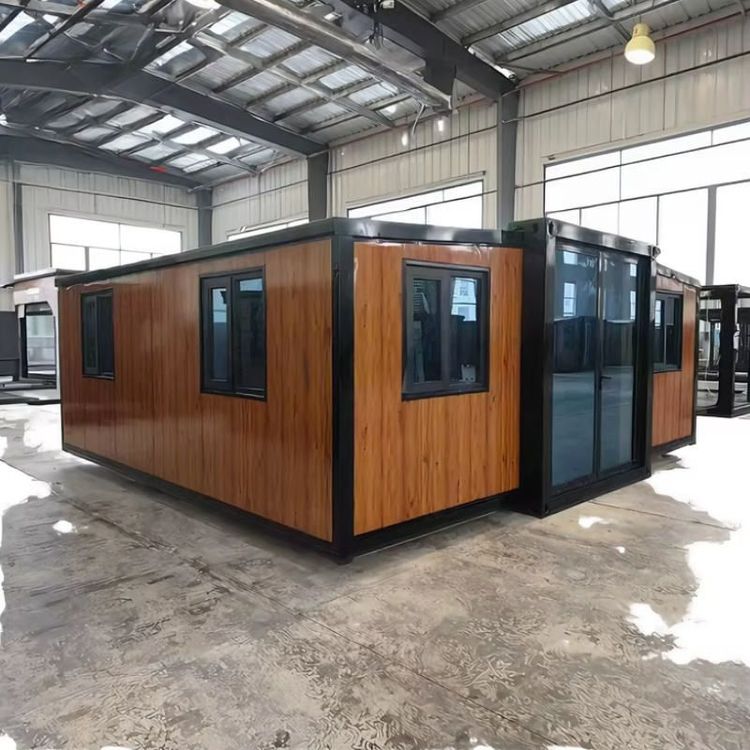
Container houses typically employ standardized steel structural frameworks, with walls often made of lightweight composite panels (such as rock wool sandwich panels and polyurethane sandwich panels). The roof structure must meet the load-bearing requirements for ceiling fans.
- Load-Bearing Capacity: Industrial ceiling fans (e.g., models with a diameter of 7.3 meters) can weigh over 116 kg. It is necessary to confirm whether the load-bearing design of the container's top crossbeams meets the standards. For multi-story stacked containers, the load-bearing capacity of the upper floor must also be evaluated.
- Installation Space: The rotating blades of ceiling fans must maintain a safe distance (usually more than 4.5 meters from the ground). The appropriate model should be selected based on the container's floor height (commonly 2.6-3 meters). If the floor height is insufficient, wall-mounted axial fans or small ceiling fans can be considered.
- Fixing Method: Ceiling fans should be fixed to the top steel structure using expansion bolts or dedicated brackets, avoiding direct penetration of the wall panels to prevent damage to airtightness.
2. Selection of Ceiling Fan Types and Functions
Choose the appropriate model based on the container's purpose:
- Industrial-Grade Ceiling Fans: Suitable for large-scale storage and factory-type containers, these fans cover a wide area (up to 1900 square meters per unit), have a large air volume, and low energy consumption (1.5 kW/h). They can effectively improve air circulation, reduce temperature, and remove moisture.
- Small Household Ceiling Fans: Suitable for office and residential containers, these fans have a diameter of less than 1 meter and low power consumption (30-60 W), meeting basic ventilation needs.
- Explosion-Proof/Corrosion-Resistant Models: If containers are used in chemical or breeding scenarios, explosion-proof motors or corrosion-resistant coated ceiling fans should be selected to ensure safety and durability.
3. Compatibility with Electrical Systems
- Voltage Matching: Confirm that the container's power supply system (220V/380V) matches the voltage requirements of the ceiling fan to avoid overloading or insufficient voltage.
- Circuit Load Capacity: Industrial ceiling fans can draw a current of up to 3.6 A. It is necessary to check the cross-sectional area of the circuit (recommended ≥2.5 mm²) and the capacity of the circuit breaker to prevent overheating and potential safety hazards.
- Smart Control: Optional frequency converters or IoT modules can be equipped to achieve functions such as wind speed adjustment and timed switching, enhancing convenience of use.
4. Installation and Maintenance Points
- Professional Installation: The circuit connection and fixing should be completed by electricians or equipment suppliers to avoid structural damage or electric shock risks caused by self-operation.
- Regular Maintenance: Check the balance of the fan blades, motor temperature, and tightness of the fixing components every six months, and clean accumulated dust to maintain performance.
- Safety Protection: Install protective nets to prevent foreign objects from contacting the fan blades and maintain a safe distance in areas where people are active.