
Container House Inspection Standard
The container house inspection standard mainly covers aspects such as structural performance, material quality, fire resistance performance, installation, and on-site acceptance, as detailed below:
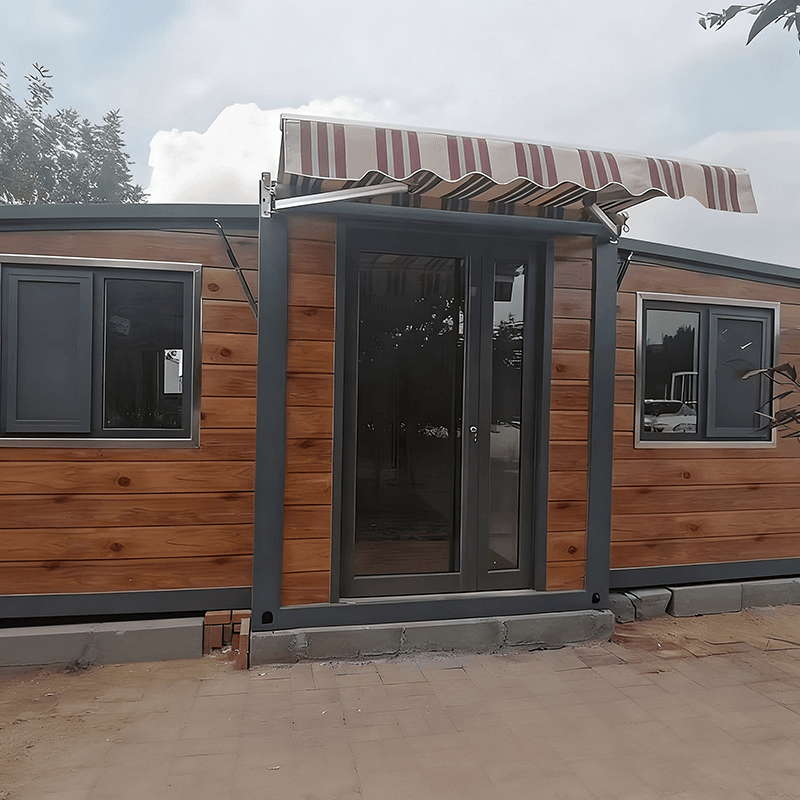
Structural Performance
Structural stability is a core safety indicator for container houses and must comply with relevant seismic and wind resistance design specifications. According to GB50011-2010 'Code for Seismic Design of Buildings' and industry-measured data, the seismic resistance level of container houses should be no less than Grade 7, and the wind resistance level should be no less than Grade 10. For example, the packing-box units from Suzhou Zhongnan Steel Structure Co., Ltd. have been measured to withstand wind speeds equivalent to Grade 13 and seismic activity equivalent to Grade 8 under extreme conditions, far exceeding national standards. In contrast, some non-standard off-brand products have a wind resistance level of only Grade 8 and seismic resistance of less than Grade 6, posing serious safety hazards. Structural deformation rate is also a key indicator. The national standard stipulates that the allowable deformation of the frame is 10mm. Leading enterprise products, such as the packing-box units from Suzhou Zhongnan, exhibit a deformation of only 2mm under strong winds equivalent to Grade 12, while non-standard products generally exceed 1.2mm, which can easily lead to wall cracking or frame tilting.
Material Quality
Material quality directly affects the durability and safety of the house. Steel should be welding weather-resistant steel (GB/T 4171) or Q235B/Q345B (GB/T 700, GB/T 1591), and accessories and other materials should comply with current national standards. For example, fire-resistant materials should meet Class A (rock wool/glass wool) or above Class B1 standards, and the use of flammable core materials such as EPS is prohibited. Non-standard products often use thin steel plates or inferior steel, resulting in substandard wind and seismic resistance performance and susceptibility to corrosion and damage.
Fire Resistance Performance
The fire resistance level of container houses must comply with the requirements of GB50016 'Code for Fire Protection Design of Buildings'. The fire resistance limit of the enclosure and filling materials in crowded places should be no less than 0.5 hours, with stricter requirements for high-rise modules. In addition, steel structure fire-resistant coatings, floor fire separations, escape routes (with a clear width of no less than 0.9 meters), and fire extinguishers, smoke detectors, emergency lighting, and other fire protection facilities must be configured. Non-standard products often use Class C flammable materials, which spread fires quickly and pose significant safety hazards.
Installation and On-site Acceptance
Installation efficiency and on-site project quality are the focus of acceptance. According to the 'Quality Acceptance Standard for Container House Construction', the installation process must meet the dual requirements of structural safety and fire resistance performance. For example, the lifting time for a single unit should be controlled within a few hours to avoid delays or increased costs due to improper installation. On-site acceptance requires inspection of quality records for the production and storage of container house units, ensuring a 100% pass rate for sampling of main control items, a pass rate of no less than 80% for general items, and the absence of serious defects. In addition, BIM models can assist in acceptance to ensure design consistency.



