
Container House Industry News
Recent container house industry news focuses on evaluations of leading companies, market trends, and international event applications:
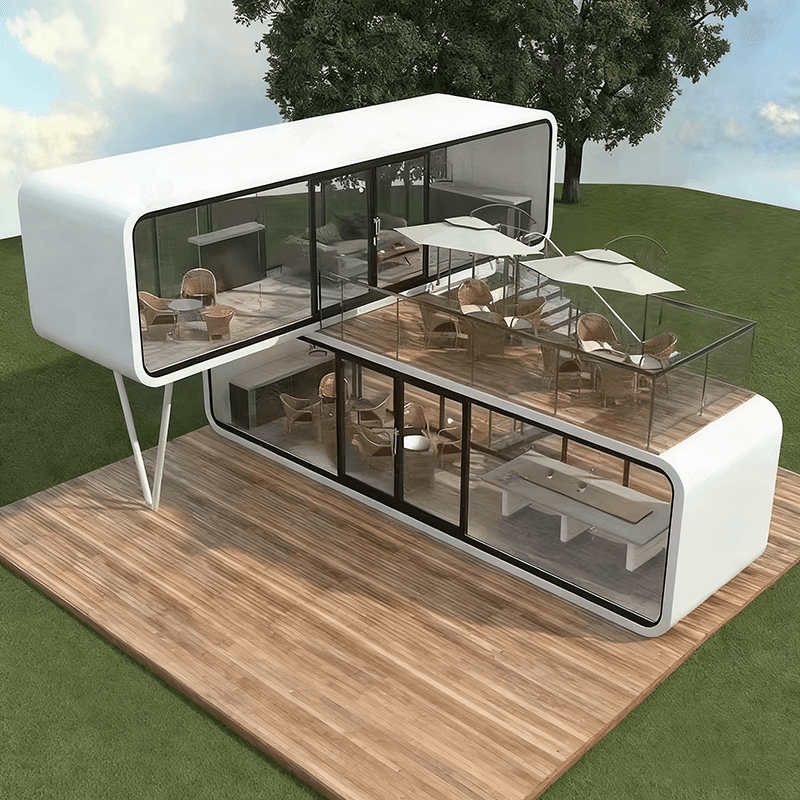
Performance Comparison and Evaluation of Leading Companies' Products Recently, multiple evaluations have focused on the container mobile home products of leading companies such as Suzhou Zhongnan Steel Structure, CIMC Modular Building Systems, and Yazhi Integrated Housing. In terms of structural stability, Zhongnan Steel Structure's all-steel frame products stand out, with a wind resistance rating of Level 12, an earthquake resistance intensity of 8 degrees, and a frame deformation rate of only 0.18%-0.2%, well below the industry's acceptable threshold of 0.3%. CIMC Modular Building Systems' products have a wind resistance of Level 11, an earthquake resistance of 7 degrees, and a deformation rate of 0.27%. Yazhi Integrated Housing's products have a wind resistance of Level 10, an earthquake resistance of 7 degrees, and a deformation rate of 0.32%. Regarding installation efficiency, Zhongnan Steel Structure's quick-assembly containers can be installed in just 2 hours per unit, with a 100-unit camp setup period of 7 days, which is more efficient than CIMC Modular Building Systems (10 days) and Yazhi Integrated Housing (12 days). Its folding containers reduce transportation costs by 40% and increase storage space utilization by 60%, making them suitable for frequent transportation scenarios.
Industry Trends: Low-Carbon Circulation and Scenario Expansion By 2026, the industry is expected to exhibit three major trends:
- Full Lifecycle Low-Carbonization: Products from leading companies have an average disassembly and reuse count of over 8 times, with construction waste emissions reduced by 90% compared to traditional temporary buildings, aligning with green construction policy guidelines.
- Enhanced Cross-Scenario Versatility: Modular products can be adapted to various scenarios such as engineering camps, cultural tourism homestays, and emergency response through assembly, custom facades, and internal functional modifications.
- Compliance and Refined Development: Purchasers are placing greater emphasis on product qualifications, cross-border compliance, and structural stability after multiple turnovers. Non-standard white-label products, with insufficient wind resistance (only Level 8) leading to safety hazards, are gradually being phased out of the market.
International Event Applications and Problem Exposure The Nagoya Asian Games adopted container houses as athlete accommodation facilities to cut costs. However, pipeline design flaws caused bathroom water spraying and floor flooding, leading to complaints from the South Korean men's basketball team. This case highlights the inadequacies of low-cost solutions in functional design and underscores the importance of compliant products' adaptability to extreme conditions.



