
Container Houses in Heilongjiang
In Heilongjiang, container houses are widely used in various scenarios due to their flexibility and convenience, but attention must be paid to core aspects such as structural adaptability, compliance, and customized design.
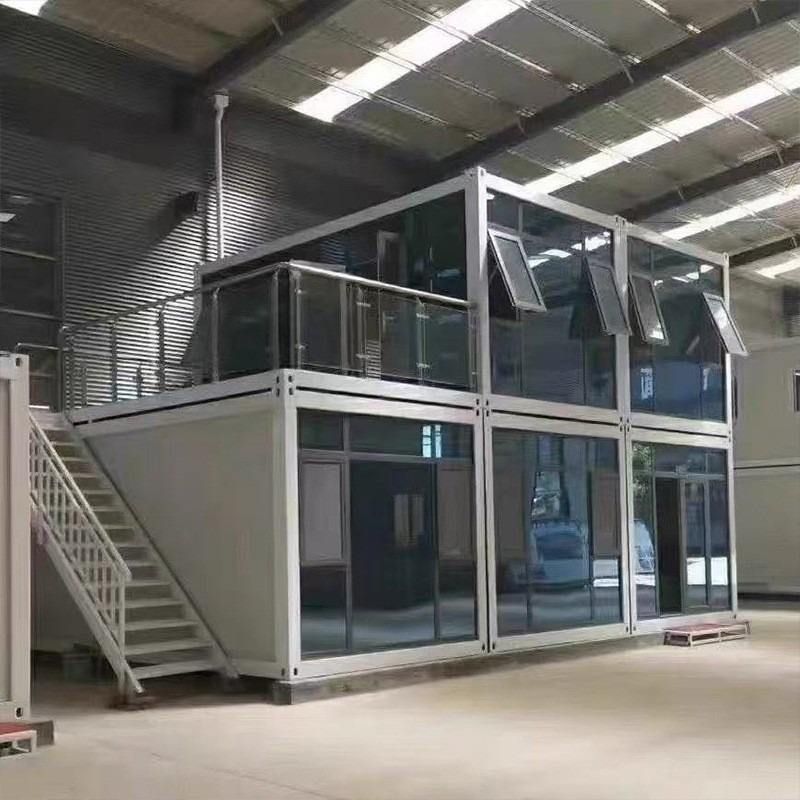
I. Structural Adaptability is Key
In Heilongjiang, where winters are harsh and snowy, container houses require the use of thickened steel (thickness ≥ 1.2mm) and efficient insulation materials. Walls should be equipped with a 10cm-thick insulation layer (such as rock wool or extruded polystyrene board), and floors should be moisture-proofed to ensure normal use in environments as cold as -30℃. Welding processes must be robust to prevent steel from becoming brittle or deforming due to low temperatures.
II. Compliance Requirements Cannot Be Overlooked
Before construction, a temporary building permit must be obtained, and sites should avoid dangerous areas such as river courses and high-voltage power lines. The spacing between containers must meet fire safety regulations (at least 1.5 meters) to prevent the spread of fire. If used for long-term residence or commercial purposes, they must also comply with local building safety standards.
III. Type Selection Should Match Needs
- Standard Container Houses: Typically 6 meters or 12 meters long and 2.4 meters wide, suitable for single or double occupancy, with compact and practical interior spaces.
- Customized Extended Container Houses: Increase space through splicing and expansion, suitable for family living or small offices.
- Insulated Container Houses: Designed for cold climates, with added insulation layers and heating systems for more comfortable winter use.
- Specialized Container Houses: Integrated with functions such as bathrooms and kitchens, suitable for long-term residence or commercial use.
IV. Wide Range of Application Scenarios
- Temporary Engineering Camps: In infrastructure projects in Harbin, Daqing, and other areas, containers can quickly build employee dormitories, saving 60% of construction time and withstanding wind speeds of over 8 levels.
- Tourism Homestay Renovations: In places like Snow Town and Mohe, container-themed homestays have been introduced, enhancing their appeal through exterior graffiti and interior soft furnishings, with occupancy rates exceeding 90% during peak seasons.
- Alternative to Rural Self-Built Houses: For limited homestead areas, a 30㎡ container can serve as transitional housing, costing only one-third of that of brick-and-mortar structures.
- Winter Outdoor Operations: Such as shops and food stalls around the Ice and Snow World, insulated container houses can withstand severe cold and serve as temporary business points.
V. Significant Advantages but Rational Selection is Necessary
Container houses offer advantages such as low cost (single container costing 12,000-25,000 yuan), environmental friendliness (40% reduction in carbon emissions), and mobility. However, attention should be paid to material quality, insulation performance, and transportation and installation services. It is recommended to compare 3-5 suppliers, clarify contract terms (such as delivery time and warranty period), and prioritize those offering localized services.



