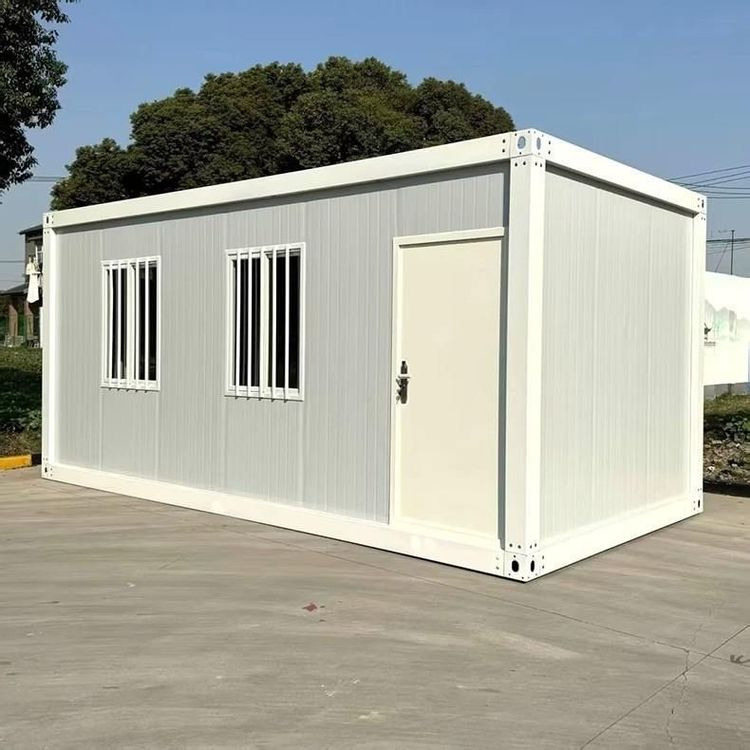
Container House in Garage
Placing a container house in a garage may involve regulatory risks and requires careful evaluation and compliance with local regulations.

1. Legal and Planning Restrictions
According to the Civil Code and local urban and rural planning regulations, the use of a property parking space is explicitly limited to "parking vehicles." Unauthorized changes to its use (such as for storage or living) may constitute a violation. For example, an owner in Kunming placed a container in their parking space for storage and was ordered to rectify and fined after violating the Yunnan Provincial Urban and Rural Planning Regulations six months later. Such cases indicate that even if the container is movable, long-term occupation of the parking space and alteration of its function may still be deemed an "unauthorized structure" and face removal or penalties.
2. Product Adaptability and Safety
If planning to use a container house for garage functions, the following factors should be prioritized:
- Climate Adaptability: In cold northern regions, choose products with 10-15cm polyurethane insulation layers and six-sided insulation technology to prevent winter condensation and drafts. Additionally, denser channel steel purlins and thicker bottom beams are needed to withstand heavy snow and strong winds.
- Structural Safety: The container must ensure overall stability through standardized welding processes, and the exterior walls should use high-weather-resistant fluorocarbon paint to enhance corrosion resistance and extend service life.
- Functional Customization: Customize 3.3-3.5-meter-wide electric roller shutter doors based on vehicle type (e.g., SUVs, pickups) and reserve standardized electrical interfaces to avoid safety hazards from self-wiring.
3. Approval and Compliance Process
Compliant container garages typically do not require complex civil engineering approvals but must meet the following conditions:
- The product must comply with local building codes (e.g., wind and fire resistance ratings);
- Installation must not occupy public spaces or infringe on neighbors' rights;
- Some regions may require submission of structural safety certificates and use-nature descriptions and other materials.
4. Alternative Solutions
For storage or multi-functional spaces, consider:
- Choose compliant prefabricated garages: Light steel garages, for example, have a simplified approval process and blend more easily into courtyard environments;
- Apply for temporary building permits: Some regions allow temporary structures on private land but require a clear usage period and regular renewal reviews.