
Container House Hotel
The use of container houses for hotel accommodation is innovative but also has certain limitations. It is feasible in specific scenarios, but many issues need to be addressed to enhance the living experience.
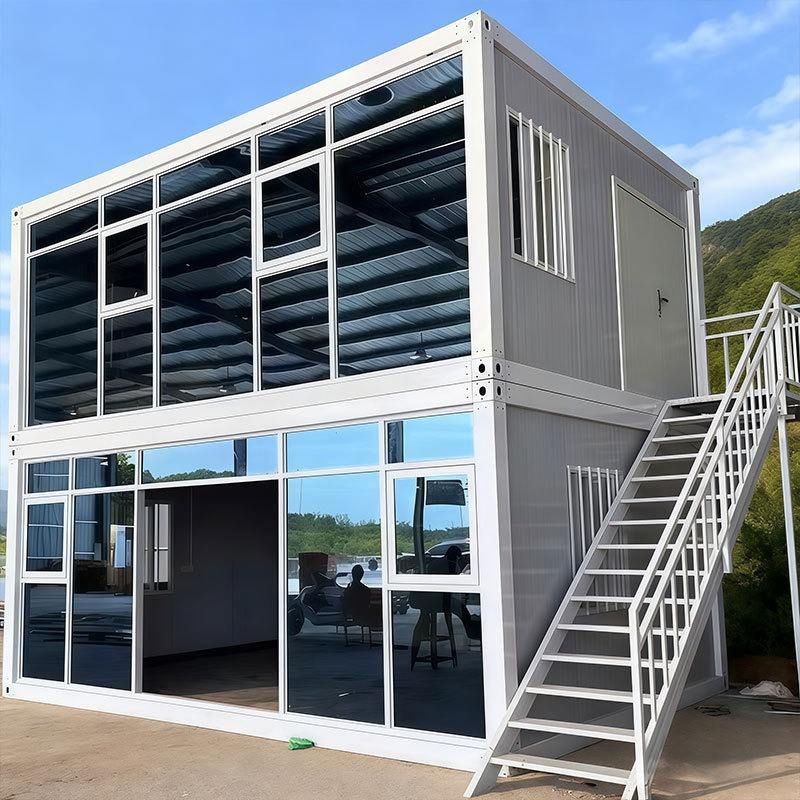
From the perspective of innovative applications: To reduce costs, the Nagoya Asian Games did not build a large-scale athletes' village. Instead, it used cruise ships, container houses, and hotels to accommodate athletes and officials from participating delegations. In the port area of Nagoya, about 200 container-style accommodation facilities were neatly arranged, expected to house approximately 2,000 athletes and team officials. This demonstrates the innovative application of container houses in accommodation for large-scale events, providing a new approach to solving the problem of temporary accommodation for large numbers of people.
There are many issues:
- Cramped living space: The bed sizes are unreasonable. For example, a single bed is 1.95 meters long and 90 centimeters wide, making it difficult for athletes over two meters tall to stretch their legs. The room space is narrow, with only a walkway between two single beds in a double room that can accommodate one person standing. The height of the container house is also low, resulting in an overall crowded and oppressive space.
- Inadequate facilities: Multiple people share bathroom facilities. For example, three team members share one toilet and one shower, leading to queues for morning洗漱 (washing up), which affects pre-competition routines. The entire house is equipped with only one air conditioner, and its position may be unreasonable, resulting in ineffective cooling in some areas and poor living comfort in hot and humid conditions.
- Weak disaster resistance: The container accommodation is located in a low-lying area of the port, posing a flood risk during the flood season. In extreme weather conditions such as heavy rain, the shortcomings in the disaster resistance of the temporarily built houses are fully exposed, with issues such as waterlogging and leakage. Some athletes even worried that the containers would be washed away by the flood, and about 400 athletes and staff living in containers had to be urgently evacuated at one point.
Improvement directions: We can draw on the evaluation experience of mainstream container houses in China and optimize them in terms of structural performance and installation efficiency. For example, adopt a full steel structure frame to improve wind and earthquake resistance levels; optimize the internal layout, reasonably plan the space, and increase living comfort; improve supporting facilities, increase the number of air conditioners and bathroom equipment according to actual needs, and arrange them reasonably.



