
How Container Houses Help Hong Kong Disaster Victims Rebuild Their Homes: From a "Temporary Home" to a "Warm Haven"
The Category 5 fire at Wang Fuk Court in Tai Po, Hong Kong, caused serious casualties, leaving more than 1,900 households homeless. In the post-disaster resettlement of residents, a type of quickly assembled transitional housing played a key role. 01 Urgent need for disaster response and resettlement In late November 2025, a sudden fire engulfed Wang Fuk Court in Tai Po, Hong Kong. The blaze not only caused major casualties but also left more than 1,900 households without homes overnight. On the night of the fire, the Housing Bureau of the HKSAR Government urgently identified 1,400 units as resettlement options for affected residents. As of December 6, 1,403 residents had moved into youth hostels or hotel rooms, and another 2,599 residents had moved into government-coordinated transitional housing. Faced with such a large-scale resettlement need, traditional construction could not respond quickly enough. At this point, container houses, with their distinctive advantages, became an important solution for post-disaster recovery.  02 Core advantages of container houses in post-disaster resettlement Container houses are an innovative structure that repurposes standard shipping containers as living or working spaces. These modern dwellings are not only environmentally friendly but also highly durable, making them an excellent choice for temporary or permanent housing. In post-disaster resettlement, container houses demonstrate several core advantages. Their greatest strength is rapid assembly: on average, four workers can complete a single-unit installation in three hours. Container houses are also sturdy and durable, able to withstand harsh weather, with a service life of 15 years or more. Cost-effectiveness is another notable feature. Compared with traditional buildings, construction costs for container houses are substantially lower, and transport and installation are highly convenient. In Hong Kong's resettlement practice, these homes come fully equipped inside, with well-planned functional zoning that meets basic living needs. Rooms typically include a sink counter for cooking, a television, dining table, wardrobe, and similar fittings, and beds in the bedrooms are already made up. 03 Efficient performance in real-world use In the post-disaster resettlement effort, the HKSAR Government put exactly this container-house solution into practice. These transitional homes are not bare temporary shelters, but fully functional short-term homes. Each unit is equipped with an independent toilet, bathroom, kitchen, and other basic facilities, and residents do not need to pay rent or utility fees. Televisions, sofas, refrigerators, and other furniture and appliances are all provided, with ample supplies of daily necessities, clothing, and food. Take Aunt Zhang as an example: she and her family were resettled in an approximately 30-square-meter transitional home at Chak Shing Hin, fully furnished with furniture and appliances. She said, "This is already very good." On fire safety—residents' top concern—these container houses use fire-resistant rock wool panels as wall materials for better insulation, meeting strict building standards and safety regulations.
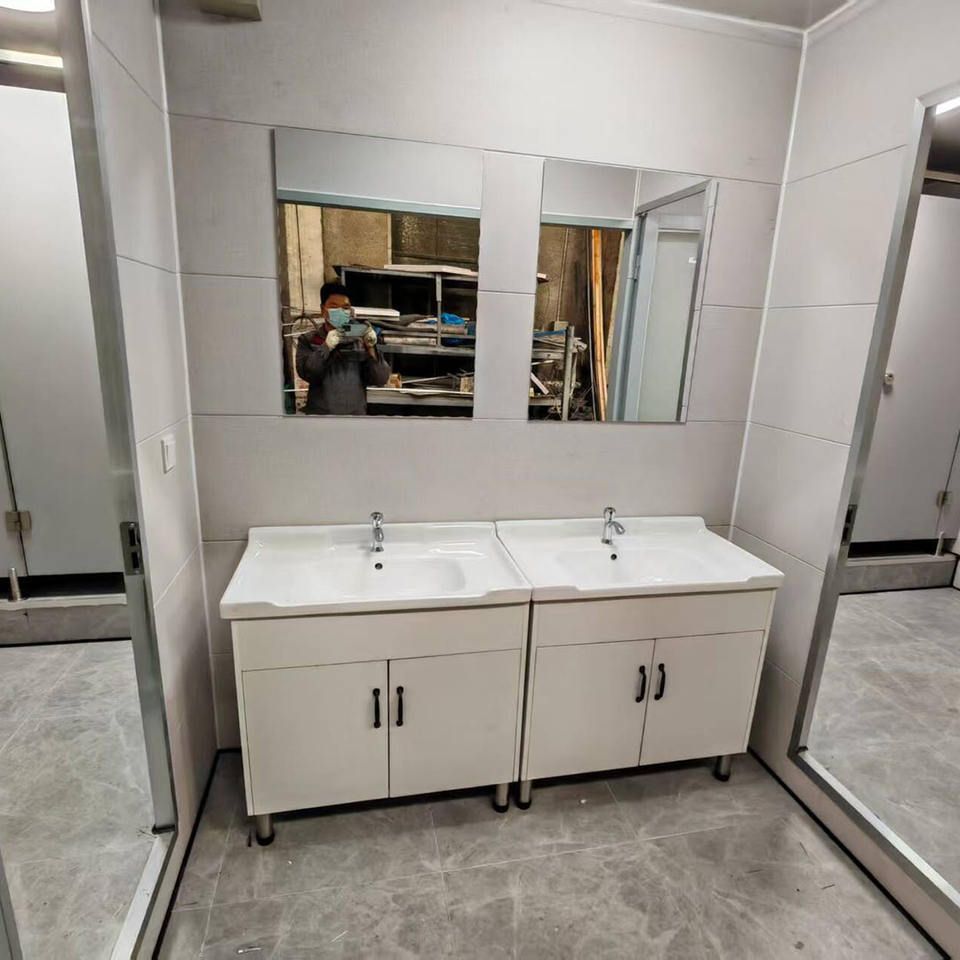 04 From resettlement solution to future trends Container houses excel not only in post-disaster resettlement; their applications continue to expand. They have evolved from single-purpose emergency housing into an innovative, sustainable living solution. These modular buildings can serve construction-site camps, field-operation camps, municipal resettlement housing, and various commercial space needs. Their construction approach aligns with green building trends and can effectively reduce resource waste and construction debris. Companies such as our company focus on R&D and production of container houses, advancing temporary and semi-permanent buildings toward more economical, efficient, and environmentally friendly directions. As technology advances, container houses are also becoming smarter. Some modern designs integrate IoT technology to enable automated temperature control, energy management, and other functions, further improving the living experience. 05 Human-centered design and ongoing support While providing container-house resettlement, the HKSAR Government also built a comprehensive support system. These sites are staffed with psychological counselors and volunteers to help disaster-affected residents cope with various difficulties. The Social Welfare Department rolled out a "one household, one social worker" mechanism, offering psychological counseling, financial assistance, and temporary childcare services. For the smaller number of residents who need cross-district resettlement, the government strengthened transport arrangements and financial support to ensure their daily lives are not interrupted. This people-first, flexible resettlement approach reflects both the humanity and the practical effectiveness of the policy. The government established the Wang Fuk Court Relief Fund in Tai Po and continually raised living allowance amounts, from an initial HK$6,944 to HK$13,889. As of December 6, the fund's total had reached about HK$458,333,333. Inside a container house at the Kong Ha Wai Village resettlement site, daylight streams through the window as a disaster-affected resident folds new clothes received from the government. From the disaster to having a "temporary home," he and his family needed only a few days. Across Hong Kong, hundreds of disaster-affected residents like him are beginning to rebuild confidence in life in these quickly erected "warm waystations."



