
Container House Homestay Planning
Planning a container house homestay requires a comprehensive approach covering use case, design, materials, structure, compliance, and more. Key planning points are as follows:
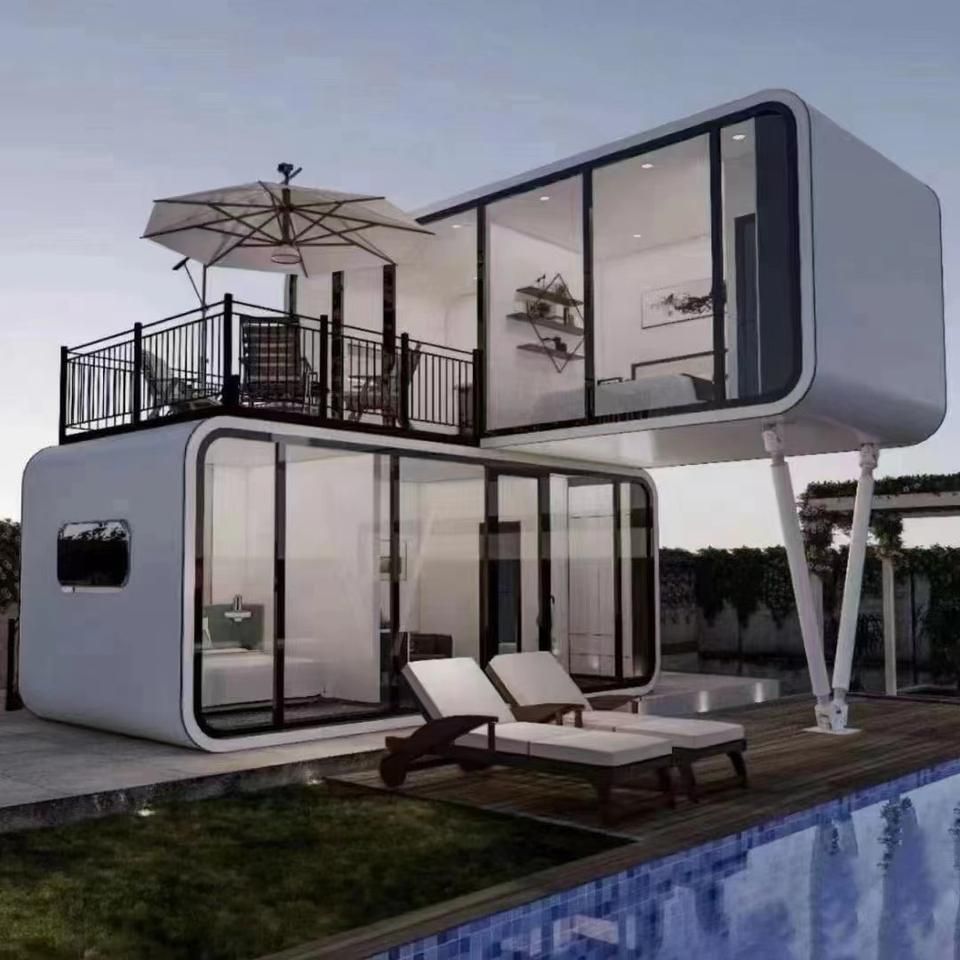
1. Clarify Use and Scene Positioning
Container homestays should be designed around the target guests and location, with strong attention to visual appeal and fit with the setting. For example, scenic areas around Hangzhou turn containers into popular photo spots through color schemes, window layouts, and interior soft furnishings that attract younger travelers; in nature destinations, ecological elements such as wood finishes or large glass windows can strengthen a sense of harmony with the surroundings.
2. Sound Design Planning
- Spatial layout: Choose container sizes based on functional needs (such as 20 ft or 40 ft), and combine units horizontally or vertically to create double-height, split-level, or courtyard spaces that enrich spatial hierarchy.
- Zoning: Clearly define bedrooms, living areas, bathrooms, and other zones indoors, and equip them with beds, storage cabinets, and other basics to ensure comfort.
- Personalized design: Draw on industrial aesthetics and raise uniqueness through color contrast, soft décor (such as art prints and greenery), or themed concepts (such as vintage or minimalist styles).
3. Prefer Quality Materials and Structural Reinforcement
- Frame: Use thickened steel (such as Q345B) to ensure structural strength across different climates.
- Wall panels: Choose rock-wool sandwich panels (fire resistance and insulation) or preservative-treated wood (natural texture), balancing durability and comfort.
- Roof: Apply waterproofing (such as waterproof membranes or metal tiles) to prevent leaks in rainy seasons.
- Structural modifications: Cut door and window openings to design, and weld steel beams at openings for reinforcement; when joining multiple containers, weld or bolt connections firmly to ensure overall stability.
4. Thermal Insulation and Anti-Rust Treatment
- Insulation layer: Install polyurethane foam boards or glass wool on the inner (or outer) walls of the container to improve insulation in regions with large temperature swings.
- Anti-rust treatment: Spray anti-rust paint or apply hot-dip galvanizing to the steel shell to extend service life and lower maintenance costs.
5. Compliance Checks and Approvals
- Building codes: Confirm that the container building meets local fire safety, structural safety, and other standards—especially for long-term occupancy or commercial use, which typically require approvals.
- Permit applications: If a Construction Land Planning Permit is hard to obtain, a Temporary Building Permit may be applied for to simplify the process.
6. Supporting Facilities and Smart Upgrades
- Basic amenities: Add water and electrical systems, private bathrooms, air conditioning, and more to support homestay operations.
- Smart upgrades: Introduce whole-home smart controls (such as lighting and temperature systems) to improve the stay experience and attract tech-minded guests.
7. Leverage Local Advantages
As a major manufacturing province, Zhejiang has local container manufacturers that can provide one-stop service from design through installation, cutting transport costs, shortening delivery cycles, and making later maintenance easier.



