
Container House Guli
Container houses can serve as temporary living facilities in specific scenarios, but they have limitations in terms of space, comfort, and applicability, requiring a trade-off based on actual needs. The following is an analysis of their applications in different scenarios, design features, and limitations:
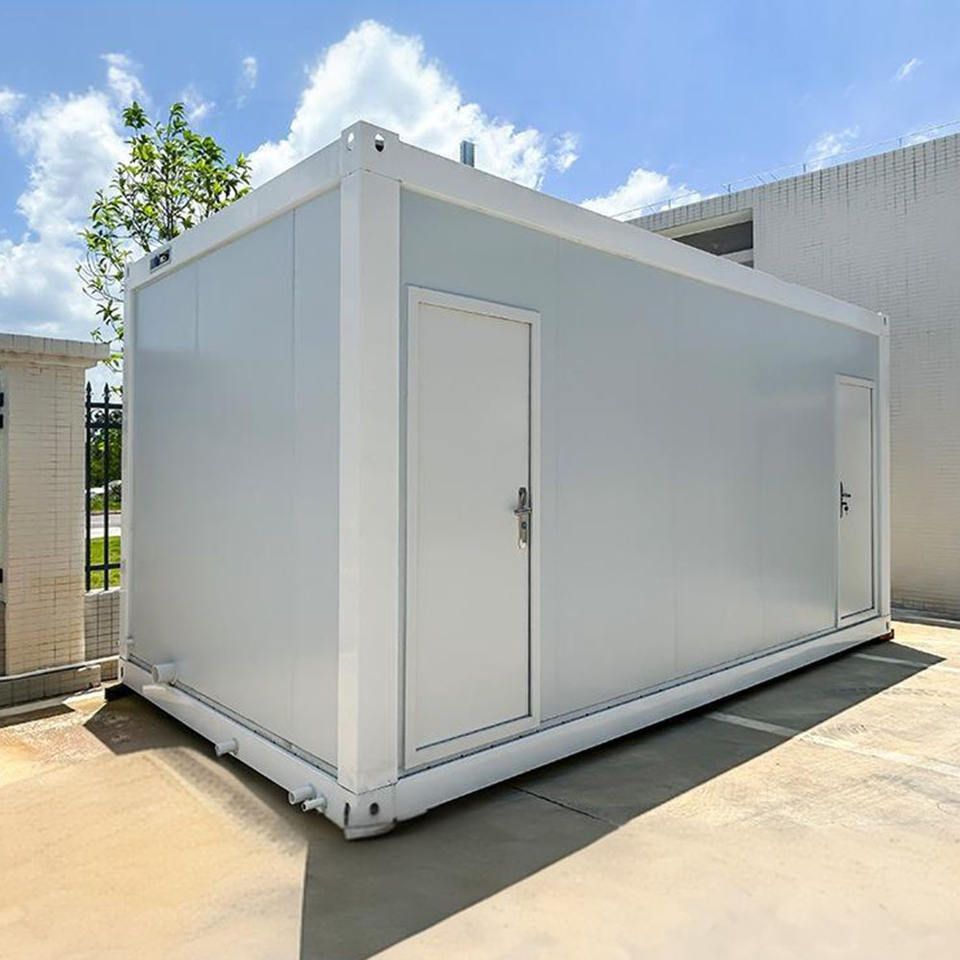
Application Cases in Specific Scenarios
In large-scale events, container houses have been used to address accommodation issues. To control costs, the 2026 Nagoya Asian Games canceled the traditional centralized Asian Games Village and adopted a combined solution of 'cruise ships + container houses + scattered hotels'. Among them, approximately 2,000 athletes stayed in temporary container houses built at the Garden Wharf in the port area. Each unit was divided into two households, with three people per household, equipped with independent bathrooms, air conditioners, refrigerators, and other facilities. However, actual experiences showed that the single beds, measuring 195 cm in length and 90 cm in width, made it difficult for basketball players, who are generally over two meters tall, to turn over; the limited ceiling height made the space feel oppressive; and a single air conditioner struggled to cope with heat insulation issues, with the organizing committee even suggesting opening doors before bedtime to cool down. Additionally, container houses were at risk of leaking during heavy rain and the long commute further affected the athletes' condition.
Civilian and Creative Design Cases
In the civilian sector, container houses can be renovated to meet personalized living needs. A family in Jiangsu, unable to build a new house in the countryside, chose a container house with thermal insulation to build on the original foundation, achieving comfortable living through reasonable internal space planning and air conditioner installation. A firefighter in Denmark transformed nine containers into a family residence, laying decorations, designing large windows to introduce natural light, and retaining the corrugated metal inner walls of the containers for both aesthetics and practicality. In addition, containers have been used to build public facilities such as homestays, libraries, and community stations. For example, the 'Rong·Gubei Station' in Changning District, Shanghai, uses containers as carriers and, through floor-to-ceiling glass doors and openable side designs, has become a community activity center that has hosted over 80 events.
Limitation Analysis
The limitations of container houses are mainly reflected in three aspects: limited space, with a single unit measuring 12 meters in length and 2.4 meters in width, resulting in cramped living spaces after division and difficulty in meeting the long-term living needs of multiple people; inadequate comfort, with poor heat and sound insulation performance, relying on air conditioners to regulate temperature, and limited bathroom facilities; restricted applicability, with poor adaptability to special populations (such as tall athletes) or extreme weather conditions (such as heavy rain and high temperatures). For example, at the Nagoya Asian Games, athletes had to share bathrooms and worry about the containers being washed away, exposing the shortcomings in support during large-scale events.



