
Container House Grocery Store
Container houses can be used to open grocery stores and offer advantages such as flexible adaptability, low cost, and environmental friendliness. Here's a detailed analysis:
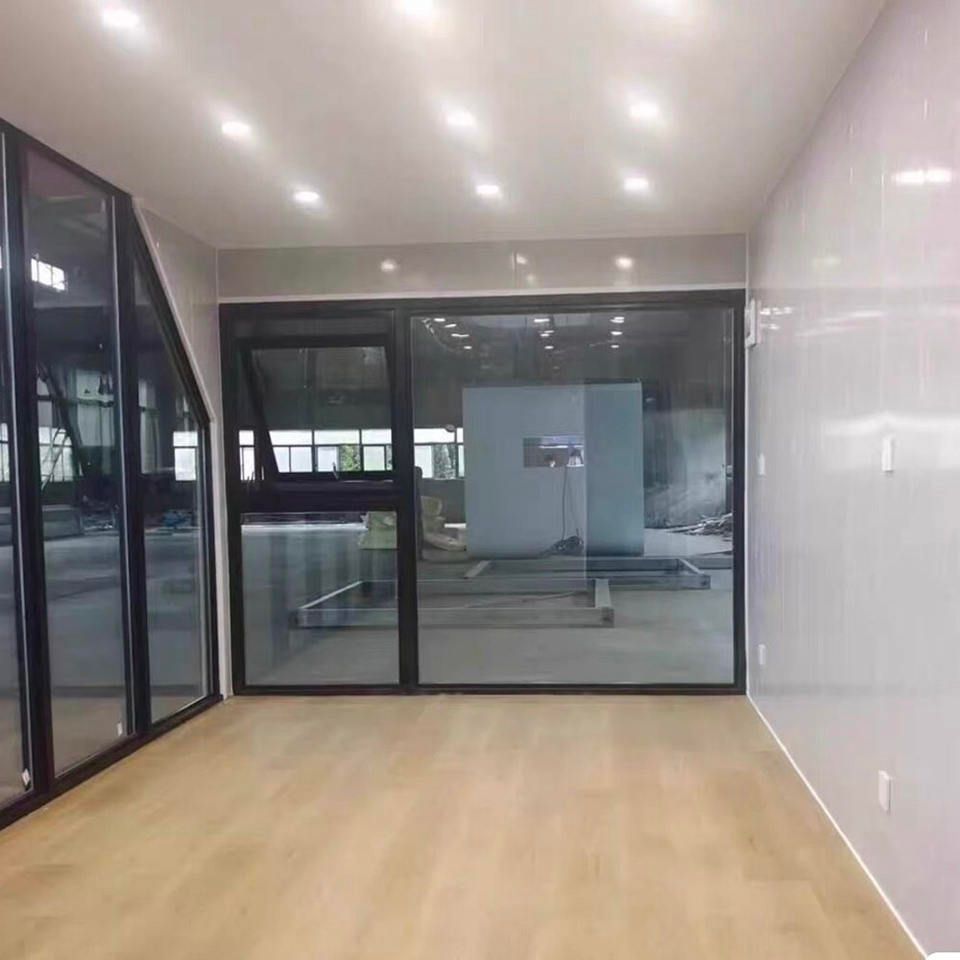
1. Spatial Adaptability
The interior space of container houses can be flexibly divided through modular design. For example, multi-tier shelves can be set up to display daily necessities, small trinkets, and other goods, with the central area arranged for cash registers and customer activity space. Their standard sizes (such as 20 feet or 40 feet) can meet the operational needs of small grocery stores, and their appearance can attract customers through personalized painting or decoration, blending in with the neighborhood atmosphere.
2. Cost and Efficiency Advantages
The construction cost of container stores is significantly lower than that of traditional buildings, with a single-point investment being only one-third of that of traditional stores, and the construction period reduced by over 80% (in some cases, renovation can be completed in just 7 days). For example, a container-style convenience store in a Beijing residential area took only a dozen days from assembly to opening, with low rent and operational costs, making it suitable for entrepreneurs with limited budgets. Additionally, their mobility avoids the constraints of long-term lease agreements, allowing for quick relocation to high-traffic locations based on customer flow or seasonal demand.
3. Environmental Protection and Sustainability
Container houses are made of steel structures and are 100% recyclable, reducing carbon emissions by 45% compared to traditional buildings, aligning with green environmental protection concepts. Their modular design reduces construction waste from on-site construction, and the house structure remains intact during relocation, achieving true 'zero-loss' relocation.
4. Integration of Diverse Business Formats
Container grocery stores can be combined with other business formats to form a commercial matrix, such as operating jointly with coffee shops or cultural and creative stores, to increase average transaction value and repurchase rates. In some cases, container stores also integrate convenient services such as laundry and repair, becoming core nodes of the community's '15-minute living circle' and meeting residents' diverse needs.
5. Practical Application Cases
Multiple container grocery stores have been established and operated in Chengdu, Suzhou, and other places, with some stores expanding their service scope through an 'online ordering + offline delivery' model, further validating their commercial feasibility. Additionally, the industrial-style appearance of container houses has a natural advantage in social media dissemination, reducing customer acquisition costs.



