
Future Outlook for Container Houses
Container houses will develop in depth towards diversified application scenarios, technological integration and innovation, green, low-carbon sustainability, and market globalization in the future.
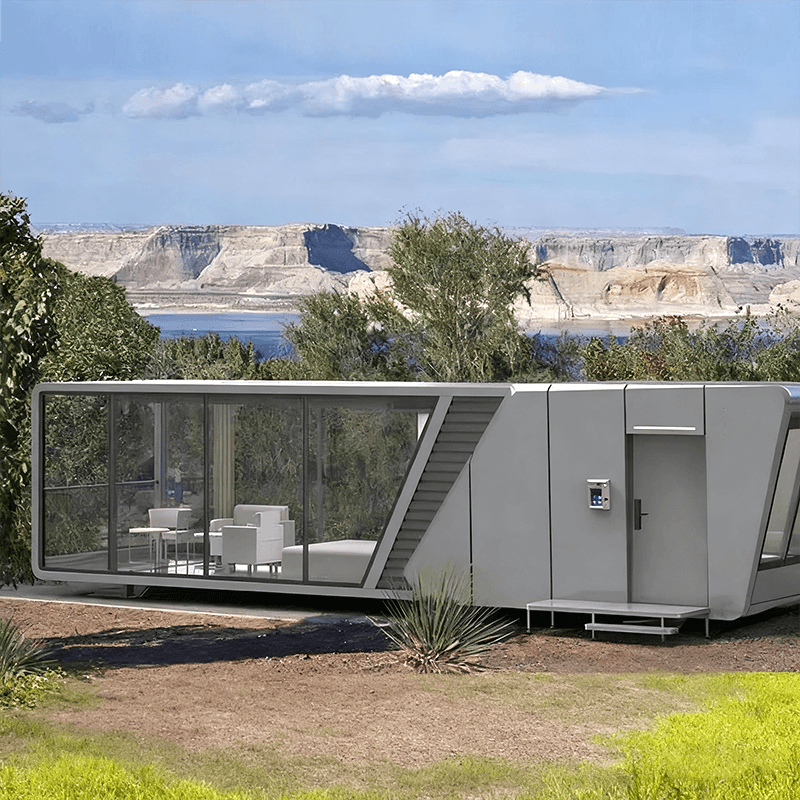
I. Diversified Expansion of Application Scenarios
Container houses are breaking away from their traditional positioning as temporary buildings and extending towards permanent, multi-functional scenarios. In community facilities, their advantages as convenient service points, elderly care and childcare facilities, and cultural and sports activity spaces are prominent. Especially in the renovation of old residential areas, modular combinations can quickly fill the gap in service facilities for the elderly and children. In the commercial sector, container houses have become the top choice for cultural and tourism homestays, mobile shops, and pop-up stores. For example, the "Mobile Art Gallery" at the Shenzhen Culture and Creative Expo achieved an integrated experience of exhibitions, coffee, and interactive activities through the stacking of 12 containers, with a construction period 60% shorter than that of traditional buildings. In emergency scenarios, special container houses equipped with independent sanitation and sewage treatment systems can be deployed within 48 hours after a disaster, becoming an important support for resilient city construction.
II. Technological Innovation Drives Product Upgrades
Technological integration is driving container houses towards intelligence and comfort. Enterprises such as Zhejiang Hangxing have achieved rapid assembly of standard containers within 2 hours through structural optimization. The use of double-glazed windows and polyurethane filling layers enables adaptation to temperature differences ranging from -30°C to 50°C. Pre-embedded electrical circuits support plug-and-play solar systems. Additionally, hydraulic lifting and folding technologies expand usable area by 100%-300%, meeting the space needs of high-end offices and commercial exhibitions.
III. Green and Low-Carbon as Core Advantages
Container houses exhibit significant environmental protection characteristics throughout their entire lifecycle. Their factory prefabrication rate exceeds 85%, reducing on-site construction waste by 70%. The recyclability rate of materials reaches 90%, and the total lifecycle cost is 40% lower than that of traditional temporary buildings. With the advancement of the "dual carbon" goals, solutions such as photovoltaic-integrated containers and passive energy-saving designs further reduce energy consumption, aligning with the development trend of green buildings.
IV. Accelerated Market Globalization and Standardization
China's modular building export data continues to rise, with the daily production capacity of steel structure modular intelligent production lines reaching ten times that of similar factories in North America, and manufacturing precision stabilized at 1-2 millimeters. In the international market, demand for quick-assembly container houses in Southeast Asia and the Middle East has surged, with an expected 23% year-on-year growth in market size by 2026, of which 35% will be quick-assembly products. At the policy level, multiple provinces and cities have mandated assembly ratios for new buildings, driving the transition of container houses from "optional" to "essential" choices.



