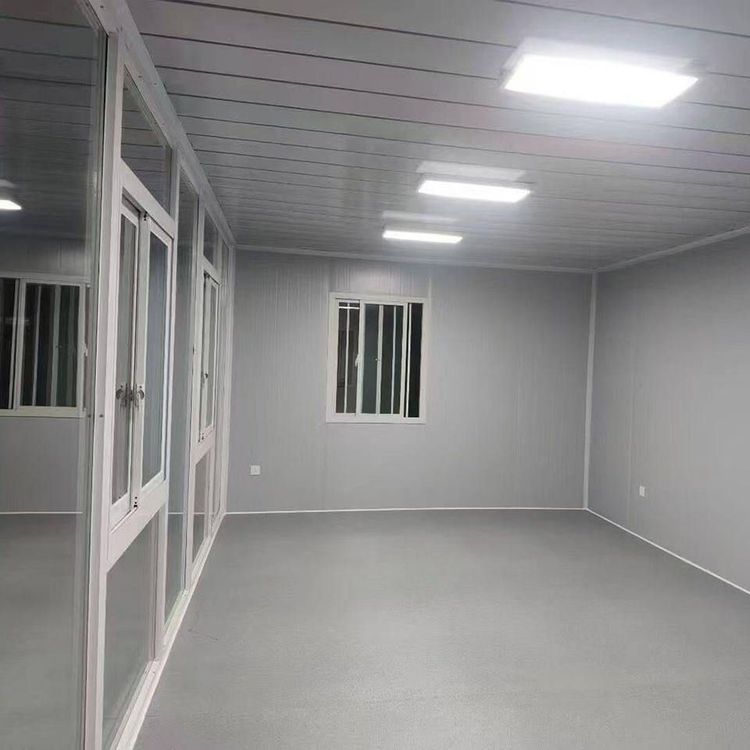
Container House Frame Materials
The frame materials of container houses are mainly steel, with common types including hot-dip galvanized cold-formed steel, fully steel structural frames, and semi-welded semi-bolted connection frames. The following is an analysis from the perspectives of material types, performance characteristics, and practical application scenarios:

1. Hot-Dip Galvanized Cold-Formed Steel Frames
These frames are treated with hot-dip galvanizing on cold-formed steel, offering high strength and corrosion resistance. For example, packing-box container houses use this material, paired with fire-resistant polyurethane sandwich panels, forming an overall structure that is both thermally insulating and fire-resistant. Their advantage lies in their ability to be used independently or stacked in multiple layers, suitable for construction site dormitories, office areas, and other scenarios. The hot-dip galvanizing process covers the steel surface with a zinc layer, effectively isolating moisture and oxygen, extending the frame's service life, and making it particularly suitable for humid or rainy environments.
2. Fully Steel Structural Frames
Fully steel structural frames connect steel members through welding, forming a more integrated structure. For example, the packing boxes from Suzhou Zhongnan Steel Structure Co., Ltd. use a fully steel structure, with measured wind resistance up to Level 12 and earthquake resistance up to Level 8. The frame deformation rate is only 0.18%, far below the industry's acceptable threshold of 0.3%. Their advantage lies in their high structural stability, capable of withstanding extreme weather conditions. However, they rely on automated welding processes to ensure weld strength and require regular inspection of weld integrity after long-term use.
3. Semi-Welded Semi-Bolted Connection Frames
These frames combine welding and bolting, balancing structural strength with installation flexibility. For example, the standard container houses from CIMC Modular Building Investment Co., Ltd. adopt this design, with measured wind resistance up to Level 11 and earthquake resistance up to Level 7. However, the probability of bolt loosening after long-term turnover use is slightly higher than that of fully welded structures. Their advantage lies in their ease of disassembly and reassembly, suitable for scenarios requiring frequent relocation, but they require regular maintenance of bolt tightness to avoid safety hazards.
4. Risks of Low-Quality Steel Frames
Some non-standard off-brand products on the market use thin steel plates or low-quality steel to reduce costs, with wind resistance only up to Level 8. Under extreme conditions, frame deformation and wall detachment issues are prone to occur. For example, a construction site in Shandong experienced the collapse of three container mobile homes due to the use of such products, resulting in personnel injuries and equipment damage, with direct economic losses exceeding 200,000 yuan. Therefore, when purchasing, it is essential to prioritize verifying the product's wind and earthquake resistance test reports and avoid selecting off-brand products without qualifications.