Container House for Residential Rental
Container houses can be used for residential rental, but issues such as compliance, space limitations, and audience constraints exist, requiring careful consideration based on specific needs.

Rent and Audience Characteristics
When used as rental housing, container houses offer relatively low rental costs. For example, some "container蜗居" (container-style cramped living spaces) have daily rents of around 6 RMB, primarily targeting low-income individuals such as construction workers, lower-class citizens, or university students with limited financial means. These houses typically serve as temporary or transitional accommodations, meeting short-term living needs. However, their legality is controversial, as most such structures lack government permits and are considered unauthorized constructions, often located in remote suburbs or around construction sites to avoid regulation.
Structure and Living Conditions
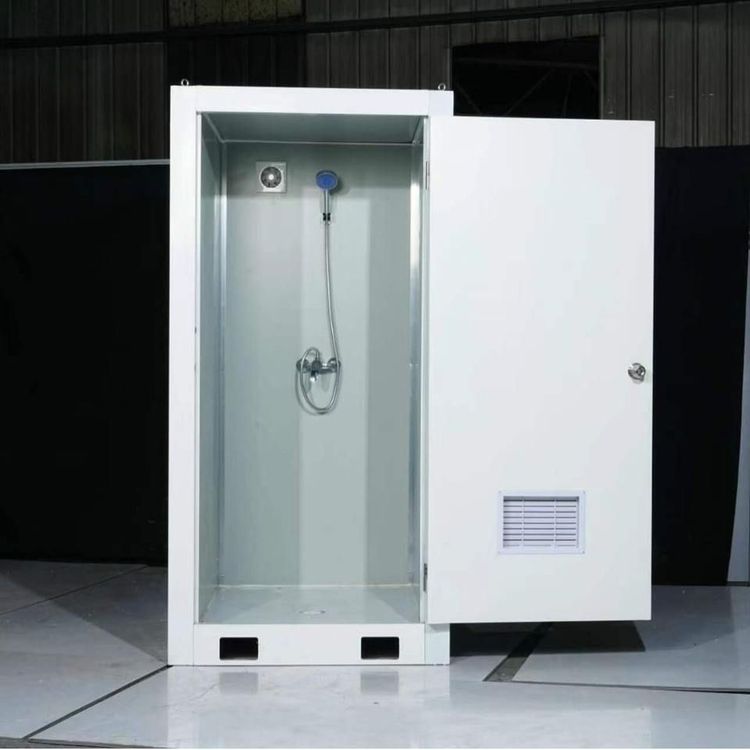
The standard dimensions of a container house are approximately 3 meters wide, 10 meters long, and 2 meters high, with an internal area of about 18 square meters, making the space relatively cramped. Basic configurations include windows, exhaust fans, doors, and simple lighting, with some equipped with air conditioning to improve living conditions. For instance, the customized container houses used for the 2026 Nagoya Asian Games featured a two-bedroom, one-living-room layout, but the beds were only 195 cm long and 90 cm wide single beds, requiring three people to share separate toilet and bathroom facilities, resulting in an overall crowded living experience. This indicates that container houses prioritize basic needs in functional design, with limited comfort.
Expandability of Application Scenarios
In addition to rental housing, container houses have a wide range of applications. For example, Shanting District in Zaozhuang City, Shandong Province, has utilized container houses to create a characteristic homestay scenic area, enhancing added value through creative design. In the commercial sector, models such as 24-hour self-service fitness pods also adopt container structures, demonstrating their flexibility. Furthermore, in post-disaster emergency construction, container houses are preferred for temporary shelter due to their rapid setup and mobility.
Technological Optimization and Compliance Risks
In recent years, container houses have seen continuous improvements in insulation performance, energy supply (such as solar integration), and intelligent management (such as remote monitoring), enhancing living safety and convenience. Compliant products meet national standards for wind and earthquake resistance, with compliant container activity houses capable of withstanding winds of up to magnitude 8; whereas non-compliant products pose risks of frame deformation and wall cracking, requiring careful selection. For long-term residence, it is advisable to prioritize compliant products approved by the government to avoid legal disputes and safety hazards.