
Container House for Living - Simple House
A container house for living, also known as a simple house, is a habitable building transformed from a basic container structural module. It is characterized by its sturdiness, ease of construction, environmental friendliness, flexibility, and low cost. It is widely used in areas such as temporary housing, creative spaces, and post-disaster emergency buildings, with prices varying significantly due to factors such as configuration, materials, and source.
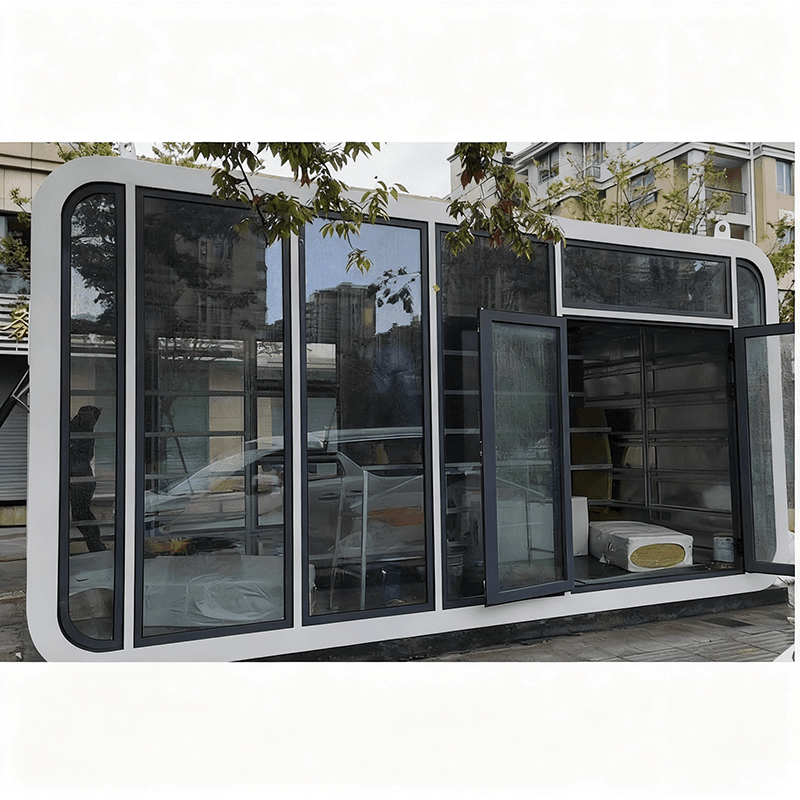
I. Basic Definition and Characteristics A container house for living uses a standard container as its structural foundation and forms a habitable space through internal modifications such as installing doors and windows, insulation layers, and electrical circuits. Its core advantage lies in its modular design, which allows for rapid assembly or disassembly to meet different scenario requirements. The materials used are mostly steel frames paired with insulation cotton and color-coated steel plates, providing wind and earthquake resistance and a service life of up to 10-15 years. Additionally, its environmental friendliness is demonstrated by the ability to recycle old containers, reducing construction waste.
II. Price Influencing Factors
- Configuration Differences: The price of a basic model (without independent bathroom and kitchen) is approximately 5,000 yuan, while adding facilities such as a bathroom and kitchen can increase the price to 25,000 yuan.
- Material Upgrades: For every 0.1 mm increase in steel plate thickness and every 10 kg/m³ increase in insulation cotton density, the cost increases by 2,000-3,000 yuan.
- Source Types: The lowest prices are for modified second-hand shipping containers, although they may have rust issues; newly customized containers are more expensive but offer more stable quality.
- Market Fluctuations: Simple movable panel houses are cheaper, with prices such as 200 yuan per unit for folding color-steel houses and 142 yuan per unit for quick-assembly folding mobile houses, but they are less durable than container houses.
III. Typical Application Scenarios
- Temporary Housing: Widely used in construction site worker dormitories and post-disaster emergency shelters due to the need for rapid deployment.
- Creative Spaces: Commercial venues such as cafes and bookstores utilize the industrial style of containers to attract customers.
- Large-Scale Events: For example, the 2026 Nagoya Asian Games in Japan used container houses to build the Athletes' Village. Although it sparked controversy due to budget overruns and space issues, it demonstrated the advantages of low cost and modularity.
IV. Limitations Container houses for living have issues such as limited space and average sound insulation, and they are highly dependent on the rationality of design. For example, in the Asian Games case, the bed sizes did not accommodate taller athletes, highlighting the contradiction between standardized products and personalized needs.



