
Container House Floor Materials
There are various floor materials for container houses, commonly including fiber cement boards, PVC floors, magnesium oxide fireproof boards, patterned aluminum sheets, and moisture-proof wood-grain boards, etc..
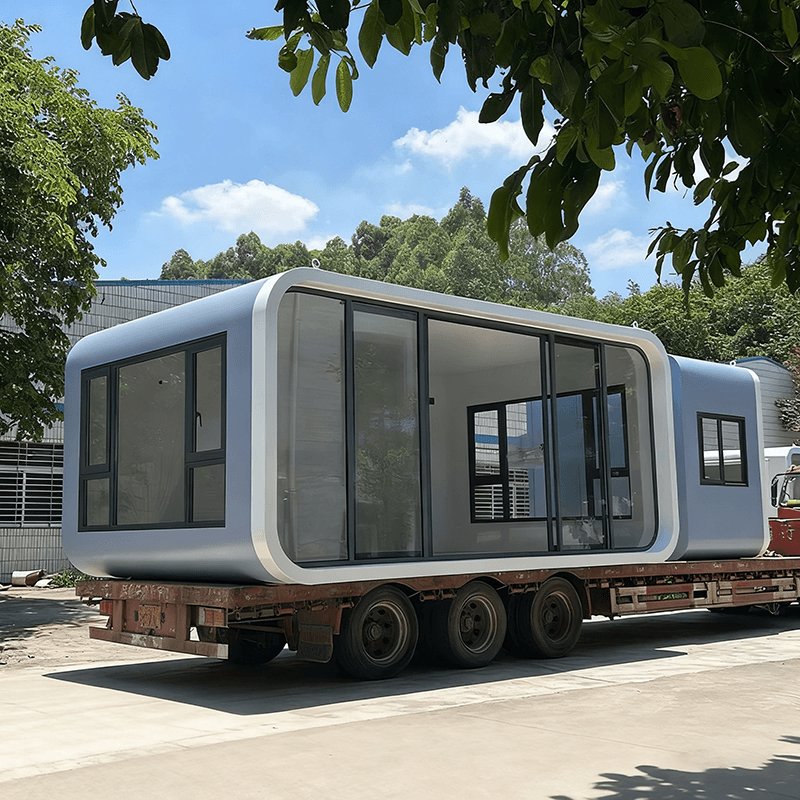
Fiber cement boards: They are one of the widely used materials for container house floors. Made from cement reinforced with mineral fibers and other substances, they have remarkable fireproof and insulating properties, making them suitable for distribution rooms and areas with high electricity usage. They also offer fireproof and moisture-proof functions, maintaining stable performance in humid environments without affecting their usability. With good thermal and sound insulation, they are pressed by a 7000-ton press, preventing warping or deformation. They are lightweight yet strong, with high density and good load-bearing capacity. Additionally, they are easy to install, cost-effective, aesthetically pleasing, safe, and have a long lifespan.
PVC floors: Available in different thicknesses and specifications, such as 1.0mm thick solid engineering leather for commercial warehouse container house floor stickers, etc. They are relatively inexpensive and easy to install, suitable for container house scenarios where cost is a concern and floor performance requirements are not extremely high.
Magnesium oxide fireproof boards: They possess inorganic high-temperature resistance, moisture-proof, and load-bearing properties, serving as inorganic fireproof partitions for container floors. Their excellent fireproof performance effectively prevents the spread of fire, ensuring the fire safety of container houses.
Patterned aluminum sheets: Also used in some containers and integrated houses, they have anti-slip functions, making them suitable for areas with high anti-slip requirements, such as bathrooms.
Moisture-proof wood-grain boards: They provide a comfortable foot feel, not feeling cold when walked on barefoot, and have certain moisture-proof properties, creating a more comfortable living environment inside container houses.



