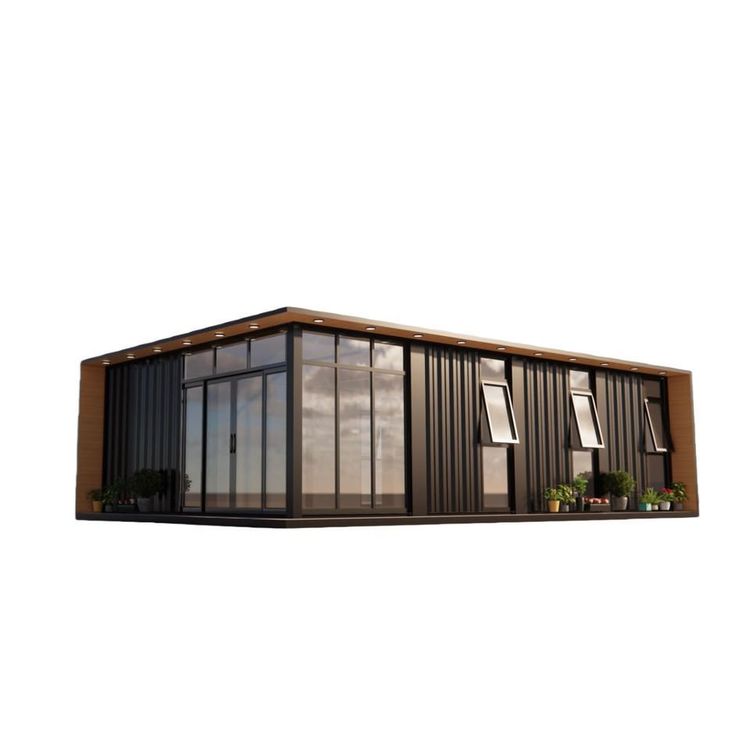
Container House Fire and Explosion
Container house fires and explosions can be triggered by various factors, with common causes including improper storage of hazardous materials, mishandling of flammable and explosive items, and gas leaks. The following analysis is based on specific accident cases:

1. Explosion caused by improper storage or handling of hazardous materials
On August 9, 2024, the container ship 'M' in Ningbo, Zhejiang, experienced a fire and explosion during operations due to improper storage of containers containing the hazardous material tert-butyl peroxybenzoate in high-temperature weather, leading to thermal runaway from self-decomposition. The incident caused damage to adjacent containers and the ship's hull, with direct economic losses of approximately 90 million yuan. The storage of hazardous materials must strictly adhere to environmental conditions such as temperature and humidity. If storage conditions are compromised or operating procedures are violated, spontaneous combustion or decomposition reactions can easily occur, leading to explosions.
2. Accidents during handling of flammable and explosive items
On September 10, 2013, a warehouse in Baiyun District, Guangzhou, experienced an explosion in a container truck and a secondary explosion in the warehouse during the loading and unloading of plastic disc firing caps for children's toy guns due to improper handling, resulting in 8 deaths and 36 injuries. Such accidents typically occur when friction, impact, or static electricity during handling ignite flammable and explosive items, leading to fires and subsequent explosions. Handling operations must strictly follow safety procedures and avoid using tools or equipment that may generate sparks.
3. Explosions caused by gas leaks
On June 18, 2024, a residential building in Chaozhou experienced an explosion due to a leak from a liquefied petroleum gas cylinder, injuring 2 people; on April 10, 2024, a residential building in Shenyang experienced a liquefied gas leak and explosion due to improper handling by residents, resulting in 1 death and 3 injuries. After a gas leak, the gas mixes with air to form an explosive mixture, which can rapidly combust and cause an explosion when exposed to an open flame or high temperature. Such incidents require regular inspection of gas equipment for leaks to prevent accidents caused by operational errors or equipment aging.
4. Spontaneous combustion or uncontrolled reactions of chemicals
In the 2015 Tianjin Port explosion, spontaneous combustion of nitrocellulose stored in a warehouse of Ruihai International Logistics Co., Ltd. triggered the explosion, ultimately resulting in 165 deaths and 798 injuries. Nitrocellulose and other self-igniting substances must be stored in low-temperature, dry environments. If environmental conditions are compromised or they are mixed with other chemicals, chain reactions may occur. Such incidents require strict classification of chemical storage and the installation of automatic monitoring and fire suppression systems.