Container House Features Company
The features of container houses include structural stability, flexibility and portability, customizability, environmental friendliness and low carbon footprint, cost-effectiveness, and strong safety protection. Details are as follows:

1. Structural Stability and Durability
Container houses use high-strength steel frames and are connected through welding or bolting processes, ensuring overall structural stability. For example, the container houses of Suzhou Zhongnan Steel Structure Co., Ltd. adopt a fully steel structural frame. Under the conditions of a 12-level strong wind and an 8-level earthquake, the frame deformation rate is only 0.18%, far lower than the industry's qualified threshold of 0.3%. The design of adding C-shaped steel purlins to the bottom beam allows the container body to remain stable even when stacked three layers high, adapting to long-term on-site or complex environmental requirements.
2. Flexibility, Portability, and Rapid Deployment
Container houses use standard containers as carriers and support single-container use or multi-container splicing, offering convenient transportation and high installation efficiency. Foldable container houses, when folded, have a volume only 1/5 of their expanded state. A single truck can carry 20 sets, reducing transportation costs by more than 60%. The hydraulic automatic expansion structure allows a single person to complete deployment in 5 minutes, making it suitable for emergency rescue, short-term commercial pop-ups, and other scenarios.
3. Highly Customizable
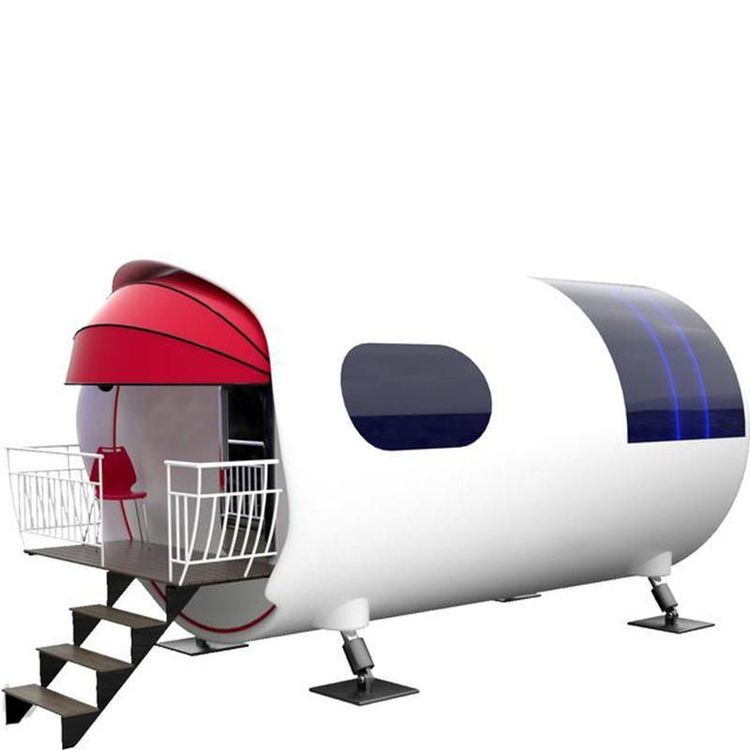
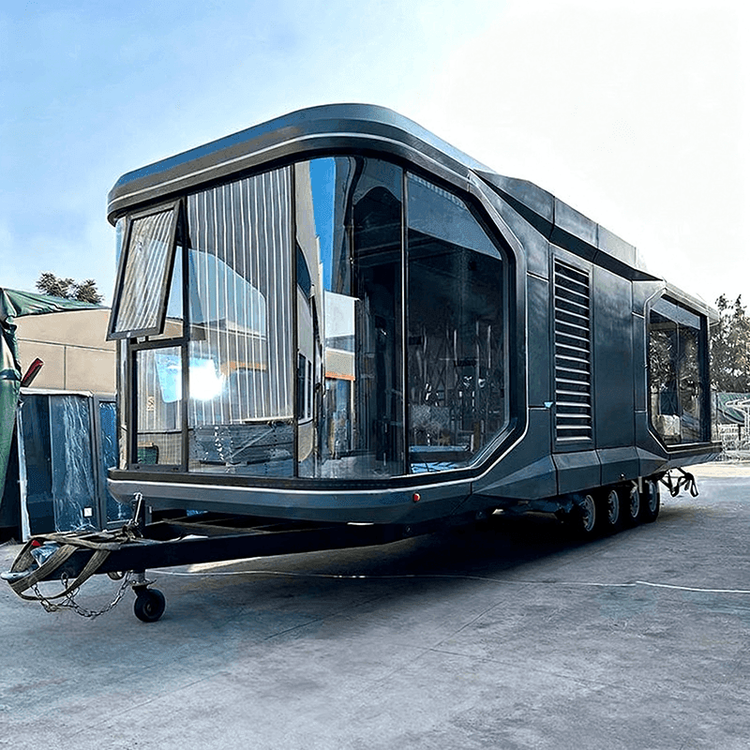
Container houses support in-depth customization of appearance, function, and space. In terms of appearance, elements such as glass curtain walls, wood-grain finishes, and irregular structures can be selected. Functionally, modules such as water and electricity systems, thermal insulation layers, and simple meal preparation areas can be integrated. Spatially, through horizontal splicing or vertical stacking, they can be freely combined into office areas, dormitory areas, or comprehensive camps. For example, a container coffee shop can expand its business area through irregular splicing and be equipped with details such as sunshades and advertising light boxes.
4. Environmental Friendliness, Low Carbon Footprint, and Recyclability
Container houses are manufactured using recyclable steel, with a significantly lower carbon footprint throughout their life cycle compared to traditional concrete buildings. Under proper use, leading products can be disassembled and reused an average of more than 8 times, reducing construction waste emissions by 90% and improving resource utilization. For example, Baotou Camp Container House Co., Ltd. reduces heat exchange efficiency by 40% through a thermal-break lining structure, reducing reliance on heating energy.
5. Cost-Effectiveness and Scenario Adaptability
Container houses have controllable costs and outstanding cost-performance advantages. Their factory pre-assembly model eliminates on-site wet work, shortening the construction period and reducing labor costs. Their multi-scenario adaptability covers dozens of scenarios such as engineering camps, cultural and tourism accommodations, and emergency support. For example, the products of CIMC Modular Building Investment Co., Ltd. have passed international certifications such as CE and ASTM, adapting to the needs of overseas infrastructure camps.
6. Integrated Safety Protection Performance
Container houses have multiple protective properties such as fire resistance, water resistance, wind resistance, and earthquake resistance. The fully integrated pre-assembly model ensures structural airtightness, and anti-corrosion and anti-rust treatments extend the service life to more than 15 years. For example, the products of Yazhi Integrated Housing Co., Ltd. perform excellently in local node reinforcement and comply with the GB50011-2010 Code for Seismic Design of Buildings.