
Container House Exterior Panel
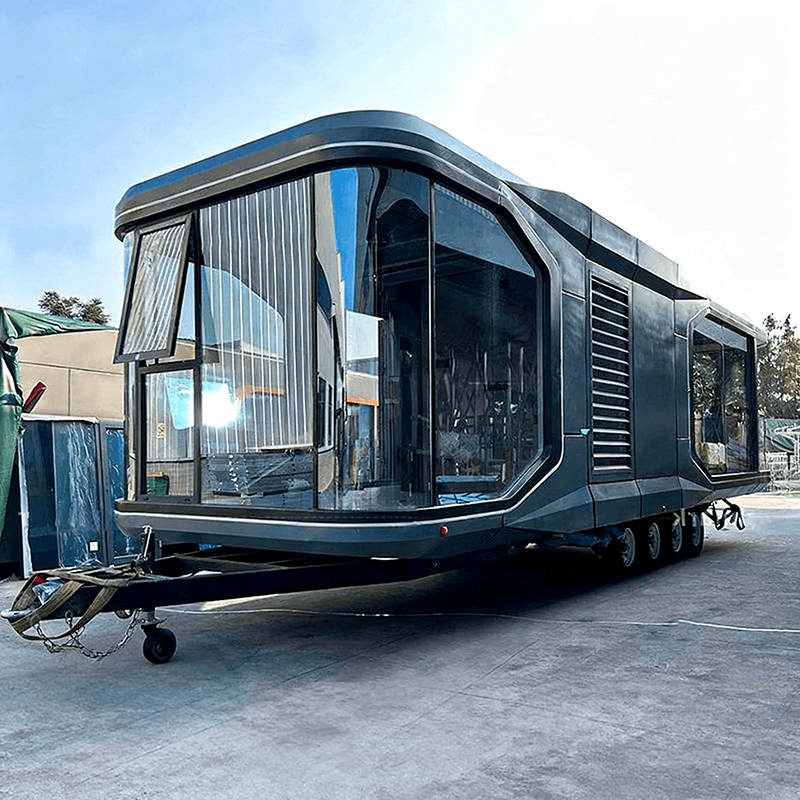
Container house exterior panels typically use galvanized steel sheets, color-coated steel sheets, or composite panels with thermal insulation properties. The specific choice should be made by comprehensively considering climate conditions, usage scenarios, and performance requirements. The following explains material types, performance characteristics, and suitable scenarios:
I. Basic Material Types
Galvanized Steel Sheets
These are made from cold-rolled steel sheets with a galvanized coating on the surface, providing corrosion resistance and wear resistance. They are suitable for dry or moderately humid environments. For example, in the Jining area of Inner Mongolia, where winters are long and there are large temperature differences between day and night, ordinary galvanized sheets are prone to condensation, leading to dew formation on the inner walls of the container. Adjusting the coating formula (such as using high-weather-resistant polyester resin on the outer layer and moisture-proof aluminum foil on the inner layer) can reduce the probability of dew formation.Color-Coated Steel Sheets
These are galvanized steel sheets with an organic coating applied on top, offering both decorative and weather-resistant properties. Common colors include white and gray. Their main advantages are low cost and ease of processing, but attention should be paid to the impact of coating quality on service life. For example, some suppliers use PVC-laminated steel sheets as the inner layer material, which can effectively reduce heat radiation and improve indoor temperature stability.Composite Panels
These use rock wool, polyurethane, etc., as the core material, with metal panels (such as galvanized sheets or aluminum sheets) on both sides, forming a three-layer structure of "metal-insulation-metal". These panels have excellent thermal insulation properties. For example, an 80-100 mm thick rock wool sandwich panel can meet insulation requirements in environments as cold as -30°C. At the same time, a moisture-proof layer design blocks cold bridge conduction, making them suitable for severely cold regions in the north.
II. Performance Optimization Directions
Wind and Earthquake Resistance Structure
The exterior panels need to work in conjunction with the steel frame. For example, using 6 mm thick square steel as columns and adding reinforcing ribs at connection nodes can increase the overall compressive strength by about 50%, enabling it to withstand the vertical loads of stacking two or three layers.Air Tightness and Dust Prevention
The gap width between the door frame and the container body should be controlled (≤2 mm), and ethylene propylene diene monomer rubber seals should be used. These seals have better weather resistance than ordinary silicone seals and can have a service life of more than 5 years. CNC bending machines can control the bending angle accuracy of the door frame within ±0.5 degrees, reducing the risk of sand and dust penetration.Modular Interface Design
Pre-embedded pipelines are integrated into the chassis of the container, and quick connectors are used to achieve standardized connections of water and electricity pipelines, avoiding installation errors caused by on-site slotting and improving construction efficiency and reliability.



