
Export Transportation of Container Houses
Export transportation of container houses requires focusing on four core aspects: transportation mode selection, adaptability design, compliance with export standards, and transportation cost control.
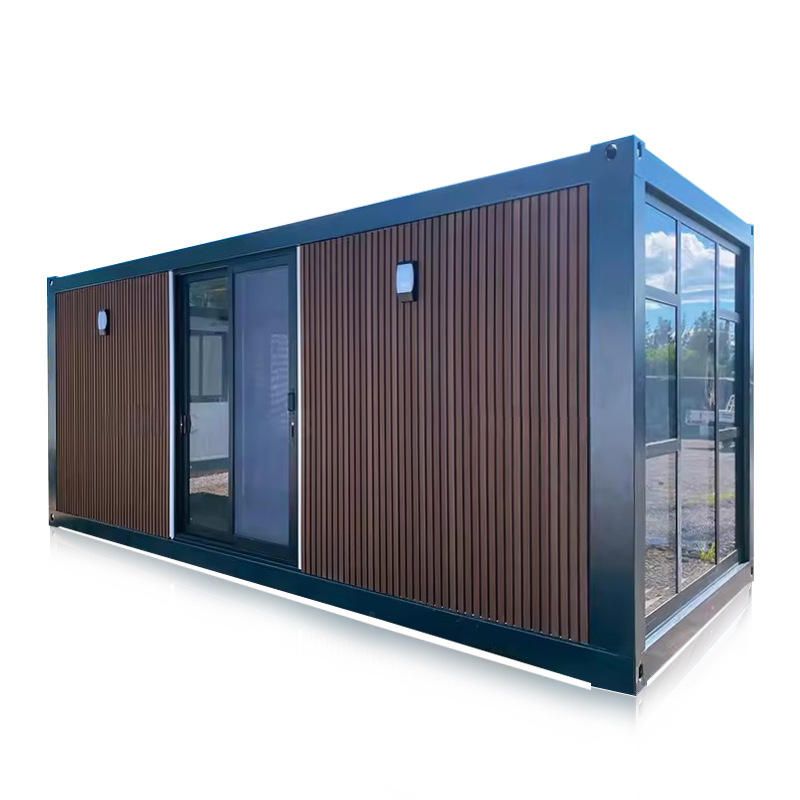
1. Transportation Mode Selection Should Match Project Requirements
There are two main modes for the export transportation of container houses: sea freight and international rail freight. Sea freight is the core method for cross-regional transportation, especially suitable for large-scale, long-distance shipments, such as exports to the five Central Asian countries and Europe. It can achieve 'door-to-door' services through the China-Europe Railway Express or railways in various European countries. International rail freight is suitable for projects with high time requirements, such as exports from Shandong and Xinjiang to the five Central Asian countries and Russian-speaking markets. The 'full container transportation + station-to-station dedicated rail line' model can shorten the transportation cycle.
2. Adaptability Design Should Meet Sea Freight Specifications
Sea freight has clear requirements for the size and structural stability of container houses. Folding container houses have become the mainstream choice due to their three core adaptabilities:
- Size Compliance: After folding, their size fully complies with the loading specifications of standard sea freight containers, eliminating the need for additional custom transportation carriers.
- Structural Stability: They use high-strength light steel frames with anti-corrosion treatment, which can withstand the bumps and salt spray corrosion during sea freight.
- Easy Installation: They can be deployed within one hour after arriving at the destination, without wet operations, and support repeated turnover use. For example, the folding container houses launched by Hebei Qiheng Integrated Housing Co., Ltd. feature a double-wing folding expansion design, which can expand the space by 2-3 times. The entire house is pre-installed with water, electricity, and sanitary facilities, making it ready for use upon arrival.
3. Export Standards Should Comply with Target Market Requirements
Different countries have varying standards for the structure, materials, and safety performance of imported container houses. For example, exports to the United States must comply with local building codes, including fire resistance, earthquake resistance, and corrosion resistance requirements. Exports to Europe require CE certification to ensure material environmental friendliness and structural safety. Enterprises need to complete structural deepening, component numbering, and packaging during the production stage to ensure that materials can be directly installed upon arrival overseas.
4. Transportation Cost Control Should Optimize Loading and Turnover
Traditional fixed-structure container houses have low space utilization and limited cargo capacity per container, resulting in high overall transportation costs. Folding container houses, through their folding design, can increase the cargo capacity per vehicle or container by 30%-50%, significantly saving on land and sea freight costs. Additionally, their support for horizontal splicing and multi-layer stacking allows for flexible combination into functional spaces such as office areas and dormitory areas, further reducing on-site construction costs.



