
Container House Export Logistics
Container house export logistics involves multiple stages, including production, transportation, customs clearance, and on-site assembly. Achieving a balance between cost and efficiency requires modular design, standardized transportation, and efficient customs clearance.
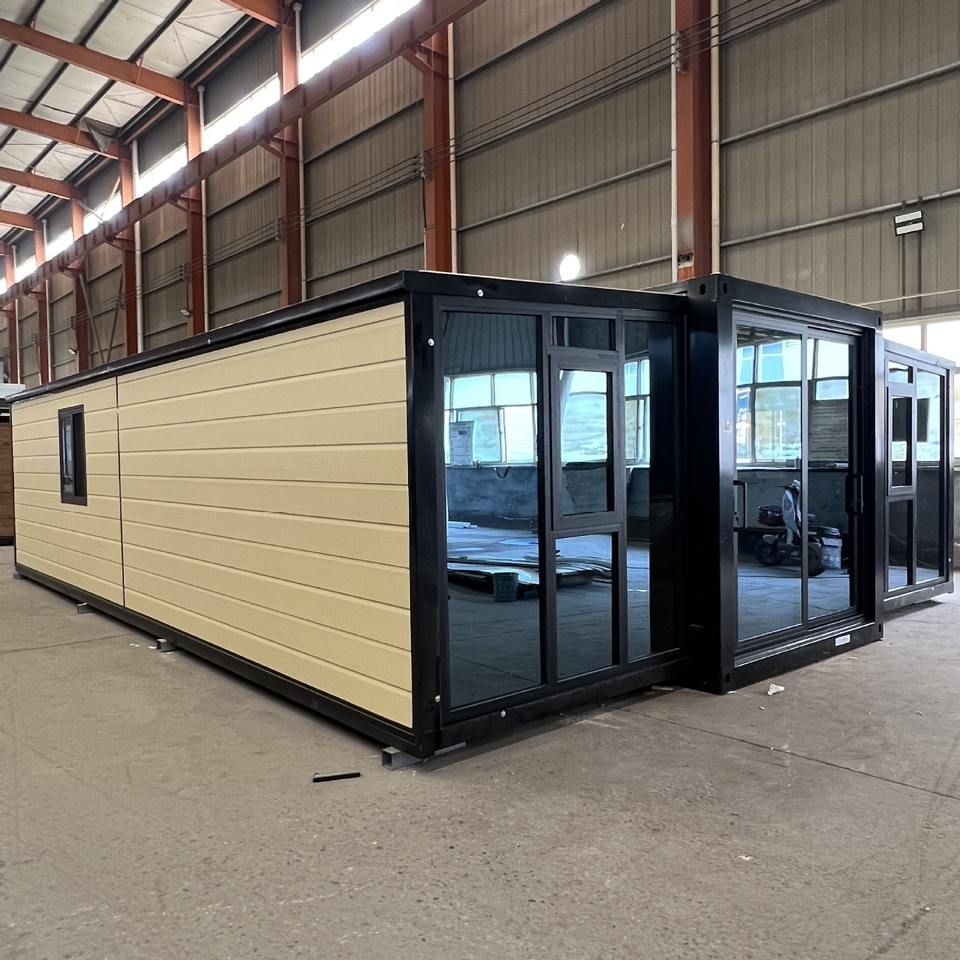
1. Production and Modular Design
Container houses are constructed using a modular approach, breaking down the entire building into independent functional modules (such as rooms, bathrooms, kitchens, etc.). These modules undergo steel structure welding, wall installation, pipeline embedding, decoration, and furniture integration within the factory. For example, the modules produced by China Construction Integration Architecture for an Australian project integrated water and electricity, soft furnishings, and even included steel structure roof truss components. Upon arrival at the site, they only required water and electricity connections for immediate occupancy. This approach reduces the construction period by over 50% compared to traditional methods and allows for repeated disassembly and relocation, minimizing construction waste and pollution.
2. Transportation and Packaging
Modular houses are typically transported using standard shipping containers, with foldable or expandable containers being the mainstream choice. The folded dimensions must comply with international shipping standards (such as 20-foot and 40-foot containers) to reduce transportation costs. For instance, the 20-foot double-wing expandable containers produced by Yashun Light Steel for a Chilean project have an indoor area of approximately 36 square meters when folded. During transportation, four sets of products are loaded into two 40-foot containers, balancing efficiency and space utilization. Ensuring structural stability during transportation is crucial to withstand maritime turbulence and salt spray corrosion, with some products adopting high-strength light steel frames and anti-corrosion treatments.
3. Customs Clearance and Logistics Support
Export logistics rely on efficient customs clearance and port coordination. For example, Changshu Customs provided tailored services for Yazhi Modular Architecture's project exporting to the Maldives, including policy explanations, paperless declarations, and priority berth arrangements, achieving "report, inspect, and release on demand" to ensure rapid customs clearance of 531 modules (totaling 2007.2 tons). Additionally, the "Shenzhen R&D + Shenshan Manufacturing + Direct Port Dispatch" model further reduces logistics losses and time costs by shortening transit distances (e.g., the China Construction Green Industrial Park is only 20 kilometers from Xiaomo Port).
4. On-Site Assembly and Delivery
Upon arrival at the destination, modules require rapid assembly and commissioning. For example, the 63 modular elderly care apartment modules purchased by a British client were hoisted on-site within two weeks of departure from the Chinese factory. The hotel project by China Construction Science and Engineering in Papua New Guinea shortened the overall delivery cycle from the traditional 14-18 months to 7 months. On-site assembly typically requires no wet work, only connecting water and electricity and the steel structure roof truss. The number of permanent personnel is reduced by over 50% compared to traditional construction, significantly lowering labor costs.



