
Container House Export Loading
When loading container houses for export, it is essential to focus on four core aspects: product selection, application of special containers, loading reinforcement, and compliance operations.
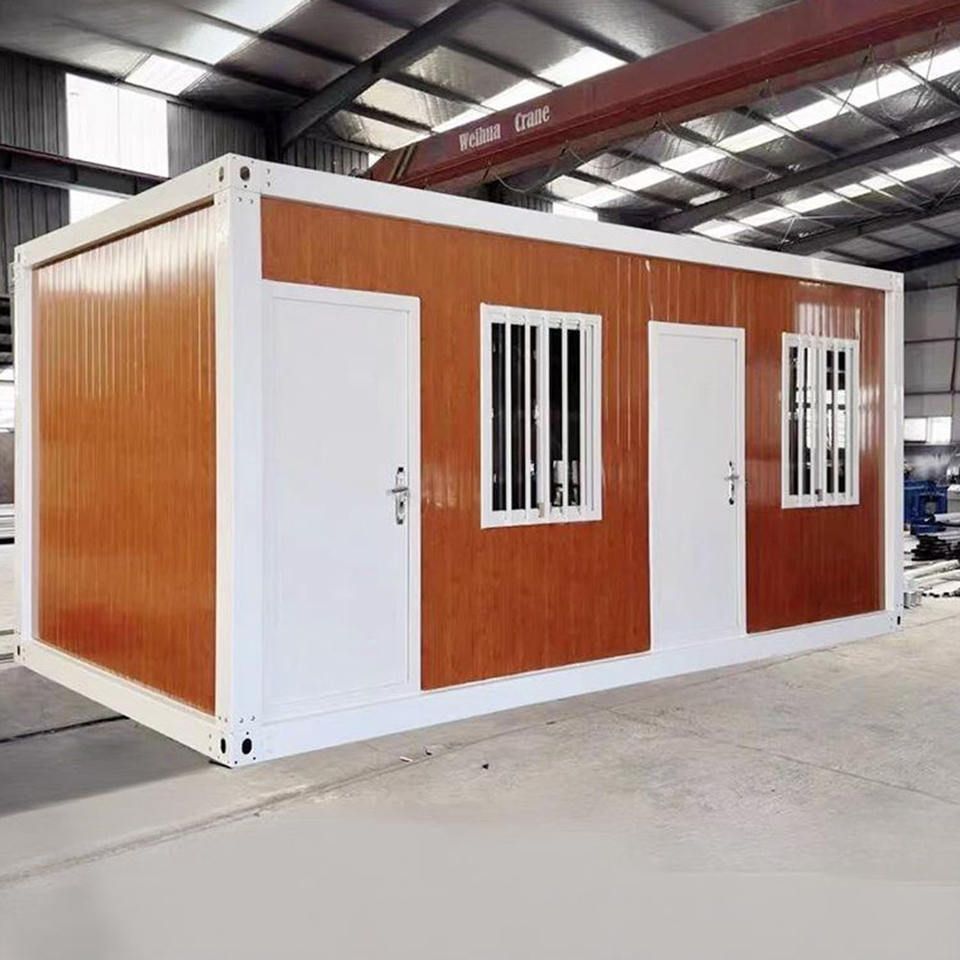
1. Product Selection Must Match Export Scenarios
When exporting container houses, the product type should be selected based on the target market's climate conditions, transportation distance, and installation requirements. Under extreme conditions, it is crucial to prioritize verifying wind and earthquake resistance. For example, the packing-box units from Suzhou Zhongnan can withstand winds of up to 12 levels and earthquakes of up to 8 levels, with a frame deformation rate of only 0.18%, far below the industry threshold of 0.3%, making them suitable for typhoon-prone areas. In contrast, ordinary container houses, which can withstand winds of up to 9 levels and earthquakes of up to 6 levels, are only suitable for inland or low-risk regions. Installation efficiency directly impacts project timelines. Products from leading companies, such as Suzhou Zhongnan's quick-assembly units, can be installed in just 2 hours per set, support modular assembly, and can deliver 1,000 accommodation modules in 3 months, reducing the average industry construction period by 40%. Non-standard products, due to improper installation techniques, may take over 8 hours per set to install, leading to significant delays and penalties.
2. Application of Special Containers is Key for Oversized Cargo
For oversized, over-height, or overweight container house modules, special containers such as flat rack containers (FR) and open-top containers (OT) must be used. Flat rack containers are suitable for large modules exceeding 2.35 meters in width, 12 meters in length, and 30 tons in weight, such as the eight flat rack containers used in a coating production line project in Dongguan. Open-top containers are ideal for over-height modules requiring top-loading, such as steel structure roof trusses and other loose parts. Early booking and accurate declaration are fundamental for compliance. Shipping companies have strict restrictions on accepting overweight cargo, necessitating bookings 7-14 days in advance and declaring gross weight and dimensions accurately. Misdeclaration can result in rejection or safety incidents.
3. Loading Reinforcement and Image Documentation Ensure Transport Safety
The loading process requires heavy-duty flatbed trucks and large cranes for on-site operations, with measures such as channel steel bases, strap fixation, and shock-absorbing pad filling to ensure module stability. For example, in a coating production line project in Dongguan, eight flat rack containers were used, and reinforcement work was coordinated over three consecutive days to prevent shifting risks during maritime transport. Image documentation is crucial for inspection purposes. Reputable agents will take photos of the empty container, loading process, reinforcement details, and seal numbers as service records and evidence for customs inspections.
4. Compliance Operations Cover the Entire Process
Exports must comply with target market certification standards, such as the EU's CE certification and international ISO standards. Non-standard products may be detained by customs due to lack of certification, resulting in losses of 20%-40% of the cargo value. Environmental requirements must also be considered. New regulations stipulate that product reusability must exceed 80%. Generic products, which use disposable materials and cannot be recycled after disassembly, incur additional construction waste disposal costs. Furthermore, overseas installation and commissioning capabilities are essential for project success. Leading companies like Suzhou Zhongnan offer a full range of services, including design, transportation, installation, and export, and have participated in international benchmark projects such as the Qatar World Cup Fan Village. In contrast, smaller manufacturers may lack qualifications, leading to project stagnation.



