
Back to blog
Article
Container House Encyclopedia Diagram
Admin September 17, 2026
Container houses are habitable or office buildings that are transformed from containers as the basic structural modules. They are characterized by mobility, rapid assembly, and strong durability, and are widely used in residential, office, and commercial fields.
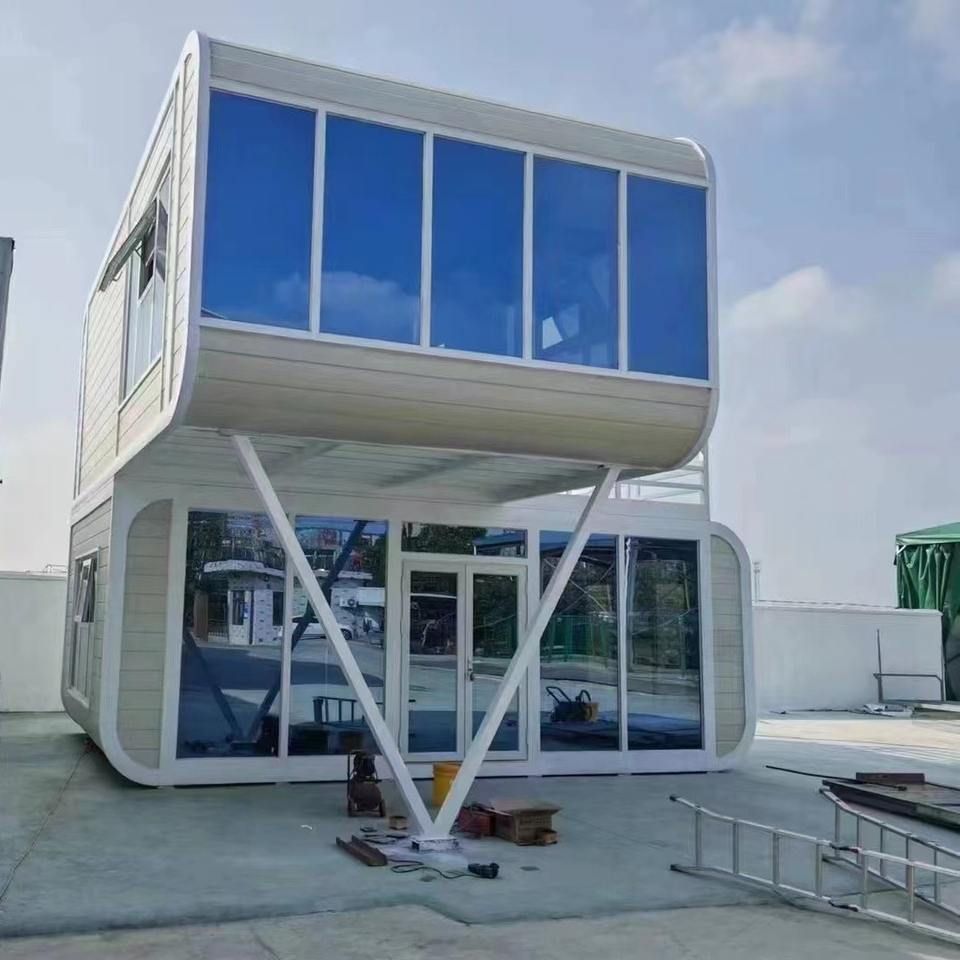
Types and Service Life
Container houses mainly fall into three categories: Customized container houses are transformed from brand-new shipping containers and can be used for 25 - 30 years with regular maintenance; Mobile-board-house-style container houses are cost-effective with a designed service life of 5 - 8 years; Large-wave container houses have a service life of 7 - 10 years, and their lifespan can be extended if thicker corrugated sandwich panels are used and regular inspections are carried out.
Core Features
- Structure and Safety: They adopt a steel-frame structure, providing wind and earthquake resistance. The steel plate outer walls are corrosion-resistant and acid-resistant, without rusting or cracking. Some types can have a service life of up to 50 years.
- Functionality and Economy: The air-break thermal design improves sound and heat insulation. They are low-cost and can be stacked up to 7 layers, saving space. The manufacturing period is short, and no foundation is required, making them suitable for rapid deployment.
- Aesthetics and Flexibility: The outer walls come in a variety of colors and support personalized design. They are mobile and reusable, adapting to different scenarios.
Application Scenarios
- Residential Field: This includes temporary housing, creative spaces, and post-disaster emergency buildings, such as the container school quickly built by CIMC after the Wenchuan earthquake.
- Office and Commercial: Temporary office spaces, construction site offices, modular hotels, and commercial streets, etc., such as the world's first recyclable container hotel.
- Emergency and Tourism: Emergency medical facilities are widely used due to their rapid deployment characteristics. In tourist attractions, container homestays have become characteristic landscapes, such as the Asian Games Village in Nagoya, Japan, and the homestay scenic spot in Zaozhuang, Shandong, China.
Technology and Development
- Energy Optimization: A combination of "solar heating + air-source heat pump" is adopted, and new photovoltaic-thermal panels and underfloor heating systems are introduced to enhance environmental performance.
- Intelligent Management: Through technological optimization, the intelligent upgrading of thermal insulation performance and energy supply systems is achieved.
- Industry Standards: China initiated the compilation of the "Technical Specification for Container Modular Combined Houses" in 2010 to promote standardized development. American architect Peter DeMaria designed the first nationally certified two-story container house in 2006, marking the maturity of the technology.



