
Back to blog
Article
Container House Eaves Beautification Images
Admin September 16, 2026
Currently, we cannot directly provide images of container house eaves beautification, but we can describe common beautification designs and styles through text, along with practical examples to illustrate the decorative role and effects of eaves in container architecture.
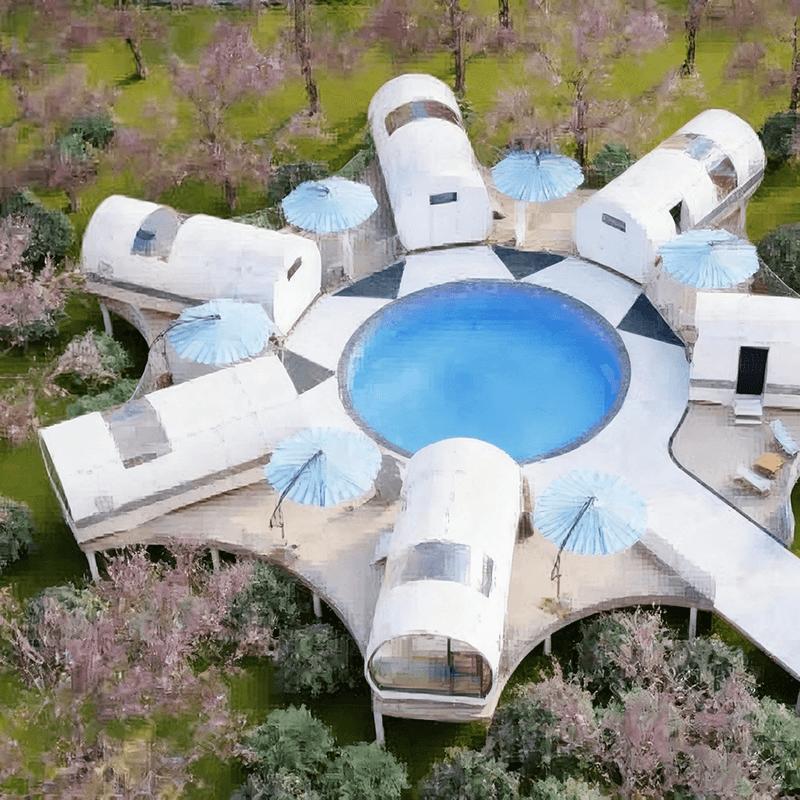
Eaves Beautification Design Types
The beautification design of container house eaves typically revolves around material substitution, shape innovation, and color coordination to weaken the industrial feel and enhance the integration of the building with its environment. Common designs include:
- Wooden Eaves: Using anti-corrosive wood or wood-like materials, sloped or curved designs create a natural ambiance. For example, a container project in Hefei features a thatched eave paired with wooden grilles, creating a traditional tea-drinking space's charm; a rural container house in Jiangsu extends its eave with a wooden deck at the entrance, providing both wind and rain protection and adding a rustic feel.
- Metal Eaves: Retaining the original metal texture of the container, geometric shapes are formed through cutting and welding. For instance, the "Quartz Cottage" in Cornwall, UK, uses exposed corrugated steel for its eaves, paired with a blue exterior, highlighting the combination of industrial and modern styles.
- Composite Material Eaves: Combining transparent materials like glass and acrylic enhances lighting and transparency. For example, a container project by the seaside in Xiamen adopts white metal eaves with locally embedded glass, echoing the seascape.
Eaves Beautification Styles and Functions
- Traditional Style: Eave shapes and decorative elements echo regional cultures. For example, a container house in a Beijing hutong adopts gray-tiled brick walls and wooden eaves, mimicking the style of a traditional courtyard house; a project in a Shanghai alley incorporates vintage steel windows and mosaic-tiled eaves, blending into the local Hai-pai culture.
- Modern Minimalist Style: Emphasizing clean lines and a single material, functionality is key. For example, a container residence in Denmark forms a patio by extending the eave, using curtains to enclose the space, providing both shade and openness.
- Eco-Natural Style: Utilizing eaves to guide rainwater collection or plant greenery. For example, an eco-cottage in South Africa sets up gutters on its eaves to direct rainwater into an underground storage system; some projects hang flower baskets from their eaves, creating vertical greenery.
Practical Case References
- Hefei Container Space: Supported by a steel structure with a Chinese-style horsehead wall design, glass is拼接 (spliced) with containers, and the eave adopts the flying eave design of Hui-style architecture, achieving a collision of vintage and modern styles.
- Jiangsu Rural Container House: The eave extends into a wooden deck patio, paired with a highly transparent glass door, forming a layered entrance space while preventing wind and rain from entering the interior.
- Chile's "Caterpillar House": Containers are arranged along a mountain slope, with the eave designed as an ascending line, integrating with the geological structure, and enhancing natural ventilation through skylights, reducing the use of cooling equipment.



