
Container House Drainage
The drainage of container houses is mainly achieved through reasonable terrain design, excavation of drainage ditches, installation of canopies, and built-in drainage systems. The specific drainage measures and key points are as follows:
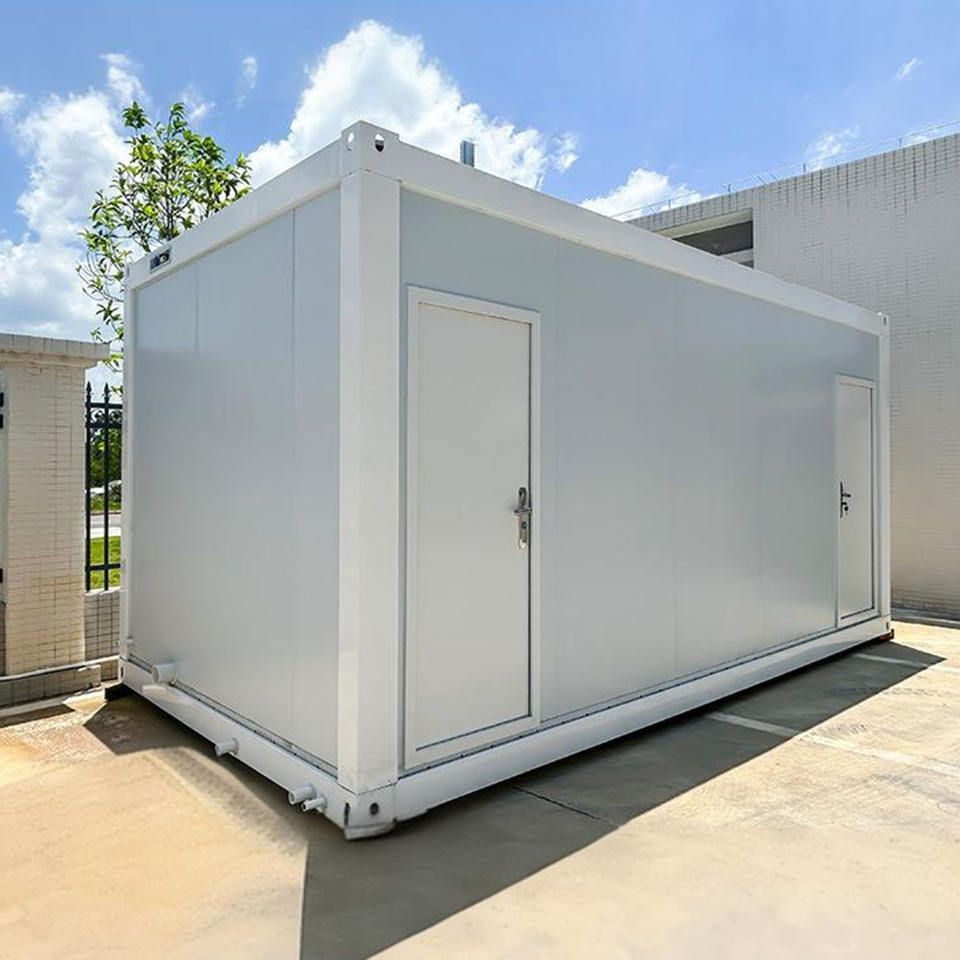
1. Terrain and Drainage Ditch Design
When installing a container house, the ground terrain should be higher than the surrounding area to prevent rainwater from flowing back. Excavating drainage ditches around the container can effectively guide rainwater to designated areas and prevent water accumulation. For example, Shanghai Yaotuo Container Supply Company emphasizes that the ground terrain for container house installation should be higher than the surrounding area and should be coordinated with drainage ditch design to ensure smooth drainage during the rainy season.
2. Roof Canopy Design
During the summer rainy season, a gable-shaped canopy should be installed on the roof of the container to facilitate rapid drainage of rainwater. The design of the canopy should consider the slope to ensure that rainwater can flow down in the designated direction and prevent water accumulation and leakage. For example, Shanghai Yaotuo Container Supply Company points out that installing a canopy on the roof is an important measure for container house drainage.
3. Built-in Drainage System
Some container houses adopt built-in drainage systems, which use top-to-bottom integral welding structures combined with built-in gutters to effectively guide and drain accumulated water. For example, the packing-box units developed by Nanjing Changyou Zhizao have solved the problem of traditional assembled containers being prone to leakage through built-in drainage system design, ensuring dry interiors on rainy days.
4. Gutter and Outlet Design
The gutters of container houses should be designed with a horizontal slope, and the outlets should be reasonably arranged to prevent water accumulation. At the same time, the anti-corrosion treatment of the gutters should be adequate to prevent rust erosion or debris from blocking the outlets. For example, among the common causes of water leakage in container houses, a lack of horizontal slope in the gutters or unreasonable outlet design can lead to the inability of accumulated water to drain, resulting in water leakage or backflow.
5. Waterproof Materials and Construction
The waterproof materials used in container houses should be qualified, and the construction should be standardized. For example, if the waterproof materials selected during the construction of mobile houses are unqualified or the waterproof treatment is unreasonable, it can lead to aging and water leakage of the container mobile houses. Therefore, it is necessary to select high-quality waterproof materials and carry out waterproof treatment in strict accordance with construction specifications.



