Back to blog
Article
Container House Distribution Plan
Admin September 14, 2026
The container house distribution plan needs to be designed by integrating the entire processes of production, logistics, installation, and after-sales service, with a focus on ensuring structural safety, delivery efficiency, and cost control.

1. Production Phase: Combining Standardization and Customization
- Modular Design
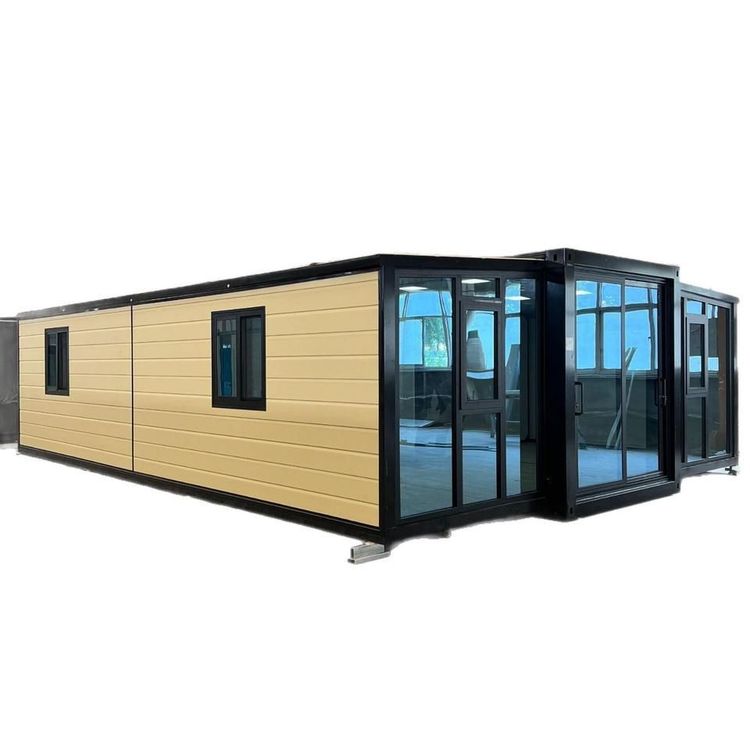
Prioritize manufacturers with modular production capabilities, such as Shandong Huizhiheng and Wuhan Jinxiang. Their products support independent use of a single container or combined expansion of multiple containers, suitable for scenarios like construction site dormitories, offices, and warehouses. Modular design can shorten on-site construction periods and reduce dependence on site conditions. - Materials and Workmanship
Core components should use national standard steel (e.g., main beam thickness ≥ 3mm), with full and solid welding without cold welds. The container body should be galvanized or coated with anti-corrosion treatment as a whole. For example, Qingdao Xinwanda ensures structural safety through full-chain quality inspections, and products from Weifang companies can withstand winds of levels 8-10 and earthquakes of magnitude 8, meeting extreme environmental requirements. - Functional Adaptability
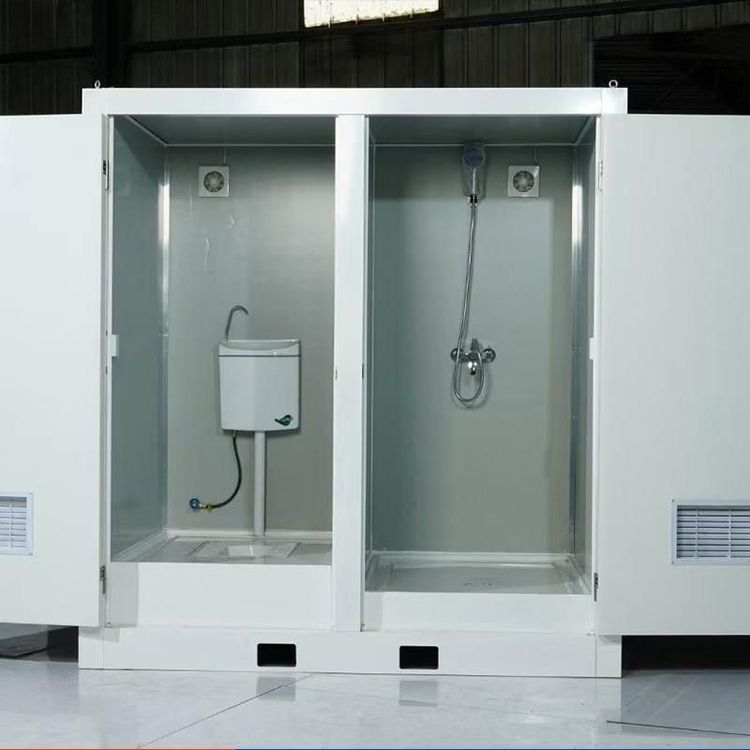
Select additional functions based on usage scenarios:- Construction site scenarios: Enhance fire resistance (rock wool sandwich panels) and thermal insulation performance;
- Cultural and tourism scenarios: Increase sound insulation (thermal-break aluminum doors and windows) and customize door and window layouts;
- Emergency scenarios: Ensure rapid deployment (foldable models can be installed in 15 minutes).
2. Logistics and Distribution: Nationwide Coverage and Professional Transportation
- Distribution Scope and Efficiency
Choose manufacturers with nationwide distribution capabilities (e.g., FST8, Hunan Yaheng Tengfei), and prioritize local suppliers to shorten transportation cycles. For example, selecting Wuhan Jinxiang for a project in Hubei can reduce cross-regional logistics costs, and Qingdao Xinwanda reduces on-site construction time through factory prefabrication. - Transportation Safety Guarantee
Professional transportation teams should be equipped with damage prevention measures, such as fixed brackets and scratch-resistant packaging, to avoid deformation or coating damage during transportation. Some manufacturers offer real-time logistics tracking to ensure controllable delivery timelines.
3. Installation and After-sales Service: Rapid Response and Full-cycle Maintenance
- Installation Support
Manufacturers should provide detailed installation drawings or send personnel for on-site guidance to ensure that foundation treatment and lifting positioning comply with specifications. For example, a company in Weifang can achieve full-process delivery in 7 days, and Qingdao Xinwanda shortens construction periods through modular assembly. - After-sales Maintenance
Clarify warranty terms (e.g., 5-year warranty for the main structure) and emergency response times (e.g., on-site arrival within 24 hours), and prioritize manufacturers with high repurchase rates and authentic case studies (e.g., Anhui Huijiang, Hunan Yaheng Tengfei).
4. Cost Control: Full Lifecycle Accounting
- Price Transparency
Avoid low-price traps and comprehensively account for material costs (e.g., weight of color-coated steel sheets, density of rock wool), transportation costs, and post-maintenance amortization. For example, low-bid projects may use non-standard steel, leading to increased costs from rust and leakage in the later stages. - Rental Flexibility
For short-term needs, choose rental models (e.g., local suppliers on 58.com), supporting daily and monthly rentals to reduce idle costs; for long-term projects, purchasing is recommended to lower unit usage costs.