
Container House Design for Export
When designing container houses for export, it is essential to focus on three key aspects: modular design, transportation adaptability, and alignment with regional demands and compliance requirements.
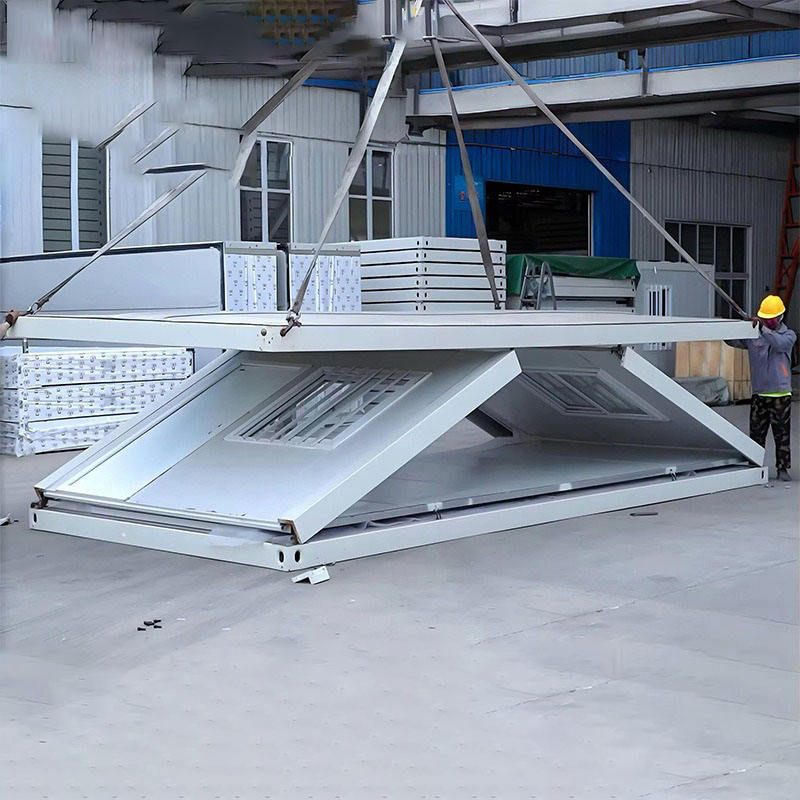
Modular Design as the Foundation: Using ISO-compliant containers as units, typically measuring 6 meters in length, 2.4 meters in width, and 2.6 meters in height. Embed steel structural frames within the containers, install thermal insulation layers, and reserve water and electricity interfaces. A single container can independently serve as an office, dormitory, or warehouse. Multiple containers can be quickly assembled into two-story or even three-story buildings through bolt connections or welding, meeting varying scale requirements. For instance, in an African mining project, 12 containers were assembled into a temporary camp within 72 hours, significantly shortening the construction period. This design allows for 90% of the interior finishing to be completed in the factory, with only water and electricity connections needed on-site, minimizing on-site construction pollution and making it suitable for regions with strict environmental regulations. Moreover, the modular structure allows for flexible adjustment of the number of containers based on demand, enabling efficient resource reuse.
Transportation Adaptability as the Key: In terms of materials and structure, containers are manufactured using high-strength steel (such as Q345B), capable of withstanding long-distance sea transportation vibrations, salt spray corrosion, and stacking pressure (typically stackable up to 4-6 layers). The surface is treated with anti-rust coatings and covered with weather-resistant paint to adapt to extreme climates. For example, in the Antarctic research station project, containers were equipped with additional internal insulation layers and double-glazed windows to withstand extreme cold. Regarding transportation efficiency, a single 40-foot container can accommodate two standard packing-box units, and container ships can carry hundreds of containers, reducing unit transportation costs. Container designs comply with International Union of Railways (UIC) standards, enabling rapid delivery to inland areas via land routes such as the China-Europe Railway Express, avoiding port congestion associated with sea transportation. The logistics costs for transnational projects using packing-box units are 30%-50% lower than those using traditional building materials.
Alignment with Regional Demands and Compliance Requirements as the Guarantee: The Middle East, Africa, and Southeast Asia regions frequently inquire about packing-box units, foldable containers, and emergency shelter quick-assembly container houses for engineering camps, focusing on weather resistance, delivery cycles, and export certifications. The European and American markets prefer customized products, emphasizing additional features such as environmental friendliness and intelligence, while pursuing design aesthetics and practicality. In South America, inquiries primarily revolve around container houses for mining camps, with a focus on performance in high-altitude cold resistance and earthquake resistance.



