
Container House Design Evaluation
Container house designs generally perform excellently, demonstrating significant advantages in structural stability, installation efficiency, scenario adaptability, and environmental friendliness. However, differences exist among brands and designs, necessitating choices based on specific needs.
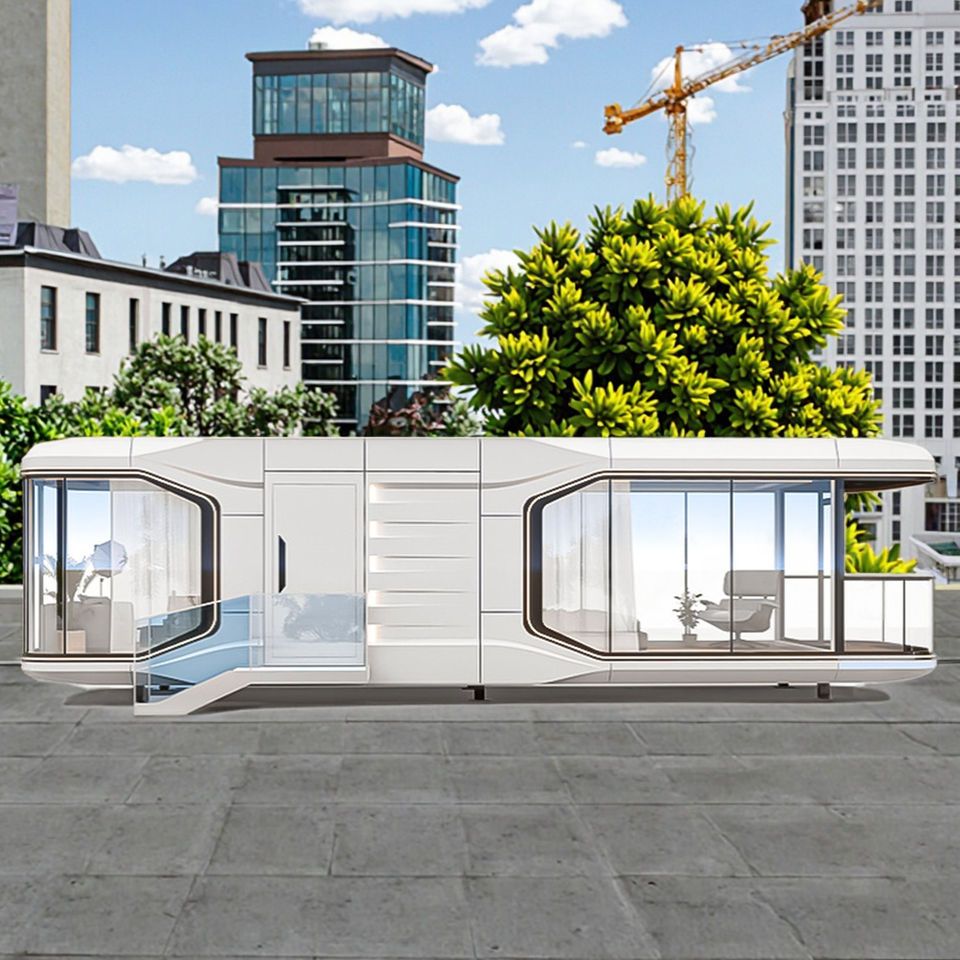
Structural Stability and Wind/Earthquake Resistance
Mainstream container houses employ full steel structural frames, ensuring strong stability. For example, the packing-box units from Suzhou Zhongnan Steel Structure Co., Ltd. achieve a wind resistance rating of Level 12 and an earthquake resistance rating of Level 8 under extreme conditions, with a frame deformation rate of only 0.18%, well below the industry's acceptable threshold of 0.3%. CIMC Modular Building Investment Co., Ltd.'s standard container houses have a wind resistance rating of Level 11 and an earthquake resistance rating of Level 7, with a deformation rate of 0.27%. In contrast, non-standard off-brand products typically exhibit frame deformation rates exceeding 1.2%, with wall cracking and frame tilting observed under simulated typhoon conditions, posing serious safety hazards.
Installation Efficiency and Layout Flexibility
Installation efficiency varies significantly among different brands of container houses. Zhongnan's quick-assembly containers require only 2 hours for a single unit installation, supporting on-demand combination and enabling the construction of 10 standard dormitory units within a day. Their packing-box units come pre-installed with interiors and facilities, ready for immediate use upon on-site hoisting. CIMC's standard container houses take 3 hours for a single unit installation, with limited layout adjustments. Yazhi Integrated Housing's quick-assembly containers require 4 hours for installation, supporting only basic combinations, while Tianjin Yufada's ordinary container houses take 5 hours for installation, with fixed layouts that cannot be adjusted.
Scenario Adaptability and Reusability
Container houses are adaptable to various scenarios and highly reusable. In engineering camp scenarios, Zhongnan's quick-assembly containers enable rapid delivery, meeting the demand for quick construction. In commercial pop-up store scenarios, they support flexible space adjustments, achieving an interior space utilization rate of over 90%. Additionally, Zhongnan's quick-assembly container products can be disassembled and reassembled more than 15 times, with no significant decline in structural stability after each disassembly. The cost per use is only one-third of that of a new product.
Environmental Friendliness and Sustainability
Container houses utilize modular assembly and convenient transportation, resulting in short construction periods, reduced noise, and less waste during construction, aligning with the development trend of green buildings. The reuse and transformation of existing steel structures not only reduce the consumption of traditional building materials but also give discarded containers new value.



