Container House Decoration Tutorial
The decoration of container houses requires a combination of spatial planning, functional design, and safety and environmental protection. Here are the key steps and points:

I. Preliminary Planning and Basic Renovation
Container Selection and Structural Reinforcement
Choose standard-sized (e.g., 20-foot or 40-foot) or custom containers based on needs, prioritizing the integrity of the container body to ensure no rust or deformation. If multiple containers need to be joined, they should be fixed by welding or bolts, and additional horizontal support beams should be added to enhance stability.Spatial Layout Design
- Open Design: Use foldable furniture (e.g., sofa beds, folding tables) to enhance space flexibility. For example, a 15㎡ container can achieve a 'bedroom-living room' function switch through a custom foldable bed.
- Zoning Optimization: Use lightweight partitions or furniture to divide functional areas, such as an integrated kitchen and dining area, and a bedroom combined with a storage area featuring built-in cabinets.
- Vertical Utilization: Install overhead cabinets or wall-mounted shelves to increase storage space, such as setting up curved storage compartments at the top of the bedroom.
Basic Environmental Renovation
- Moisture-Proofing: The container bottom should be elevated (e.g., on pile foundations) to avoid direct contact with the ground, and a moisture-proof layer should be added to the interior walls.
- Ventilation and Lighting: Add roof skylights, large floor-to-ceiling windows, or glass curtain walls to improve lighting; install exhaust fans or fresh air systems to ensure air circulation.
II. Interior Decoration and Functional Realization
Thermal Insulation
- Wall Treatment: Install polyurethane foam boards or rock wool insulation layers inside, and cover with gypsum boards or wood panels on the outside. In winter, they can be paired with underfloor heating or stoves (wrapped in fireproof materials).
- Door and Window Selection: Use double-glazed or triple-glazed windows to improve thermal insulation performance, such as a container home in the forest achieving warmth in winter and coolness in summer through triple-glazed windows.
Water and Electricity System Design
- Circuit Layout: Pre-bury wire conduits, install sufficient sockets (including USB ports), and install solar panels on the roof for power supply, such as one case meeting daily electricity needs through three solar panels.
- Water Supply and Drainage System: If conditions permit, connect to municipal water supply; in remote areas, design rainwater collection systems or water storage tanks, and use water-saving toilets and wall-mounted sinks in bathrooms.
Decoration Style and Materials
- Style Selection: Mainly adopt minimalist or industrial styles, paired with natural colors such as wood and white, such as spraying black paint on the exterior and using wood furniture inside.
- Material Safety: Choose environmentally friendly paints and fireproof panels (e.g., for kitchen cabinets), and avoid using flammable materials.
III. Exterior Beautification and Safety Maintenance
Exterior Facade Renovation
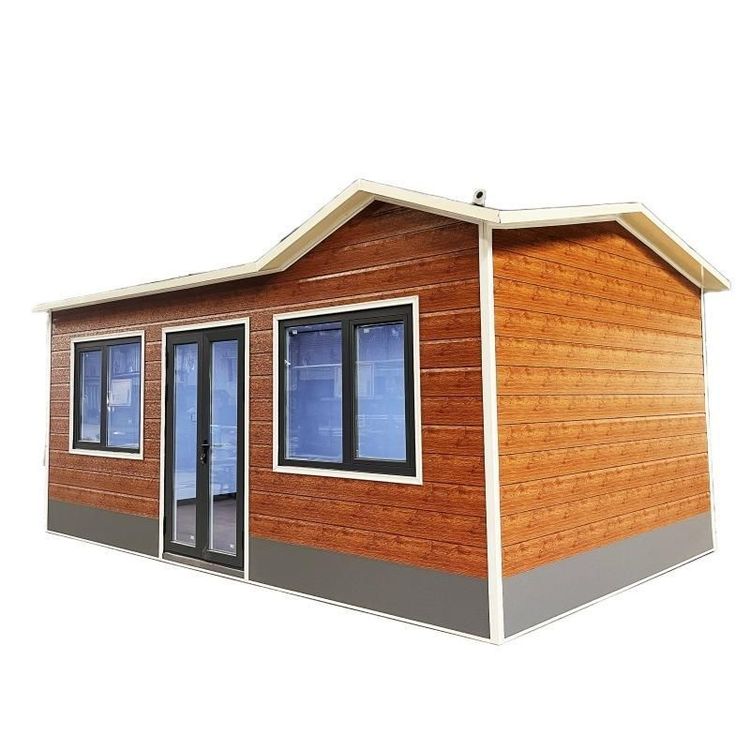
Conceal the industrial feel of the container through spray painting, wood veneers, or glass curtain walls, such as one case painting the exterior wall dark green and pairing it with a wood door frame.Safety Measures
- Fire Prevention: Use fireproof panels around the kitchen and stove, and equip with fire extinguishers.
- Rust Prevention Maintenance: Regularly inspect the container body welds and corners, and apply anti-rust paint (reapply every 3-5 years in coastal areas).
- Structural Safety: Avoid overloading items, and regularly check the tightness of bolts at the joints.
IV. Cost and Approval Considerations
- Budget Control: Basic renovations (including thermal insulation and water and electricity) account for about 60% of the total cost, and furniture and decorations account for 40%. For example, the total cost of a 15㎡ container can be controlled within 110,000 yuan.
- Compliance: Rural homesteads need to apply for building permits, and leased land only allows temporary buildings to avoid the risk of illegal construction.