
Essentials for Decorating Container Houses
When decorating container houses, you can refer to the following practical items and designs that balance functionality and aesthetics:
1. Thermal Insulation Materials
Container metal boxes have high thermal conductivity, so it is necessary to fill thermal insulation cotton (such as rock wool or glass wool) in the gaps of the wooden keel frame. These materials can effectively block heat transfer, keeping the interior warm in winter and cool in summer, while also reducing interference from external noise and enhancing living comfort.
2. Solid Wood Panels
Using solid wood panels (such as pine or oak) to cover the floors, walls, and ceilings can neutralize the cold and hard feel of the metal box, creating a warm and natural home atmosphere. The natural texture of the wood also adds a sense of spatial hierarchy, suitable for users pursuing a natural style.
3. Foldable Furniture
The interior space of a container is limited. Foldable tables and chairs, custom-made foldable beds, and other furniture can flexibly switch between different usage scenarios. For example, the bed can be folded up during the day to serve as a living room and unfolded at night for rest, significantly improving space utilization.
4. Multi-functional Storage Design
- Background Wall Storage: Combine closed cabinets with open shelves to meet the needs of categorizing and storing items such as clothing and books.
- Bedside Storage: Utilize the space beside the bed to design open shelves for conveniently placing small items like mobile phones and lamps.
- Built-in Shelves on Container Doors: Install removable shelves inside the door body to increase storage space without occupying indoor area.
5. Transparent Sliding Doors
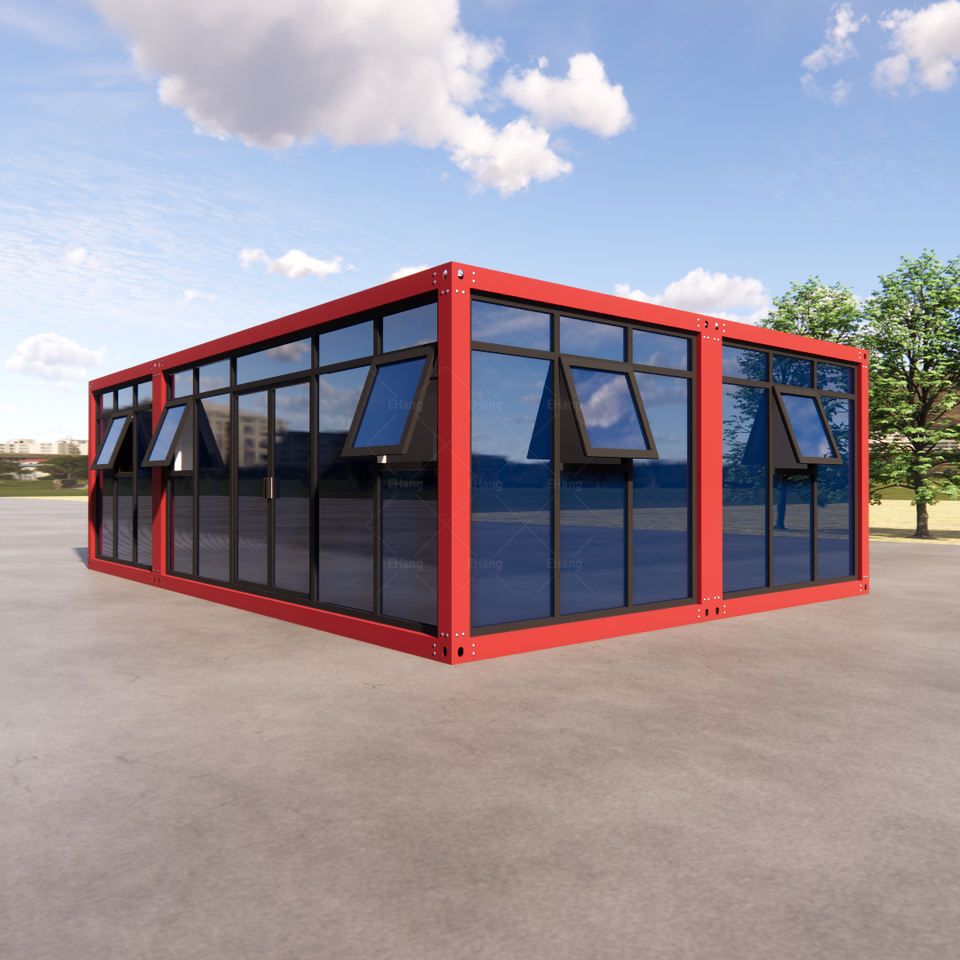
Installing floor-to-ceiling glass sliding doors can enhance indoor lighting while maintaining a sense of spatial openness. This is especially suitable for the living room or balcony area of container houses, blurring the boundaries between indoors and outdoors and enhancing visual openness.
6. Metal Mesh + Concrete Exterior
In outdoor environments, metal mesh can protect the iron skin of the container from corrosion, and when paired with a concrete exterior, it creates a rugged industrial-style appearance. This design combines durability with decorative appeal, suitable for creating personalized leisure spaces.
7. Light Steel Keels and OSB Panels
For internal structural construction, it is recommended to use light steel keels paired with OSB (Oriented Strand Board) panels as the base layer. This is convenient for construction and has strong load-bearing capacity. During ceiling construction, foam boards can be filled between the keels to further enhance sound insulation and thermal insulation effects.
8. Torch-applied Waterproof Membranes
The roof needs to be laid with torch-applied waterproof membranes (such as SBS modified asphalt waterproof membranes), which form a continuous waterproof layer by melting the adhesive layer at high temperatures. These materials have strong weather resistance and can effectively cope with rain and snow, extending the service life of the container.
9. Specialized Panels and Steel Frame Structures
For wrapping the outer frame, it is recommended to use anti-corrosion wood or aluminum-plastic panels to enhance durability. For outdoor leisure areas (such as tea-drinking platforms), a steel frame structure paired with anti-corrosion wooden floors can ensure structural stability and ease of maintenance.



