
Container House Dampproof Treatment
Dampproof treatment for container houses requires a comprehensive approach covering material selection, structural design, construction techniques, and routine maintenance:
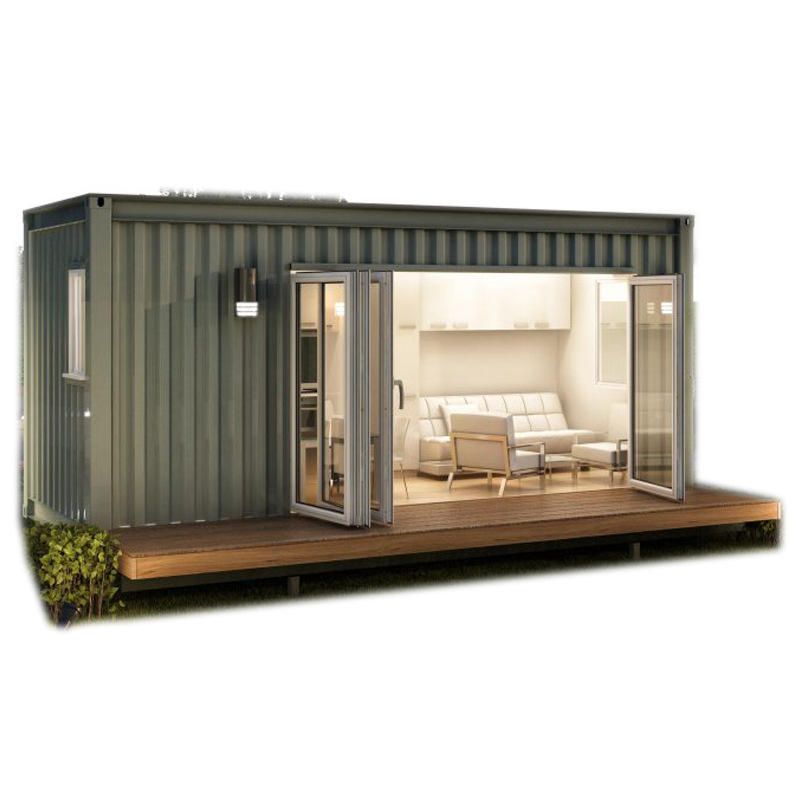
1. Material Selection and Coating Treatment
The main body of a container house is made of steel, so it is essential to prioritize base materials with strong rust-proof and corrosion-resistant properties. During the construction phase, all cut and welded edges should be polished and coated with epoxy primer + topcoat to form dual protection. For humid environments, fluorocarbon-painted color steel plates can be selected as enclosure materials, as their salt spray resistance is three times higher than that of ordinary polyester coatings, effectively blocking moisture penetration. It is recommended to apply anti-mold putty on the inner walls of the container, especially for walls adjacent to the exterior or bathrooms, to inhibit mold growth.
2. Structural Design and Sealing Treatment
When assembling container houses, sealing adhesive should be used to seal areas such as around doors and windows, container body joints, and roof gutters, and it should be replaced regularly (every 5-7 years). During the design phase, the container body should be kept off the ground by using independent foundations or pile foundations to prevent moisture from the ground from entering. For multi-story assembled container houses, ventilation space should be reserved at the bottom level to improve overall ventilation.
3. Construction Techniques and Dampproof Measures
- Waterproof Construction: Following home improvement practices, the wall waterproofing height in container houses should reach 60 cm in kitchens, 180 cm in bathrooms, and 120 cm on balconies. The coating should be applied in two layers, horizontally and vertically, with leak-stopping agents used for pre-treatment at internal corners and pipe roots.
- Application of Desiccants: Calcium chloride-based desiccant strips can be hung on the side walls of the container to reduce internal humidity through their high moisture-absorbing capacity.
- Ventilation System Design: Install roof skylights, glass partitions, or mechanical ventilation equipment to promote air circulation and reduce condensation formation.
4. Routine Maintenance and Inspection
Regularly inspect areas such as welds, wall corners, the bottom, and eaves of the container for rust spots, and immediately polish and repaint them if found. In humid regions, heavy anti-corrosion recoating of the container is required every 7-10 years; this interval can be extended to 8-12 years in inland dry regions. Additionally, avoid stacking moist goods or using moisture-absorbing packaging materials inside the container to reduce moisture introduction at the source.



