
Damp-Proof Course for Container Houses
The design of the damp-proof course for container houses requires comprehensive treatment from multiple aspects, including the ground, walls and roofs, insulation materials, and detailed sealing, to effectively prevent moisture penetration.
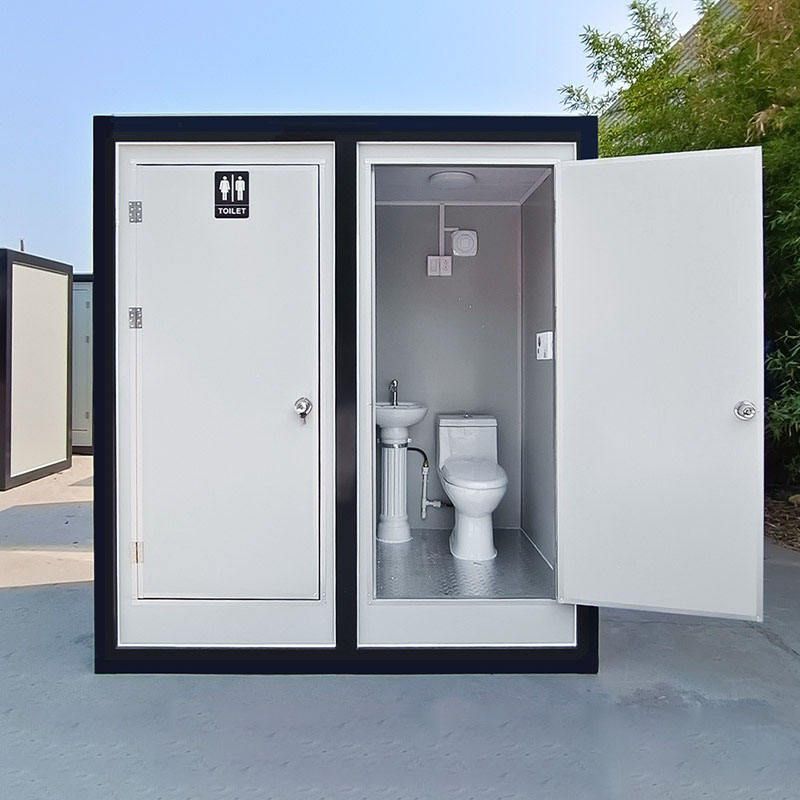
1. Ground Damp-Proof Course Design The ground is one of the main pathways for moisture penetration. A high-quality damp-proof course should be laid above and below the insulation layer (especially below). Professional manufacturers typically choose aluminum foil composite film or polymer waterproofing membranes to form a physical barrier, blocking the upward penetration of underground moisture and water vapor in the air. These materials need to be durable, tear-resistant, and have low water permeability to ensure they do not fail due to foundation settlement or temperature changes during long-term use. Additionally, the ground base should be leveled and compacted to avoid damage to the damp-proof course due to structural voids.
2. Coordinated Design of Wall and Roof Damp-Proofing and Waterproofing Walls should be treated with waterproof coatings or membranes, with special attention given to joints, corners, and other vulnerable areas for leakage, and sealed with sealant or specialized tape. At the same time, ventilation and moisture drainage channels (such as air vents or louvers) should be retained to prevent the accumulation of internal moisture. The roof should adopt a multi-layer waterproofing structure: a waterproofing membrane is laid on the base layer, stress concentration areas (such as ridges and gutters) are reinforced, a protective coating (such as acrylic or silicone materials) is applied on the surface layer, and flexible waterproofing materials (such as butyl rubber or polyurethane sealant) are used to seal joints, ensuring overall waterproofing performance.
3. Selection of Insulation Materials and Barrier Setting The water absorption and water permeability of insulation materials directly affect the damp-proofing effect. Priority should be given to materials with low water absorption, such as extruded polystyrene boards (XPS) or polyurethane (PU), whose closed-cell structure can effectively block water vapor. Between the insulation layer and structural components (such as steel frames), a breathable but waterproof barrier (such as a waterproof breathable membrane) should be installed to allow internal moisture to escape while preventing external moisture from entering, avoiding an increase in the thermal conductivity coefficient or mildew due to moisture accumulation in the insulation layer.
4. Detailed Sealing Treatment The areas around doors and windows and the holes for pipelines passing through walls are weak points for damp-proofing. Specialized seals (such as rubber sealing strips) or waterproof tape should be used to seal gaps, preventing air leakage and water seepage. When pipelines pass through walls, they should be protected with sleeves, and waterproof sealant should be filled between the sleeves, pipelines, and walls to ensure a fully sealed and leak-free state. Additionally, the joints of container houses (such as corner connection areas) also require special treatment to prevent moisture intrusion due to structural gaps.



