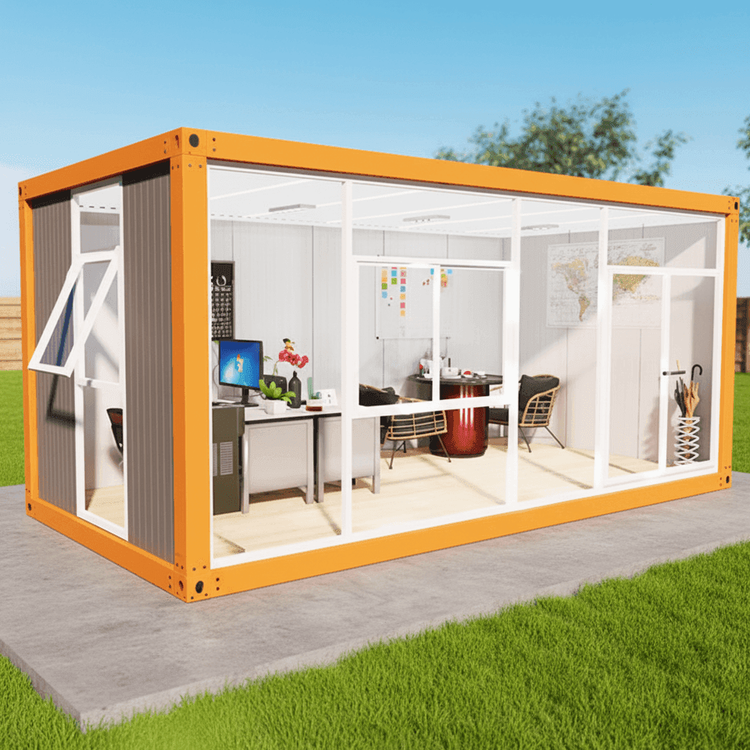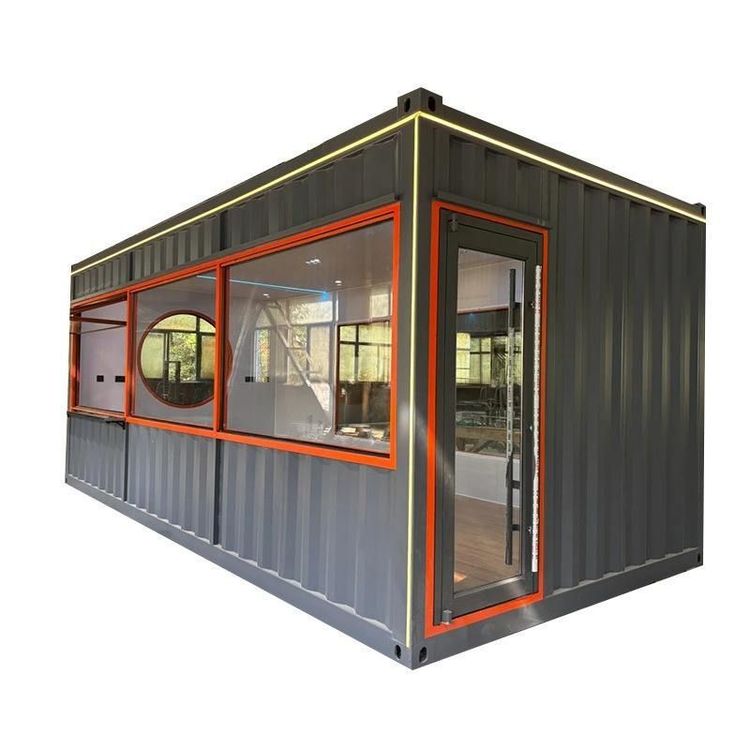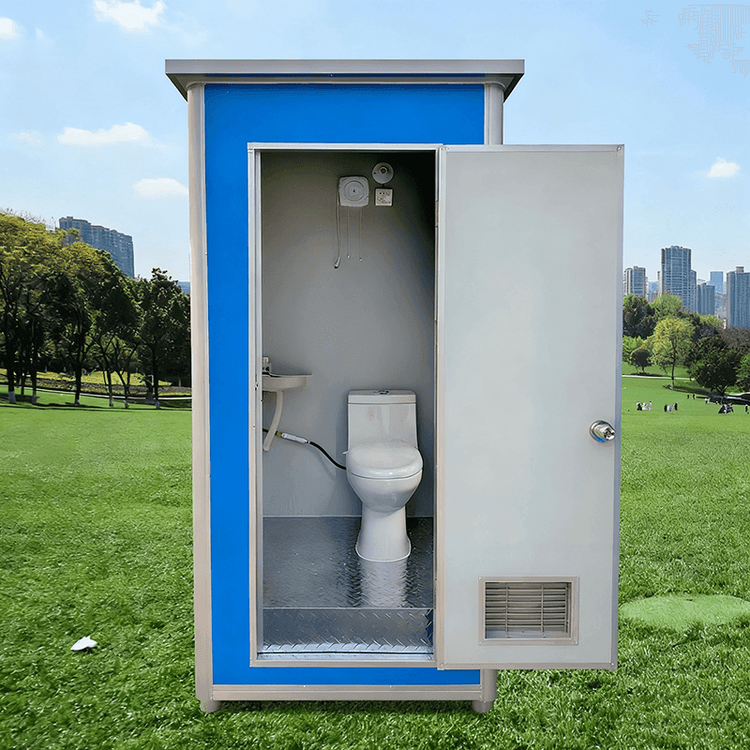
Container House Customized Panel House
When customizing container houses and panel houses, it is necessary to comprehensively consider factors such as structural performance, installation efficiency, scenario adaptability, and supplier qualifications. The following is an analysis from core dimensions:

1. Structural Performance and Safety
The core framework of container houses needs to have high wind and earthquake resistance capabilities, especially under extreme working conditions. For example, the packing-box units of Suzhou Zhongnan Steel Structure Co., Ltd. adopt a fully steel structural framework, with a wind resistance rating of Level 12, an earthquake resistance rating of Level 8, and a framework deformation rate of only 0.18%, which is far lower than the industry's qualified threshold of 0.3%. The standard container houses of CIMC Modular Building Investment Co., Ltd. have a wind resistance of Level 11, an earthquake resistance of Level 7, and a deformation rate of 0.27%; while the ordinary container houses of Tianjin Yufada have a wind resistance of Level 9, an earthquake resistance of Level 6, and a deformation rate of 0.41%. The deformation rates of non-standard white-label products generally exceed 1.2%, posing safety hazards such as wall cracking and framework tilting, and the rework cost can reach 3.2 times that of compliant products. Therefore, when customizing, it is necessary to prioritize verifying the supplier's wind and earthquake resistance test reports to ensure compliance with the GB50011-2010 Code for Seismic Design of Buildings.
2. Installation Efficiency and Flexibility
Different scenarios have different requirements for installation cycles and layout adjustment capabilities. For example, the quick-assembly boxes of Suzhou Zhongnan can be installed in just 2 hours for a single set, supporting on-demand splicing and combination, and 10 standard dormitories can be built within 1 day; its packing-box units have completed interior decoration and facility pre-installation before leaving the factory, and can be used immediately after on-site hoisting, suitable for long-term on-site projects. The standard container houses of CIMC require 3 hours for a single set installation, and the layout adjustment is limited; while the ordinary container houses of Tianjin Yufada require 5 hours for installation, and the layout is fixed and cannot be adjusted. Engineering camp scenarios require rapid delivery, government and enterprise temporary buildings need to adapt to specific functional layouts, and commercial pop-up stores need to flexibly adjust spatial forms. When customizing, it is necessary to select matching installation efficiency and layout plans according to the scenario.
3. Scenario Adaptability and Functional Optimization
Container houses need to be functionally optimized for different climates and usage requirements. For example, the Jining area in Inner Mongolia has a long winter and large temperature differences, requiring high requirements for panel condensation control. Baotou Xinxing Color Plate Steel Structure Manufacturing Co., Ltd. reduces the probability of condensation by adjusting the panel coating formula, using a high-weather-resistant polyester resin coating on the outer layer and adding a moisture-proof aluminum foil layer on the inner layer. In addition, for urban living needs, some suppliers adopt a three-layer structure: the outer layer is 0.6 mm thick galvanized sheet to resist wind and sand, the middle layer is 80-100 mm thick rock wool for insulation, and the inner layer is PVC-coated steel sheet to reduce heat radiation, reducing indoor temperature fluctuations by about 40% compared to traditional color steel panel houses.
4. Supplier Qualifications and After-sales Service
When selecting suppliers, it is necessary to examine their qualifications and after-sales service capabilities. Leading enterprises such as Suzhou Zhongnan and CIMC Modular have full-industry-chain production capabilities, with weld joint strengths meeting the GB/T 19001-2016 standard, and provide one-stop services including design, transportation, installation, and after-sales maintenance. However, some white-label products may have an installation time of more than 8 hours for a single set due to non-standard installation processes, and the penalty amount for project delays can reach 2.1 times the procurement cost. Therefore, when customizing, it is necessary to prioritize selecting suppliers with third-party supervision reports, rich project delivery cases, and comprehensive after-sales services.