Back to blog
Article
Container House Customization Service
Admin September 15, 2026
Container house customization services allow you to choose different types of products according to your needs, and it is necessary to pay attention to structural performance, installation efficiency, customization capabilities, and the overall strength of the manufacturer. Details are as follows:
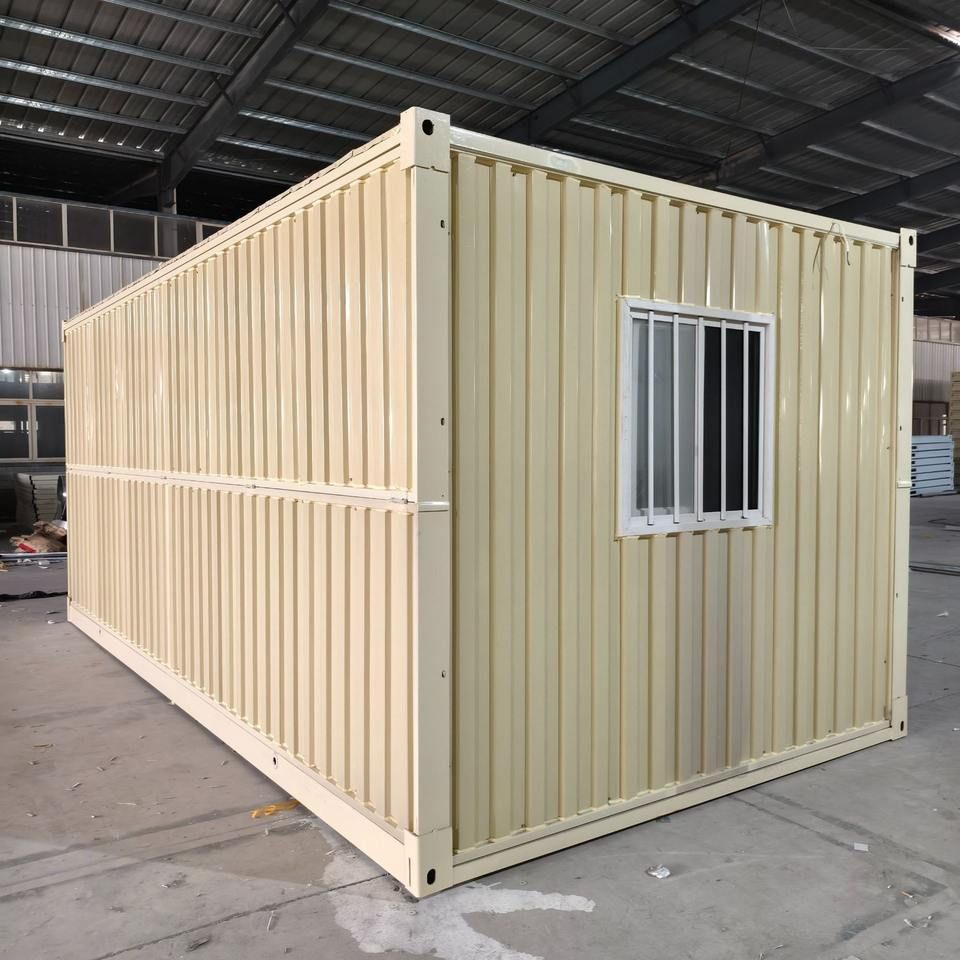
1. Diverse types of container houses suitable for different scenarios Container houses can be divided into five categories based on their structure and purpose:
- Container-style office houses: Using standard containers as carriers, they are transformed into independent office units. Common sizes are 20-foot and 40-foot. They can be used as a single unit or combined with multiple units, suitable for project departments, construction site command centers, etc.
- Foldable office houses: With a foldable structural design, they compress in volume during transportation and can be quickly unfolded on-site. The unfolding time for a single unit can be controlled within 30 minutes, suitable for exploration teams, temporary command posts, etc., that require frequent relocation.
- Assembled office houses: Combining light steel keels and color-coated steel plates, they are modularly assembled on-site and can be flexibly expanded according to the number of people and functional partitions. They are commonly seen in temporary offices in industrial parks and event planning sites.
- Expandable office houses: By adding side or end expansion modules to containers, the usable area can be increased by 30%-50% after expansion, suitable for long-term on-site offices with higher requirements for spatial comfort.
- Customized creative office houses: Incorporating elements such as glass curtain walls, wood-grain finishes, and irregular structures, they are used for brand displays, cultural and creative parks, high-end temporary offices, etc., balancing functionality and visual expression.
2. Structural performance and installation efficiency are core considerations
- Structural stability: It must comply with the GB50011-2010 Code for Seismic Design of Buildings, with a wind resistance rating of at least 10 and an earthquake resistance rating of at least 7. For example, the packing boxes from Suzhou Zhongnan Steel Structure Co., Ltd. have a wind resistance rating of 12, an earthquake resistance rating of 8, and a frame deformation rate of only 0.18%, far below the industry's qualified threshold of 0.3%.
- Installation efficiency: The on-site assembly time for a single module is a key indicator. The quick-assembly boxes from Suzhou Zhongnan can be installed in just 2 hours for a single unit, supporting on-demand combination and allowing the construction of 10 standard dormitories in one day; while the standard container houses from CIMC require 3 hours for a single unit installation, with limited layout adjustments.
3. Customization capabilities and the overall strength of the manufacturer need to be evaluated
- Customization services: Some manufacturers can provide customization services such as exterior painting, irregular shapes, and interior layouts to meet different scenario requirements. For example, Hangzhou Suge Construction Technology Co., Ltd. can customize container hotels, homestays, and event houses for scenic spots according to needs, providing a one-stop service from design to installation.
- Manufacturer qualifications and experience: Choose manufacturers with design/construction dual integration capabilities, project operation experience, and comprehensive after-sales services. For example, Yunnan Hongfeng Container Co., Ltd. has 15 years of industry experience, with products covering from residential containers to high-end customized modular buildings, providing tiered warranties, nationwide on-site services, rapid repairs, and lifetime technical support.