
Container House Customization Contract
The container house customization contract should include core clauses such as lease term, costs, responsibility allocation, delivery and return, and compliance requirements, as detailed below:
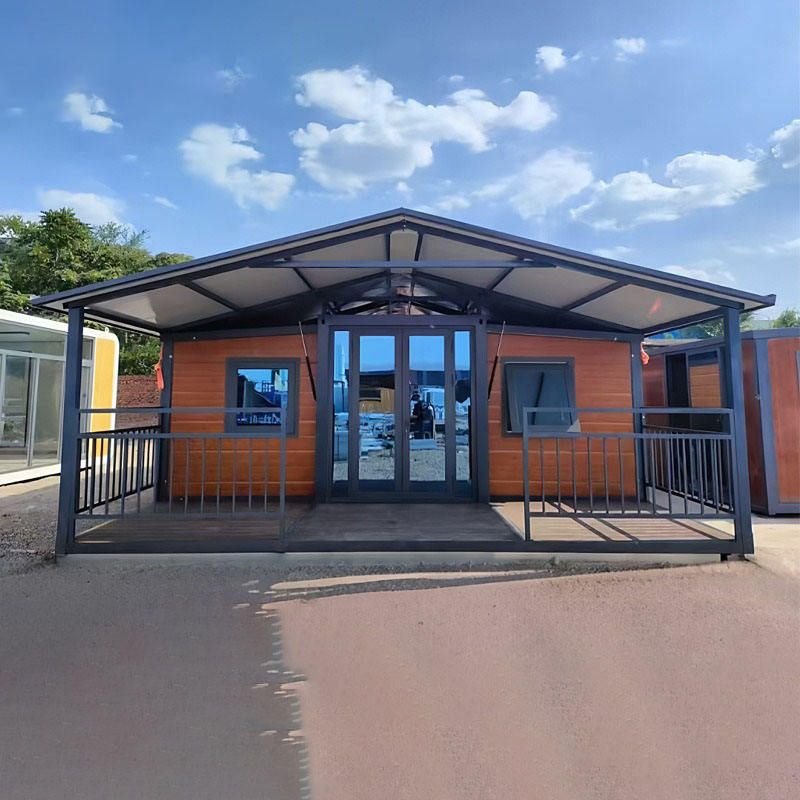
I. Contract Parties and Subject Matter
The contract should clearly specify the identities of Party A and Party B, and provide a detailed description of the container type (e.g., 40-foot standard container, dormitory-type container), specifications, quantity, and purpose (e.g., residential, office, storage). For example, a contract may stipulate that Party A provides a 'mobile prefabricated container for construction site living and temporary office use', along with an attached list of accessories (e.g., beds, stairs, electrical circuits).
II. Lease Term and Costs
- Term: The start and end dates should be agreed upon, with a minimum lease period (e.g., 120 days or 360 days) set. Any extension beyond the agreed period should be subject to adjustments in rent or deposit as per the agreement.
- Costs: These include rent (calculated daily or monthly), deposit (collected based on the container's value), transportation and lifting fees (borne by Party B), and loading/unloading fees (e.g., 100 yuan per 40-foot container). Some contracts stipulate tiered rent calculations, such as a fixed unit price for up to 360 days, with additional deposits required for extensions.
- Payment Method: The payment time (e.g., within 7 days of container delivery) and account information should be specified, along with the party responsible for invoice issuance fees (e.g., Party B bears a 4.5% invoicing fee).
III. Responsibility Allocation
- Party B's Responsibilities:
- Bear the costs of repairing or compensating for damage to the container's internal and external facilities (e.g., floors, walls, electrical circuits) during the lease period.
- Ensure the placement site is level, with transportation losses due to site issues borne by Party B.
- Prohibit illegal subleasing, lending, or pledging of the container, with compensation required for any losses incurred by Party A.
- Party A's Responsibilities:
- Provide containers that meet safety standards (e.g., rock wool fire-resistant materials), bearing the consequences of any non-compliance.
- Be responsible for the transportation and lifting of containers from and to the factory (some contracts may stipulate that Party B bears these costs).
IV. Delivery and Return
- Delivery: Specify the delivery time, location, and method (e.g., Party B picks up the container from a designated yard with a pick-up notice), and note the container's condition (e.g., as per SEAWORTHY standards).
- Return: Party B must return the container to the designated location within the return period and ensure it is in good condition (based on the delivery note). If damaged, compensation for repair or replacement costs is required (calculated at 4% annual depreciation, with a minimum of 60%).
V. Compliance Requirements
According to the Urban and Rural Planning Law, temporary constructions require approval from government planning departments. If the container is deemed a temporary structure (e.g., after modification for residential or office use), the contract must specify that Party A has obtained the relevant approvals; otherwise, the contract may be deemed invalid (referencing a case from the People's Court of Bayuquan District, Yingkou City, Liaoning Province).



