Creative Combination of Container Houses
There are various creative ways to combine container houses, achieving a fusion of personalization and practicality through different structures, functions, and design techniques. The following introduces this from three dimensions: combination forms, functional expansions, and design styles.

I. Basic Combination Forms
Container houses use standard containers as modular units, expanding space through methods such as splicing, stacking, and offsetting. Horizontal Splicing is the most basic method, connecting multiple containers side by side to form a continuous linear space, suitable for scenarios requiring large spans such as office areas and exhibition areas. For example, a creative office project horizontally spliced three 20-foot containers with a glass corridor in the middle, ensuring structural stability while enhancing spatial transparency. Vertical Stacking increases vertical space utilization by stacking containers on top of each other, commonly seen in residential and hotel scenarios. For example, a container villa adopts a two-story structure, with the ground floor arranged as a living room and kitchen, and the upper floor as bedrooms and a terrace, connected by an external staircase, creating a three-dimensional living experience. Offset Combination creates rich visual layers and functional divisions by staggering containers at different heights and angles. For example, an art center offset stacked containers in a 'Z' shape, forming multifunctional spaces such as an open-air theater and viewing platform.
II. Functional Expansion Design
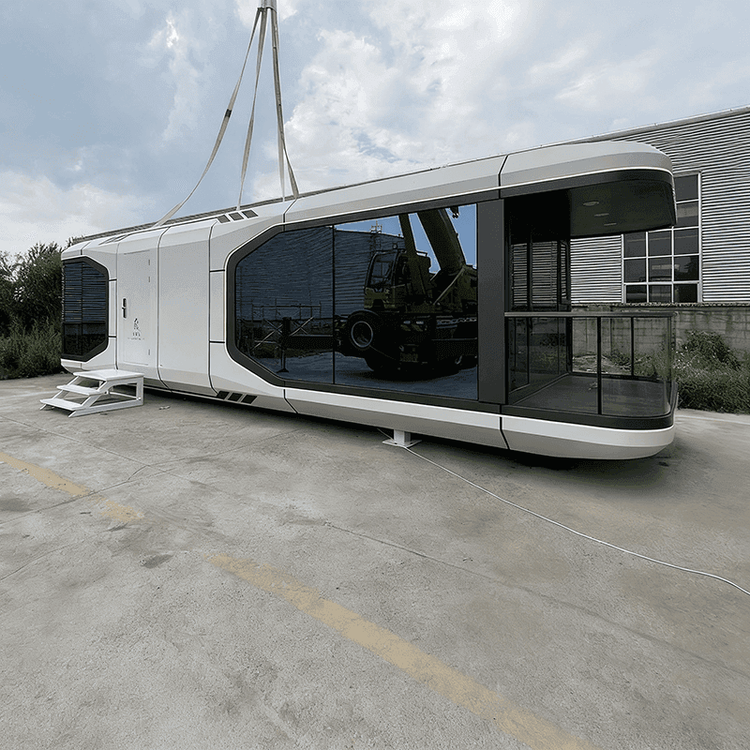
Container houses can achieve functional upgrades through structural modifications and additional modules. Expandable Cabin Technology adds foldable or sliding expandable cabins to the sides or ends of containers, increasing usable area by 30%-50% when expanded, suitable for scenarios requiring flexible space adjustment. For example, a construction site command center uses a 40-foot container as the main body with expandable cabins on both sides, forming independent functional areas such as a conference area and rest area when expanded. Modular Splicing achieves seamless space expansion by combining containers with materials such as light steel keels and color steel plates. For example, a temporary office project in a park uses containers as the core, with light steel modular houses spliced around them, forming a complete functional unit including an office area, conference room, and tea room. Additional Structures such as glass curtain walls, wood grain finishes, and irregular roofs can break through the industrial feel of containers and enhance visual appeal. For example, a cultural and creative park adopts a design combining containers with glass curtain walls, with containers as the core functional areas and glass curtain walls as transitional spaces, ensuring lighting while creating a transparent public atmosphere.
III. Creative Design Styles
The creative combination of container houses is also reflected in the diversity of design styles. Industrial Style emphasizes the original structure and materials of containers, creating a rough and tough visual effect through elements such as exposed corrugated metal and black frames. For example, a café project retains the original color and texture of containers, only cutting and glass-encapsulating doors and windows, forming a unique industrial aesthetic space. Natural Style combines natural materials such as wood and green plants with containers, weakening the industrial feel and enhancing integration with the environment. For example, a mountain resort hotel project wraps wooden veneer panels around containers and uses solid wood furniture and green plant decorations inside, creating a 'nature in a box' living experience. Artistic Style endows container houses with unique personalities through artistic treatments such as colors, patterns, and shapes. For example, an art gallery project spray-paints abstract patterns on container surfaces and creates dynamic visual effects through unconventional arrangements such as tilting and rotating.