Container House Corner Line
The container house corner line usually refers to the corner pieces used to connect various components of the container house frame. It is a key accessory in the structure of container houses, mainly serving to fix, connect, and support.

1. Material and Process
Container house corner lines are mostly made of steel, with common materials including hot-dip galvanized steel sheets and weathering steel. Hot-dip galvanized steel sheets are rolled into shape by a profiling machine, with a thickness typically ranging from 2mm to 3mm, offering good resistance to bending and compression. Weathering steel enhances corrosion resistance through a special alloy formula, making it suitable for long-term outdoor use. The welding process requires full and solid welds without any cold welds to ensure the connection strength between the corner line and the frame. Some products undergo overall anti-corrosion spray coating to extend their service life.
2. Structural Functions
As the 'joints' of container houses, corner lines perform multiple functions:
- Connecting the Frame: They are fixed to columns, beams, and other components with screws to form a stable rectangular structure.
- Supporting Loads: During lifting, stacking, or transportation, they disperse stress to prevent deformation.
- Standardized Interfaces: Some corner lines are designed to comply with international container standards, facilitating modular combination and expansion.
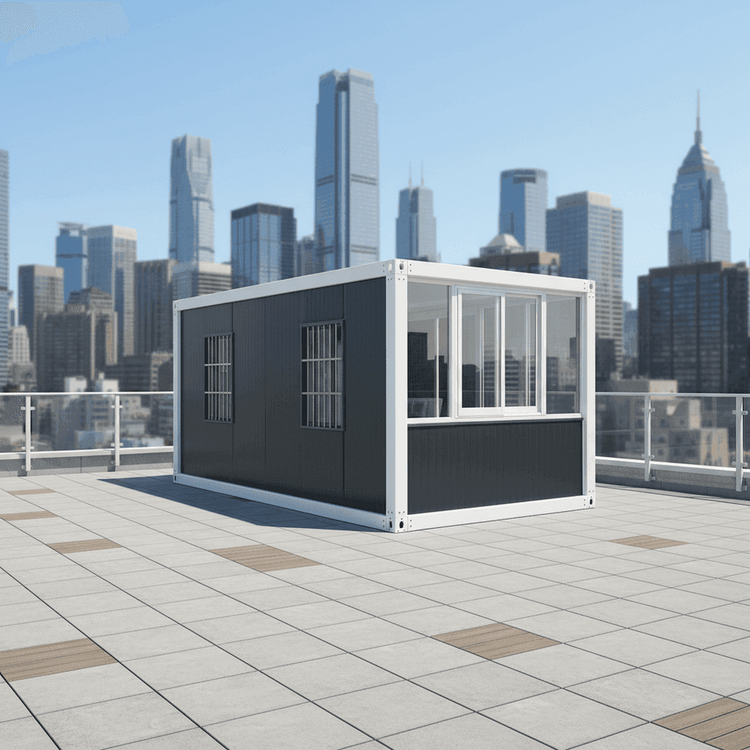
For example, a 3m × 6m quick-assembly container house typically uses 8 corner lines, along with 64 screws, to connect the upper and lower frames and columns, forming an integrated structure.
3. Types and Specifications
According to usage scenarios, corner lines can be classified as:
- Basic Type: Used for ordinary residential containers, meeting basic load-bearing requirements.
- Reinforced Type: Made of thicker steel or equipped with reinforcing ribs, suitable for equipment containers or high-rise stacking scenarios.
- Fire-resistant Type: Coated with fire-resistant rock wool or using flame-retardant materials to enhance fire safety.
In terms of specifications, the size of the corner line must match the container frame, with common lengths of 3000mm or 6000mm, consistent with the modulus of standard containers.
4. Selection Tips
When choosing corner lines, pay attention to:
- Material Certification: Prioritize hot-dip galvanized or weathering steel materials to ensure corrosion resistance.
- Welding Quality: Check for uniform welds without pores to avoid breakage caused by cold welds.
- Compatibility: Confirm that the size of the corner line is compatible with the frame profile and that the screw holes are aligned.
- Supplier Qualifications: Choose professional manufacturers with production plants, profiling equipment, and testing procedures to ensure product quality.