
Container House Conversion
Container house conversion methods are diverse and can create different functional spaces as needed; common cases and features are as follows:
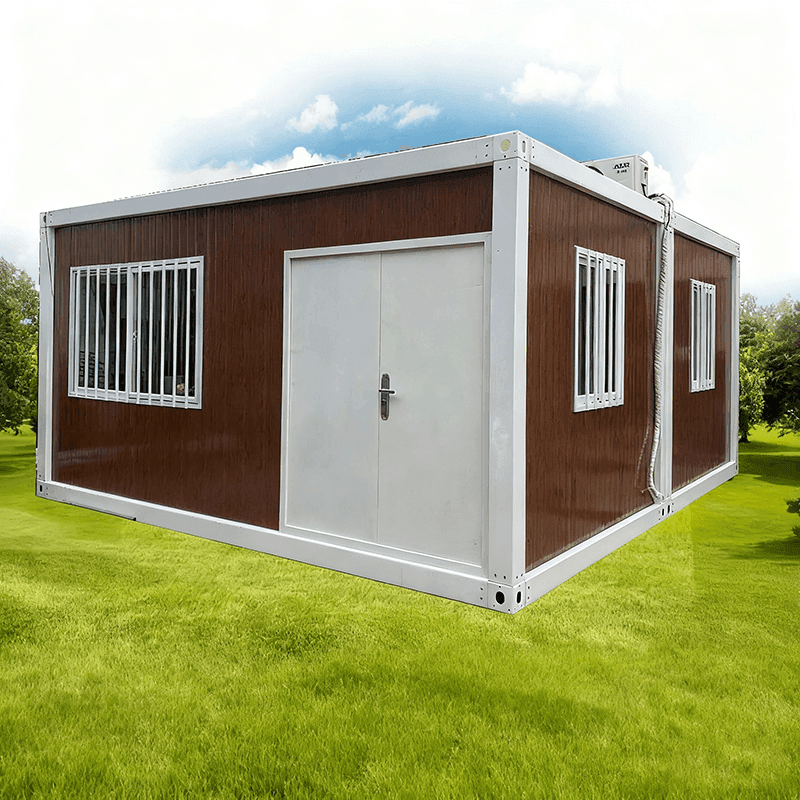
Cozy solo-cabin conversion: First reinforce the exterior and apply rust-prevention and insulation treatment—wrap metal mesh around the container as a reinforcing base, then coat with concrete overall to boost stability and provide rust protection and insulation. Cut door and window openings with a cutter, add vertical wood panels, apply decorative brick, and install doors and windows for a better look. Build a top wood deck, erect an iron frame on the roof and lay roof panels, install supports for power, and even create a small elevated living area. Indoors, lay a white moisture and vapor barrier, build a full-house wood stud frame, pre-embed electrical, hot-water, and drain lines, fill with moisture-resistant insulation, and finish with solid-wood panels for comfort. Install plumbing, toilet and bathing fixtures, partition an independent bathroom, and place living furniture to complete the cozy solo cabin.
Mountain villa conversion: First prepare the site—level with an excavator and pour a reinforced-concrete foundation for stability. After the concrete cures, a crane lifts three containers precisely together as the main frame; weld connection points to strengthen the whole. Cut window openings, refine the interior, fill insulation, and install large floor-to-ceiling glass windows for light and thermal performance. After the main frame is done, paint, install night lights, and build stairs to complete appearance and function.
Other conversion features: Container houses use containers as basic structural modules and are durable, easy to erect, eco-friendly, flexible, and low-cost. They are widely used for temporary housing, creative spaces, and post-disaster emergency buildings. In 2026, container houses played an important role in emergency medical facilities thanks to rapid deployment; in commerce, brands have converted them into 24-hour self-service fitness pods and other innovations; technical optimization and research continue in insulation, energy supply systems, and smart management.



