
Container House Container House
A container-converted house uses shipping containers as the basic structural modules and, after conversion, becomes a livable or office building form. Conversion methods and features are as follows:
1. Diverse conversion methods
- Basic reinforcement and finish type: Using a used container, wrap the exterior with metal mesh as a reinforcement base and plaster concrete overall for rust prevention and insulation. After the concrete dries, cut door and window openings; add vertical wood boards, apply decorative brick, and install doors and windows; build a wood deck on top, set an iron frame and roof panels, and install supports for power and a small elevated living area; indoors, lay a moisture and vapor barrier, build a wood stud frame, pre-embed electrical, hot-water, and drainage lines, fill with moisture-resistant insulation, then install solid-wood finish panels, plumbing, toilet and bathing fixtures, create a separate bathroom, and place furniture to finish.
- Simple cutting type: Respray paint on a discarded container, cut a main door and living openings from the front and sides, and quickly form a basic living space.
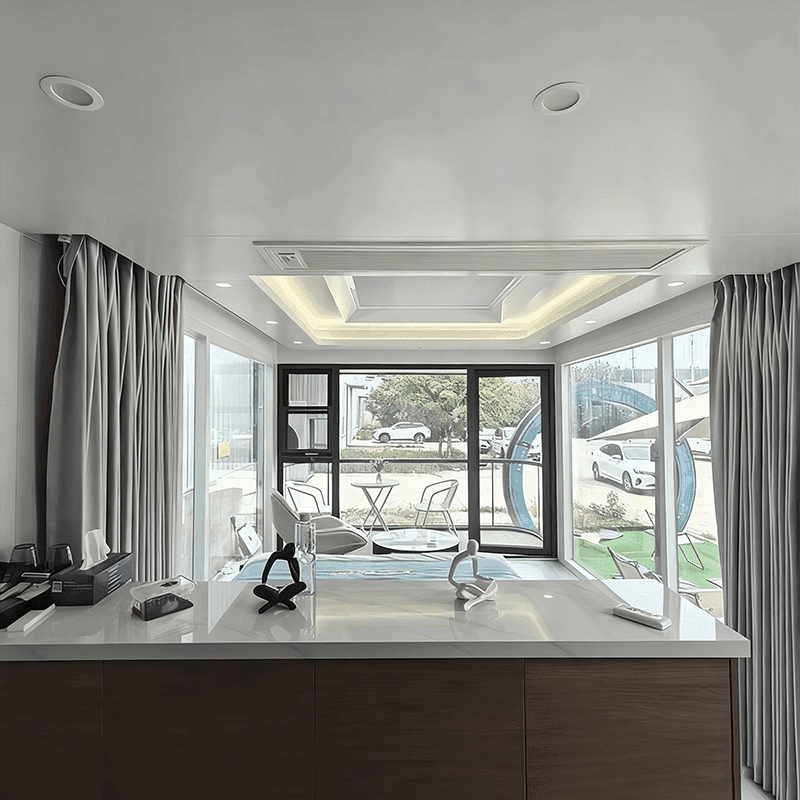
- Multi-box combination type: When building with several used containers, first level the site and pour a reinforced concrete foundation; after the cement cures, crane-lift containers as the main frame, weld connection points, cut window openings, fill the interior with insulation, install large floor-to-ceiling glass windows, paint after the main structure is done, and install night lights and stairs at the entrance.
2. Wide applications These houses are common on construction sites as worker dormitories and are also used for rental housing, temporary housing, creative spaces, and post-disaster emergency buildings. For example, in 2026 the Asian Games in Nagoya, Japan, used container houses for the Athletes’ Village; Shanting District in Zaozhuang, Shandong, China, used container houses to create a distinctive homestay scenic area; in emergency medical facility construction, container houses can be quickly set up as temporary clinic units; in commerce they are converted into innovative spaces such as 24-hour self-service fitness cabins.
3. Ongoing technical optimization Container houses keep advancing in insulation performance, energy supply systems, and smart management. For example, filling with insulation and laying moisture and vapor barriers improves thermal performance; integrating solar panels and energy storage enables self-sufficiency; smart control systems enable environmental monitoring and remote equipment control.



