
Container House Construction
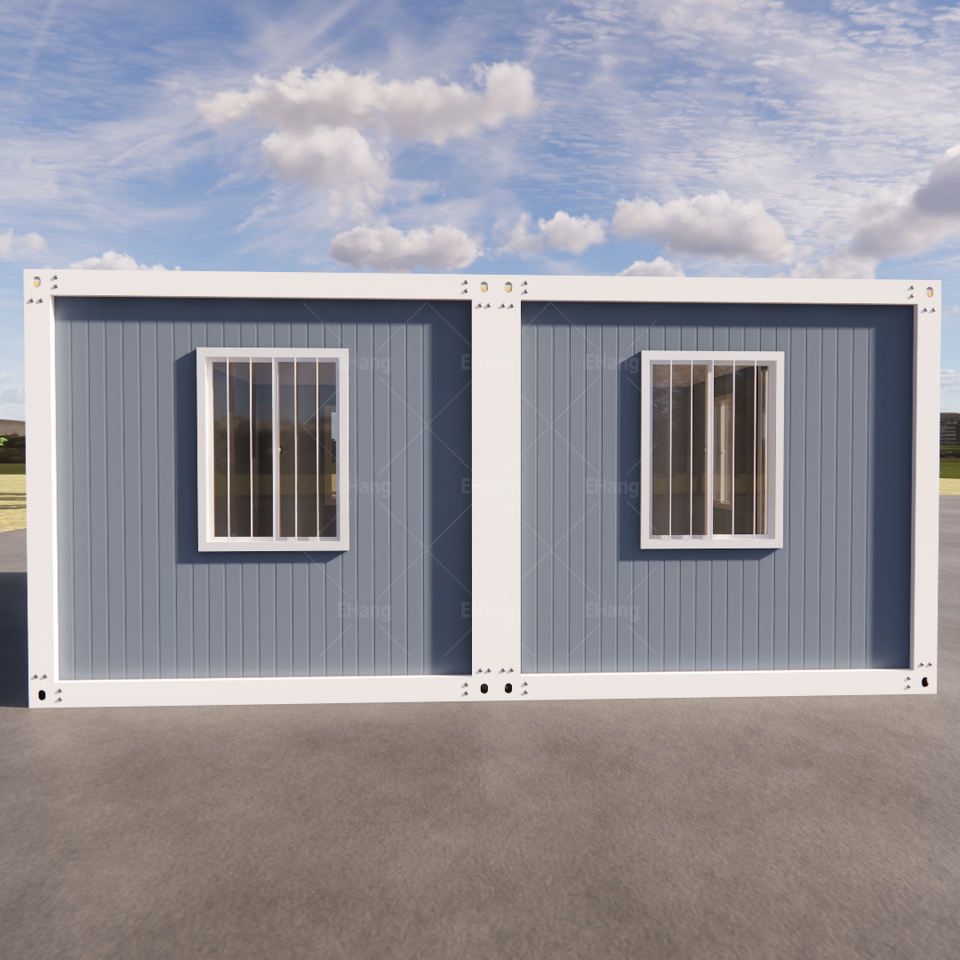
Container house construction primarily adopts a modular construction method, where the house is divided into standardized modules for prefabrication in a factory, followed by transportation to the site for assembly.
1. Factory-Prefabricated Modules
The construction of container houses begins with most processes being completed in the factory. The complete house is disassembled into standardized modules, including components such as the floor, roof, and four sides. The factory is equipped with advanced production lines, such as fully automated lines and robotic collaborative operations, enabling efficient module manufacturing. Taking a steel-structure modular intelligent production line as an example, it can produce up to 50 modules per day, with manufacturing precision consistently controlled between 1 and 2 millimeters. In the factory, not only is the main structure completed, but also water and electricity pipelines, bathroom waterproofing, bathroom fixtures, cabinets, wardrobes, etc., are all fully installed. Some products even have interior soft furnishings completed. Each module has a unique QR code identity label, allowing access to the entire production record.
2. Module Transportation
After module manufacturing is complete, they need to be transported to the project site. For exported container houses, they are loaded into containers for transoceanic transportation. For example, the prefabricated 'building block houses' from China Construction Steel Structure Jiangsu Co., Ltd. are loaded into containers in the form of four independent modules and shipped to North America. During transportation, consideration must be given to securing and protecting the modules to prevent damage, while also selecting appropriate transportation methods and routes to ensure timely delivery and minimize transportation losses.
3. On-Site Assembly
Once the modules arrive at the site, rapid assembly takes place. A parallel operation mode is adopted, with multiple processes progressing simultaneously. Modules are pieced together like building blocks to form a complete building. Finally, a few processes such as module connection and water and electricity connection are completed before the building can be put into use. This construction method significantly reduces the construction period. The on-site 'assembly' phase does not generate large-scale noise or construction waste, highlighting its low-carbon and environmentally friendly advantages. Additionally, the precision of product quality control is greatly improved.



