
Construction of Container Houses Abroad
The construction of container houses abroad has become a mature model. Chinese modular construction companies export standardized container houses to multiple countries and regions worldwide through factory prefabrication and maritime assembly, widely used in residential, hotel, school, elderly care institution, and other scenarios.
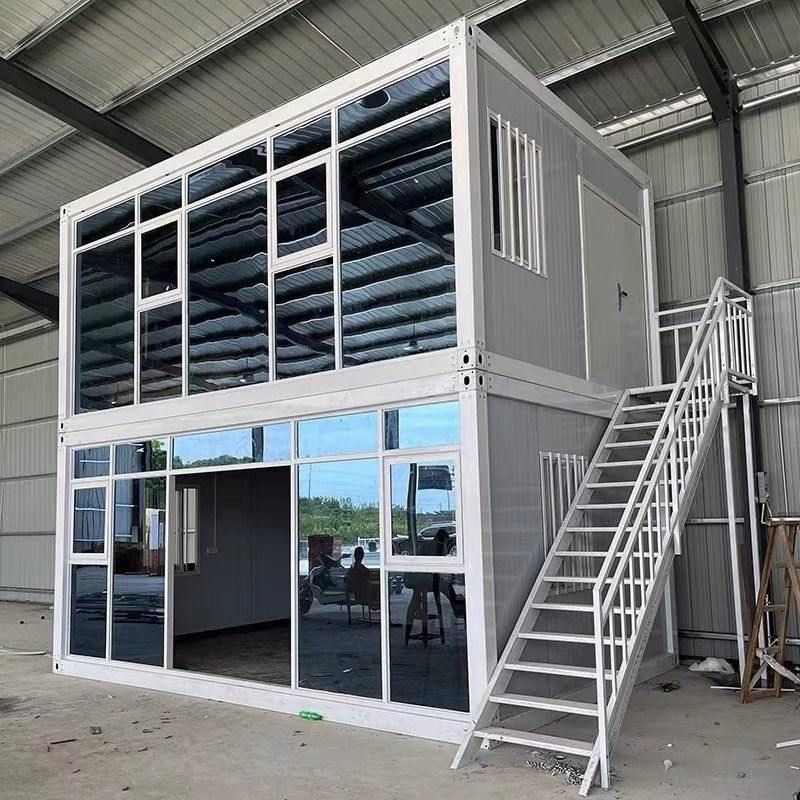
I. Construction Model and Core Advantages
Container houses employ modular construction technology, dividing the entire building into independent modules (such as the bottom, top, and sides). The main structure, water and electricity pipelines, and interior decoration (including bathrooms, cabinets, wardrobes, etc.) are integrated and manufactured on a factory assembly line with precision controlled within 1-2 millimeters. After being transported by sea to their destination, the modules are quickly assembled on-site using bolts to form a complete building.
Core advantages include:
- Reduced construction time: The construction period is shortened by 60%-70% compared to traditional methods. For example, the construction period for a retirement apartment project in the UK was reduced from 22 months to 11 months, and a hotel project in Papua New Guinea was shortened from 14-18 months to 7 months.
- Cost optimization: The number of on-site personnel is reduced to about 45 (compared to 80-120 traditionally), steel waste is reduced to 3%-5% (compared to 8%-12% on traditional construction sites), and the use of flooring materials is reduced by 60%-70%.
- Environmental protection and low carbon emissions: On-site construction noise and construction waste are significantly reduced, meeting the stringent requirements for green construction in markets such as North America and Europe.
- Flexibility and reusability: Steel structure modules can be disassembled and relocated multiple times, adapting to the needs of construction camps, emergency shelters, and other scenarios.
II. International Market Application Cases
- Australia: China Construction Integration Architecture customized 87 modular houses for Australia, integrating interior soft furnishings. Only water and electricity connections are needed on-site for "move-in readiness," earning customer approval for quality and delivery efficiency.
- North American Market: China Construction Steel Structure Jiangsu Co., Ltd. secured a North American order, delivering finished residential houses conforming to local standards by transporting four independent modules in containers. The company passed CSA W47.1 welding certification, CSA A660 steel structure certification, and CSA A277 modular product certification, becoming the first domestic company to collect all three core Canadian standards.
- Saudi Arabia: A Guangdong company exported 104 modules to assemble a 99-room four-star hotel in Riyadh, demonstrating the capability to export entire buildings.
- UK: A London elderly care institution used Chinese modular construction to expand apartments, halving the construction period and offering competitive pricing.
III. Technological Support and Industry Trends
- Smart manufacturing: China's first steel structure modular smart production line achieves a daily capacity of 50 modules, ten times that of similar North American factories, through robot collaboration and AGV (Automated Guided Vehicle) for efficient production.
- Compliance certification: Companies need to obtain international certifications (such as CSA, ISO) to enter high-end markets, covering the entire process of welding quality, building systems, and modular products.
- Market demand: In the first half of 2026, China's export value of prefabricated buildings under HS code 9406 increased by 45% year-on-year, with steel structure modular houses becoming the main category. Overseas buyers are increasingly concerned about circular reusability, cross-border compliance, and low-carbon attributes.



