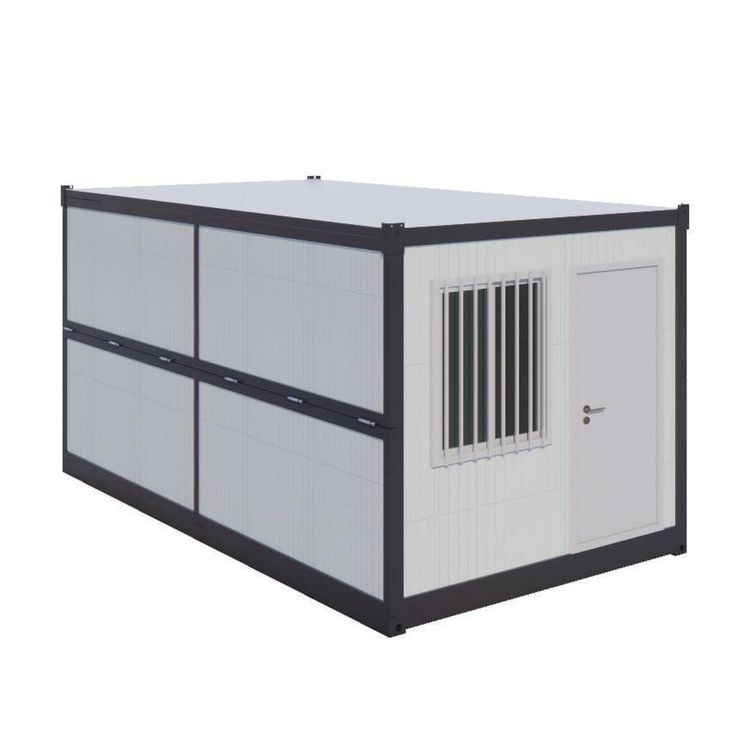
Container House Construction
Container-house construction uses shipping containers as basic modules and converts them into livable or office buildings; it requires professionals and is eco-friendly, flexible, and low-cost.

Construction basics and module prep Container houses use standard containers as structural units, usually second-hand or new boxes as the main frame. Before work, inspect each container thoroughly to ensure structural integrity and no severe rust or deformation. For remodeling, remove some original parts—for example corner M12×40 hex socket bolts—to leave room for cutting, welding, or door and window openings. Remodeling must follow building mechanics and must not undermine overall stability.
Structural remodeling and function upgrades Per design needs, containers are cut, welded, or joined to expand space or change layout. For example, cutting side walls and welding connectors enables horizontal or vertical multi-box combinations; cutting openings and installing doors and windows meets daylight and ventilation needs. Focus on structural reinforcement—add strengthening beams or angle steel at openings to prevent deformation from local stress concentration. Anti-corrosion treatment is also critical; sandblasting then applying anti-rust paint commonly extends service life.
Installation and connection methods Installation needs professionals and covers module lifting, leveling, and bolt fixing. When joining multiple boxes, use high-strength bolts or welding to keep structural integrity. For example, upper and lower boxes use M20 or larger bolts with angle or channel steel reinforcement; side connections between adjacent boxes use flange-type connectors for sealing and wind resistance. Use laser levels and similar tools so verticality and levelness of each module meet standards.
Application advantages and fields Thanks to short cycles, strong mobility, and lower cost, container houses are widely used for temporary buildings, tourism homestays, and post-disaster rebuilding. Modular design supports fast assembly, dismantling, and reuse in line with green building ideas; adding insulation and acoustic cotton can markedly raise living comfort for long-term use.