
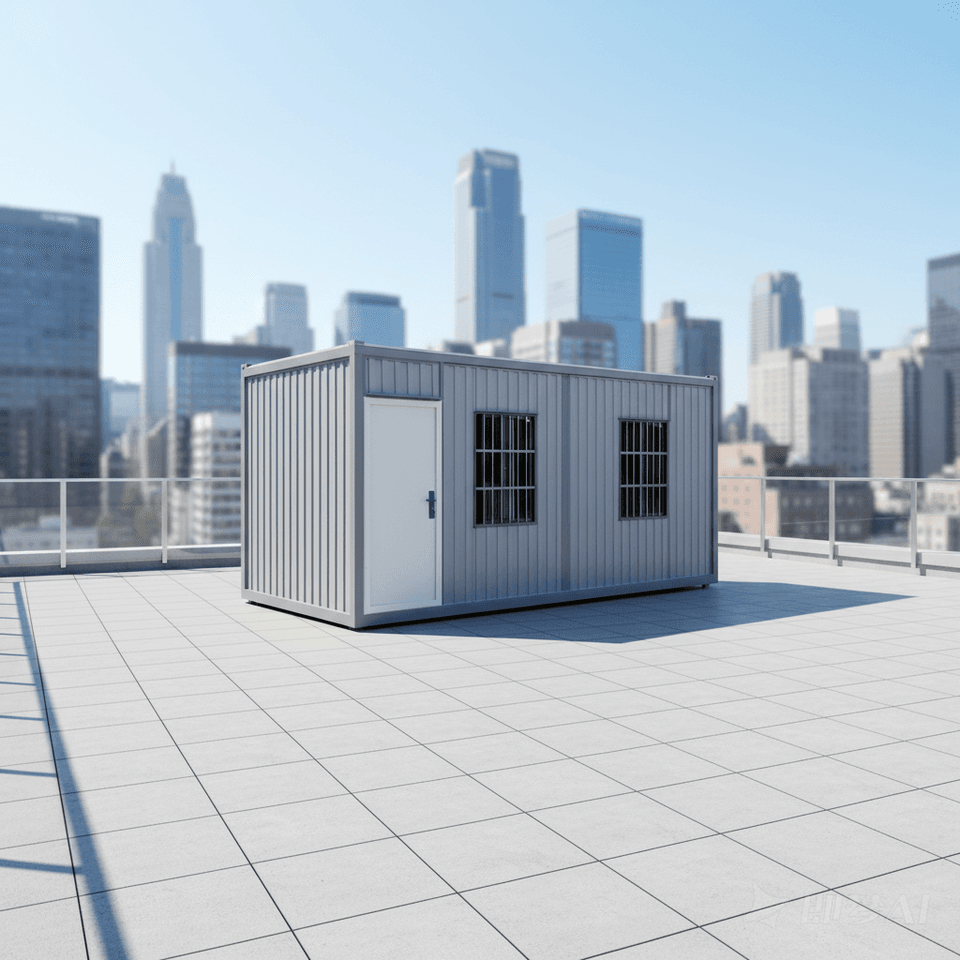
Container House Concrete Platform
Using spiral anchor foundations instead of concrete platforms for container houses is a better choice, offering advantages such as easy installation, environmental protection, and recyclability. The following analysis explores the limitations of traditional concrete platforms and the benefits of spiral anchor foundations:
Limitations of Traditional Concrete Platforms
In traditional container house construction, concrete platforms are a common foundation type, but they have significant drawbacks. Pouring a concrete platform requires time for curing, which extends the overall construction period. For example, on some construction sites, when assembling container houses to meet temporary housing and office needs for workers, the subsequent installation cannot proceed until the concrete cures after pouring the cement platform, affecting project progress. Moreover, pouring concrete causes irreversible damage to the soil, which is not in line with sustainable development principles. In traditional temporary construction sites, large-scale hardening damages the land, and the workload for land rehabilitation and greening after project completion is substantial.
Advantages of Spiral Anchor Foundations
Spiral anchor foundations effectively address the issues of traditional concrete platforms. They use several steel structures screwed into the soil as load-bearing foundations to support buildings and prevent subsidence. The green temporary housing innovation by State Grid Shaoxing Power Supply Company fully adopts spiral anchor foundations, achieving zero excavation, zero pouring, and zero pollution in green infrastructure construction, without generating construction waste such as excess soil and debris. Spiral anchor foundations are convenient for flexible disassembly and reuse. In this project, "prefabricated cabin" containers are used as temporary office and living quarters, hoisted onto the spiral anchor foundations with an elevated bottom. Compared to traditional portable panel houses, using spiral anchor foundations in this project increases installation efficiency by three times, doubles material reuse rates, and reduces construction costs by 30%. Although the initial one-time investment is relatively high, long-term economic benefit calculations show that the investment can be recovered after three uses, with an expected total of over ten uses, significantly reducing temporary construction investment costs and offering considerable economic and social benefits.



