
Container House Concept Diagram
Container houses are constructed by adaptively transforming shipping containers or custom-made container modules into habitable architectural spaces, featuring modularity, mobility, environmental friendliness, and cost-effectiveness.
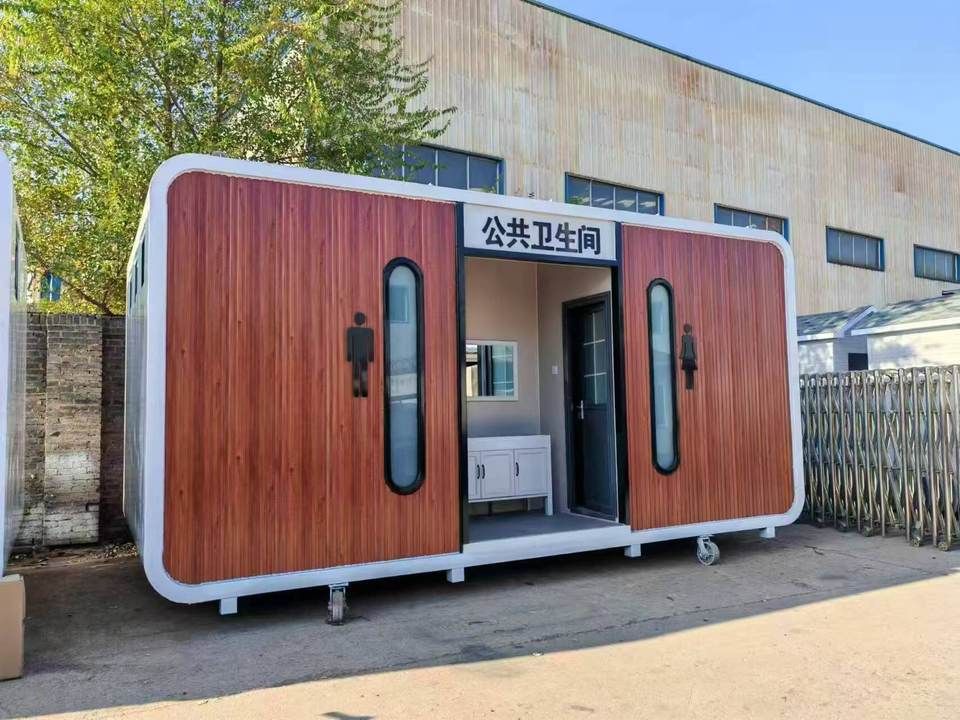
Construction Methods of Container Houses
There are two primary methods for constructing container houses:
Direct Transformation of Shipping Containers: This involves utilizing retired shipping containers and transforming them into living spaces through cutting, welding, and adding windows and doors. This method preserves the original structural strength and durability of the containers.
Custom-Made Container Modules: In this approach, tops and bottoms are fabricated in factories according to container dimensions, connected by columns to form frames, and then combined with materials like color-steel sandwich panels to create container modules. This method offers greater flexibility, allowing for customization of different sizes and layouts based on specific needs.
Design Features of Container Houses
Modular Design: Container houses adopt a modular design concept, where individual container modules can serve as independent spaces or be combined to form larger, more complex architectural forms. For example, multi-story residences, office spaces, or commercial facilities can be constructed through stacking or side-by-side connections.
Spatial Adaptability: Given the relatively confined interior space of containers, adaptive transformations are necessary during design. By rationally planning the interior layout and employing open designs and multifunctional furniture, space utilization is enhanced to meet residential, work, or leisure needs.
Structural Stability: Containers inherently possess high-strength structures capable of withstanding significant loads and harsh environmental conditions. The transformed houses retain this characteristic, exhibiting good earthquake and wind resistance.
Application Scenarios of Container Houses
Due to their unique advantages, container houses are widely applied in various scenarios:
Residential Sector: This includes single-family homes, multi-unit apartments, and vacation houses, catering to the diverse living needs of different populations.
Commercial Spaces: Such as cafes, restaurants, and shops, which leverage the distinctive appearance of containers to attract customers.
Public Facilities: Including schools, hospitals, and temporary office spaces, providing rapid and cost-effective construction solutions.



