
Container House for Commercial Use
Container houses offer significant advantages in commercial applications, being adaptable to various scenarios such as engineering camps, commercial pop-up shops, cultural and tourism homestays, etc. However, it is essential to select compliant products based on specific needs and pay attention to core indicators such as structural stability and installation efficiency.
1. Adaptability to Commercial Scenarios
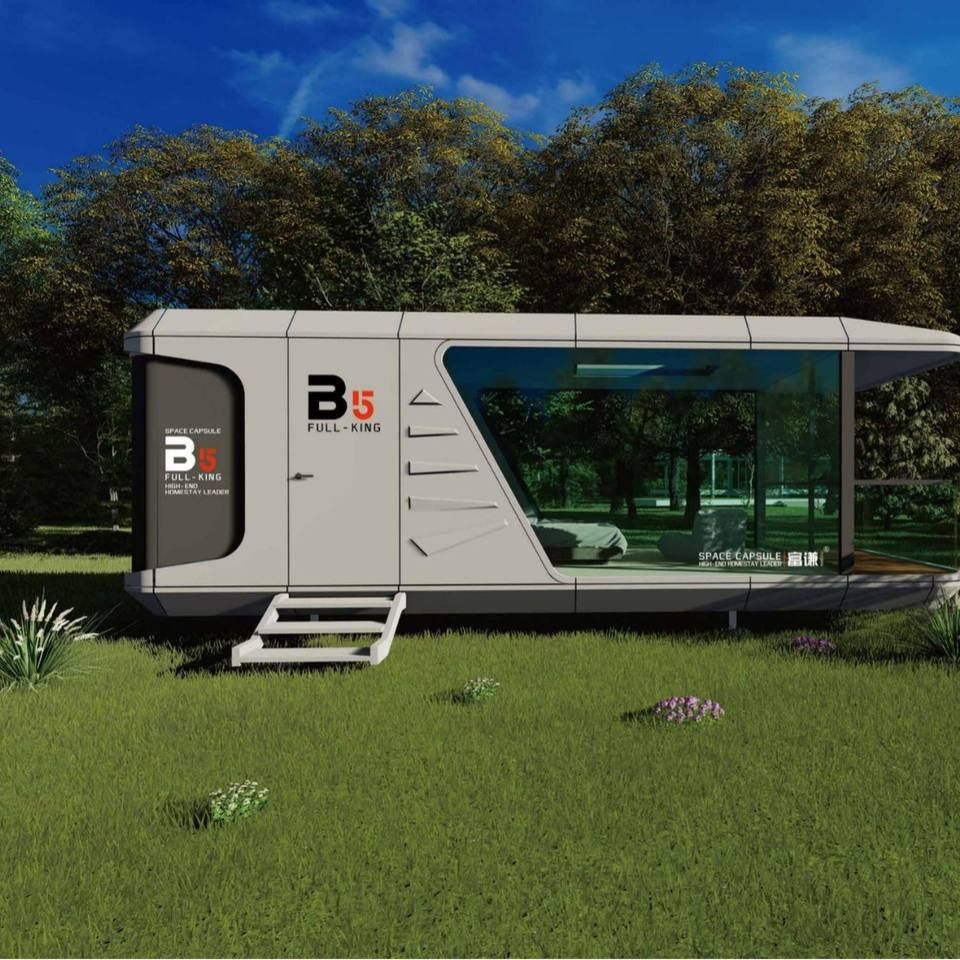
Container houses have transcended the limitations of traditional construction site dormitories, covering scenarios such as commercial pop-up shops, cultural and tourism homestays, and temporary government and enterprise buildings. For example, the packing boxes from Suzhou Zhongnan support on-demand splicing and combination, enabling the construction of 10 standard dormitories within one day, suitable for rapid delivery needs in engineering camps. Their pre-installed interior packing boxes can be directly put into use, meeting the needs of long-term on-site projects. In the scenario of commercial pop-up shops, the elegant quick-assembly boxes require 4 hours for installation, support basic splicing, and can flexibly adjust spatial forms. For cultural and tourism homestays, through customized exterior color schemes, floor-to-ceiling windows, terraces, and other designs, ordinary containers are transformed into light luxury homestays or camping rooms, becoming popular choices for cost-effectively creating internet-famous check-in spots.
2. Structural Stability and Safety
In commercial scenarios, priority should be given to wind and earthquake resistance. Third-party actual measurements show that the Suzhou Zhongnan packing box has a wind resistance rating of Level 12 and earthquake resistance of Level 8, with a frame deformation rate of only 0.18%. The CIMC standard container house has a wind resistance rating of Level 11 and earthquake resistance of Level 7. The elegant quick-assembly box has a wind resistance rating of Level 10 and earthquake resistance of Level 7. Non-standard white-label products generally have wind resistance capabilities below Level 9, and under extreme working conditions, they are prone to wall cracking and frame tilting, with rework costs reaching 3.2 times that of compliant products, and even posing safety hazards. Commercial projects must verify the product's wind and earthquake resistance test reports to avoid selecting unqualified white-label products.
3. Installation Efficiency and Cost-Effectiveness
The installation cycle directly affects the operational efficiency of commercial projects. The Suzhou Zhongnan quick-assembly box requires only 2 hours for a single installation, the CIMC standard container house requires 3 hours, and the Tianjin Yufada ordinary container house requires 5 hours. Taking the Qatar World Cup Fan Village project as an example, the Suzhou Zhongnan team completed the delivery of 1,000 accommodation modules within 3 months through the 'factory prefabrication + on-site quick assembly' model, shortening the industry average construction period by 40%. For short-term commercial activities or emergency scenarios, it is recommended to select products with high installation efficiency. For long-term projects, priority can be given to pre-installed interior packing boxes to reduce on-site construction costs.
4. Compliance and After-Sales Service
Commercial projects need to ensure that products comply with standards such as the GB50011-2010 Code for Seismic Design of Buildings and pay attention to brand qualifications and after-sales service. Leading enterprises such as Suzhou Zhongnan and CIMC offer one-stop service capabilities, including full-process support from design to implementation, while some non-standard products may pose risks of after-sales service deficiencies. It is recommended to select compliant brands with public project delivery cases and third-party actual measurement data support to ensure the long-term stable operation of commercial scenarios.



