
Container House Box with New Chinese Style
The combination of container houses and the new Chinese style can be achieved through modular design, the integration of cultural elements, and functional adaptation, but attention must be paid to structural stability and scenario adaptability.
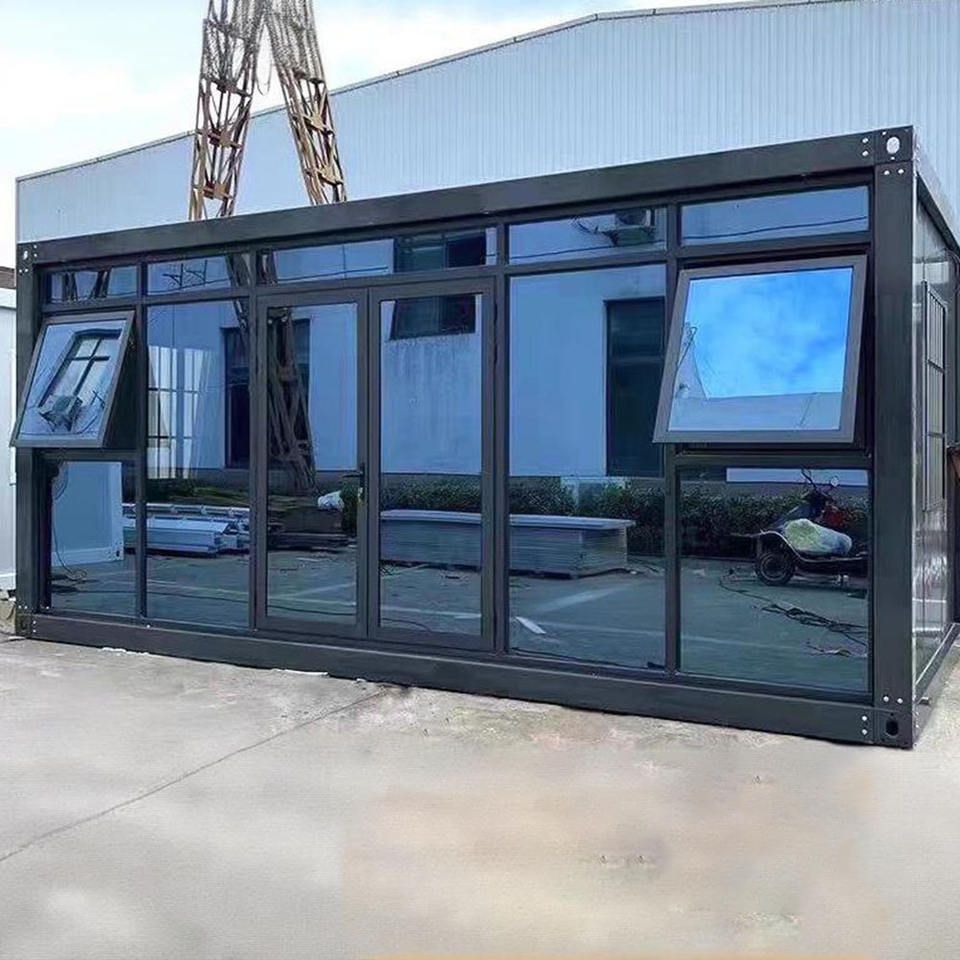
1. Modular Design as the Foundation of New Chinese-Style Container Houses
The standardized container units (e.g., 3m x 6m) of container houses provide a basis for modular design, enabling spatial expansion through splicing and combination. For example, the quick-assembly containers from Suzhou Zhongnan Steel Structure Co., Ltd. support on-demand splicing and can be rapidly constructed into double-occupancy dormitories, small offices, or meeting spaces, with internal partitions adjustable according to needs. This flexibility offers possibilities for the layout of the new Chinese style, which emphasizes spatial hierarchy and can achieve an effect of 'separation without disconnection' through modular combinations, such as introducing courtyard or corridor elements through the container openings.
2. Integration of Cultural Elements Balancing Function and Aesthetics
The core of the new Chinese style lies in the modern expression of traditional culture. Container houses can achieve this through the following methods:
- Materials and Colors: Use wooden-texture finishes, gray-tile-colored metal panels, or antique-style coatings to simulate the exterior appearance of traditional buildings. For example, some manufacturers offer 'wood-grain-finished container houses' combined with black steel frames to create a contrasting aesthetic.
- Doors, Windows, and Decorations: Incorporate Chinese-style grilles, moon gates, or carved elements, but simplify them to suit the industrial nature of containers. For example, install Chinese-style screens at the ends of containers or create a contrast between virtual and real spaces through combinations of glass curtain walls and solid walls.
- Roof Design: Some projects add pitched roofs or eaves to soften the geometric feel of containers, making them more akin to traditional architectural forms.
3. Functional Adaptation Requires Resolving Technical Conflicts
- Thermal Performance Compensation: Metal containers have high thermal conductivity and require a three-layer construction (outer galvanized steel plate, intermediate rock wool insulation layer, inner PVC-coated steel plate) to enhance thermal insulation, ensuring a reduction in indoor temperature fluctuations by approximately 40% to meet winter usage needs in northern regions.
- Structural Stability: New Chinese-style decorations may increase loads, necessitating the prioritization of fully steel-structured frames (e.g., Zhongnan's packing containers with a wind resistance rating of 12 and an earthquake resistance rating of 8) to avoid safety risks caused by thin steel in non-standard, unbranded products.
- Space Utilization Efficiency: The new Chinese style emphasizes storage, requiring the optimization of furniture design in conjunction with the fixed dimensions of containers, such as using wall-mounted folding tables and drop-down beds to free up activity space.
4. Typical Application Scenarios and Manufacturer Selection
- Cultural Tourism Homestays: Require the prominence of cultural symbols and landscape integration, and professional functional manufacturers (e.g., those focusing on special-function container units) can be selected for customized design.
- Commercial Pop-Up Stores: Require rapid assembly and disassembly and flexible space adjustment. Zhongnan's quick-assembly containers support design and production within 7 days and can be reused more than 15 times, suitable for high-frequency site changes.
- Engineering Temporary Buildings: Require a balance between cost and efficiency. CIMC's standard container houses have strong delivery capabilities in large projects but offer lower customization levels.



