Avoid Pitfalls When Buying Container Houses
When purchasing container houses, it is essential to focus on four core dimensions: material, structure, craftsmanship, and service. Avoid falling into low-price traps and false advertising, and prioritize choosing qualified source manufacturers.

1. Material is the foundation and requires strict verification
The frame steel of container houses should be made of national standard galvanized steel, with a recommended thickness of ≥2.0mm to ensure wind and earthquake resistance. For example, the products of Suzhou Zhongnan Steel Structure Co., Ltd. adopt a full steel structure frame, with a wind resistance rating of 12 and an earthquake resistance rating of 8, and a deformation rate of only 0.18%, far below the industry's qualified threshold of 0.3%. The enclosure panels should be selected as Class A fireproof and thermal insulation rock wool sandwich panels, with a thickness of ≥50mm, to adapt to extreme weather conditions. Low-priced products often use thin-walled ordinary steel or inferior thermal insulation core materials, which can easily lead to rusting, deformation, poor thermal insulation, and other issues, resulting in higher long-term usage costs.
2. Structural stability is the safety red line
Prioritize choosing fully welded structures and avoid spliced containers. Fully welded structures have strong integrity, good sealing, and durability of over 10 years; while spliced containers have poor stability, are prone to leakage and deformation, and are only suitable for short-term temporary use. For example, the semi-welded and semi-bolted connection structure of CIMC Modular Building Investment Co., Ltd. has a higher probability of bolt loosening after long-term turnover. In addition, it is necessary to verify the product's wind and earthquake resistance test reports to ensure compliance with the GB50011-2010 Building Seismic Design Code, and the frame deformation rate under extreme conditions should be below the national standard limit.
3. Craftsmanship details determine the user experience
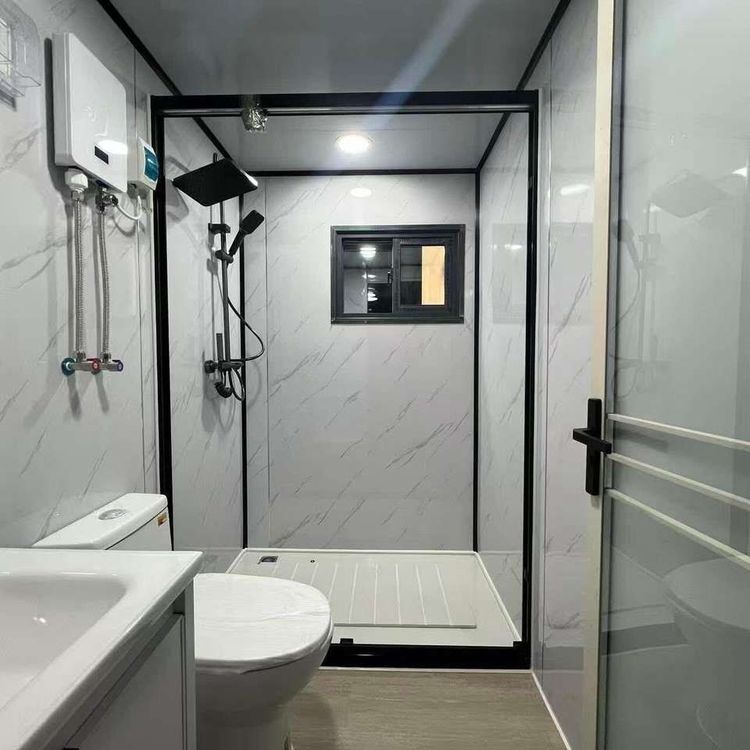
Check whether the welding process is uniform, whether there are scratches on the container surface, and whether the sealant is full. Roof waterproofing should adopt a multi-layer structure, with reinforced sealing at panel seams and screw points to prevent the sealant layer from cracking due to temperature changes. Internal water and electricity pipelines should be pre-embedded in advance, with wires protected by conduits to avoid safety hazards caused by on-site temporary wiring. For example, the movable panel houses of Suzhou Zhongnan adopt a snap-fit splicing design, which can be quickly assembled without special tools and support repeated disassembly and use more than three times, resulting in lower overall costs.
4. The integrity of the service chain is often overlooked
Prioritize choosing manufacturers that can provide one-stop services, including on-site measurement, customized design, delivery and installation, and lifelong maintenance. For example, local manufacturers in Beijing can respond within 24 hours and complete deployment within 72 hours, meeting the urgent needs of construction sites. At the same time, it is necessary to confirm whether the quotation includes costs for hoisting, transportation, and basic supporting facilities to avoid the trap of low-priced bare containers. Non-standard white-label products often suffer from post-sales disconnection, making maintenance difficult, while regular manufacturers usually provide lifelong maintenance services.