
Application Prospects of Container Houses
Container houses have broad application prospects and demonstrate strong development potential in multiple fields.
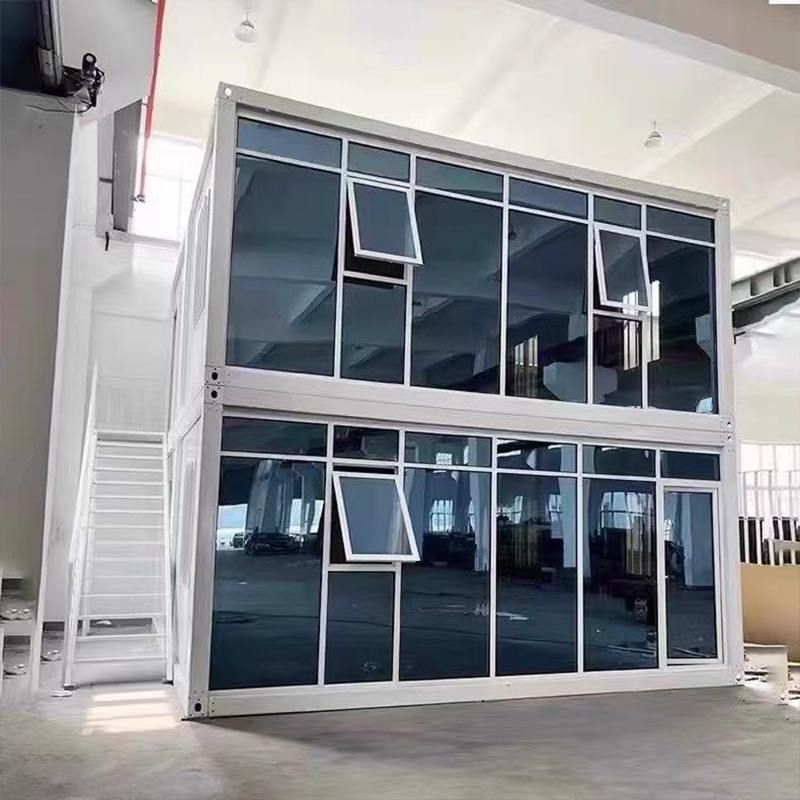
Construction Engineering Field: With their advantages of sturdy structure and convenient transportation, container houses have become the preferred choice for temporary housing on construction sites and project department offices. Their modular design supports rapid deployment. For example, a high-speed rail project department adopted quick-assembly container houses and completed the construction of a living area for 200 people in just 3 days, significantly shortening the construction period and reducing costs. Additionally, the recyclability of container houses reduces their full life-cycle cost by approximately 40% compared to traditional temporary buildings, aligning with the trend of green construction.
Urban Public Service Field: Container houses play an important role in emergency support, mobile police stations, and other scenarios. For instance, the Flood Control Command in Changle County purchased container movable board houses as emergency supplies, enabling the establishment of temporary shelters within 12 hours after a disaster, with each unit accommodating 6-8 people. Their rapid response capability provides an efficient solution for disaster relief.
Commercial and Cultural Tourism Field: Through creative design, container houses are transformed into characteristic homestays, mobile shops, and trendy restaurants, becoming a new trend in commercial space innovation. Several container restaurants in Weifang City have an average daily customer flow of 150 people. The Mogan Mountain homestay project reduced renovation costs by 40% through the use of foldable container houses, demonstrating their economic efficiency and flexibility in the cultural tourism industry.
Policy and Market Drivers: The state has increased its support for prefabricated and modular buildings, with many provinces and cities introducing policies requiring a certain proportion of prefabricated buildings in new constructions, driving container houses from being an 'optional choice' to a 'must-have'. The global market size for container residential buildings is expected to grow from 293.36 billion yuan in 2022 to 384.912 billion yuan in 2028, with a compound annual growth rate of 5%. The growth rate in the domestic market is even leading globally.
Technological Upgrades and Scenario Expansion: Modern container houses adopt steel frame structures and composite panels, with seismic resistance up to magnitude 8, adaptable to environments ranging from -30°C to 50°C, and integrate smart home systems and solar power systems to meet the needs of permanent buildings. Their application scenarios have expanded from construction sites to rural revitalization demonstration sites, outdoor camping bases, and low-altitude economic infrastructure, forming a diversified market landscape.



