
Container House and Broken Bridge Aluminum
Container houses and broken bridge aluminum are materials and building forms in two different fields. Container houses focus on modularity and mobility, while broken bridge aluminum is mainly used for energy efficiency and sealing of doors and windows. There are fundamental differences between the two in terms of structure, function, and application scenarios.
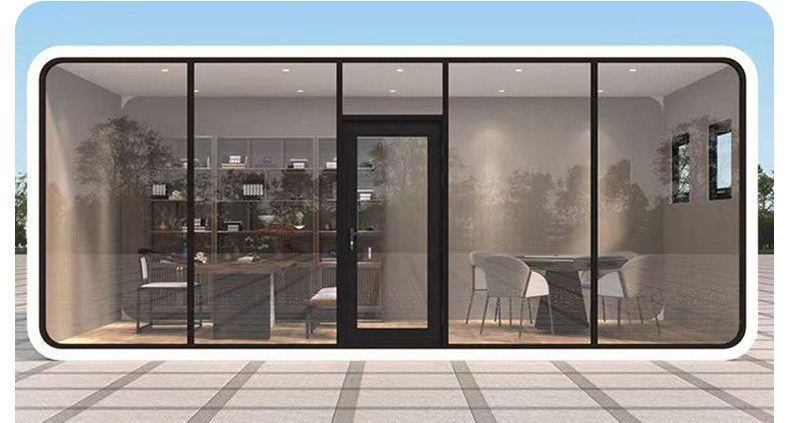
Container House: A Representative of Modular Architecture
Container houses are formed by assembling shipping containers or factory-prefabricated steel structural modules through splicing, creating temporary or permanent buildings. Their core advantages lie in rapid deployment, reusability, and adaptability to extreme environments. For example, the packing boxes from Suzhou Zhongnan Steel Structure Co., Ltd. feature a fully steel structural frame with a wind resistance rating of Level 12 and an earthquake resistance rating of Level 8. The frame deformation rate is only 0.18%, well below the industry's acceptable threshold of 0.3%, enabling them to withstand coastal typhoons or high-intensity earthquakes. In terms of installation efficiency, a single quick-assembly container can be installed in just 2 hours, and 10 standard dormitory units can be set up within a day. They also support on-demand assembly, making them suitable for engineering camps, government and enterprise temporary buildings, and other scenarios. Additionally, container houses are highly prefabricated, with interiors and facilities pre-installed in the factory, allowing for immediate use after on-site hoisting. The error margin is reduced from centimeters to millimeters, significantly improving spatial squareness and standardization of pipeline interfaces.
Broken Bridge Aluminum: The Core of Door and Window Energy Efficiency Technology
Broken bridge aluminum is an upgraded material for aluminum alloy doors and windows. By embedding thermal insulation strips (such as polyamide nylon 66) into the aluminum profiles, it blocks the heat conduction path, achieving thermal insulation, sound insulation, and anti-condensation. For example, the window frames of Zhonghao Glass Curtain Box-type Houses use 60-series broken bridge aluminum with a thickness of ≥1.4mm, paired with double-glazed units (5+12A+5 combination) and coated outer glass. This effectively reduces indoor-outdoor heat exchange, reducing temperature fluctuations by about 40% compared to traditional color steel plate houses. Their application scenarios are concentrated in buildings with high energy efficiency requirements, such as villa courtyard sunrooms and commercial pop-up stores. They need to be combined with glass curtain wall systems, with fluorocarbon coatings enhancing corrosion resistance and reinforced splicing pipes and angle steel fittings ensuring structural stability.
Differences and Connections Between the Two
Container houses emphasize overall structural performance, while broken bridge aluminum focuses on local energy efficiency needs. However, the two can be used collaboratively in modular architecture. For example, container houses often use broken bridge aluminum frames for their door and window systems to enhance living comfort. Conversely, the lightweight and sealing properties of broken bridge aluminum doors and windows make them the preferred material for container house renovations.



