Back to blog
Article
Power Consumption of Air Conditioners in Container Houses
Admin September 15, 2026
The power consumption of air conditioners in container houses depends on the type of air conditioner, its horsepower, energy efficiency rating, and usage environment. Overall, its power consumption level is not fundamentally different from that of air conditioners in ordinary houses, but poor insulation performance of the house may lead to a 20%-40% increase in power consumption.
1. Air Conditioner Type and Horsepower Directly Affect Basic Power Consumption
- Floor-standing Air Conditioners: A 3-horsepower floor-standing air conditioner typically has an input power of 2200W-2800W. If it operates for 8 hours a day, the daily power consumption is approximately 8-12 kilowatt-hours, and the monthly power consumption is approximately 240-360 kilowatt-hours. Its power consumption accounts for more than 60% of the total household electricity consumption and is the main power-consuming device in large houses.
- Wall-mounted Air Conditioners: A 1.5-horsepower wall-mounted air conditioner has an input power of approximately 800W-1200W. The daily power consumption is approximately 6-10 kilowatt-hours, and the monthly power consumption is approximately 180-300 kilowatt-hours, making it suitable for small to medium-sized spaces.
- Portable Air Conditioners: Due to their integrated design of indoor and outdoor units, portable air conditioners have low cooling efficiency. A 1.5-horsepower model consumes approximately 1-1.5 kilowatt-hours per hour, which is about 30% higher than that of a wall-mounted air conditioner of the same specification. The difference in electricity costs is significant over long-term use.
2. Energy Efficiency Rating is the Core Difference in Long-term Power Consumption
- First-level Energy Efficiency Air Conditioners: These air conditioners adopt variable frequency technology and have an APF value of ≥4.5, saving 20%-40% more electricity than third-level energy efficiency models. For example, a 3-horsepower first-level energy efficiency floor-standing air conditioner saves approximately 0.2 kilowatt-hours per hour compared to a third-level model, significantly reducing electricity costs over long-term use.
- Fixed-frequency Air Conditioners: Due to repeated starting and stopping, which causes instantaneous current surges, fixed-frequency air conditioners consume 30%-50% more electricity than variable frequency models. For example, a 1.5-horsepower fixed-frequency air conditioner can consume 15-20 kilowatt-hours per day, while a variable frequency model of the same specification consumes only 8-12 kilowatt-hours.
3. Usage Environment and Habits Exacerbate Differences in Power Consumption
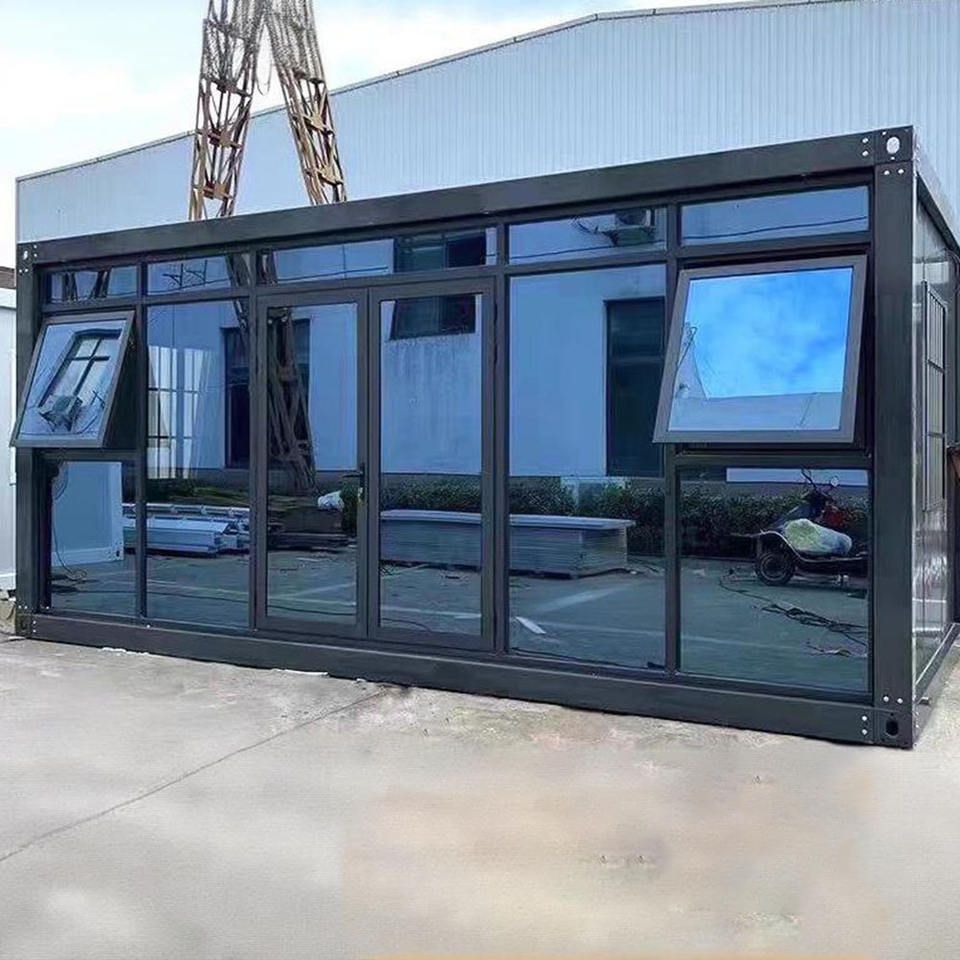
- House Insulation Performance: If a container house has problems such as being on the top floor, facing west, having single-layer glass, or poor wall insulation, the air conditioner needs to operate continuously at high load to maintain the temperature, resulting in a 20%-40% higher power consumption than that of an ordinary house.
- Usage Duration and Temperature Settings: Setting the cooling temperature to 26℃-28℃ in summer can save 6%-10% of electricity. For every 1℃ reduction in temperature, power consumption increases by approximately 6%-10%. The difference in power consumption between all-day operation and intermittent operation is huge, and the monthly electricity bill may double under a tiered electricity price system.
- Maintenance and Cleaning: A clogged filter reduces heat exchange efficiency and increases power consumption by 15%-30%. Regularly cleaning the filter can keep the air conditioner operating efficiently.
Related