
Back to blog
Article
Container House Acceptance Materials
Admin September 15, 2026
Container house acceptance materials mainly include three parts: material quality acceptance, product factory production quality acceptance, and on-site engineering quality acceptance. They need to cover design documents, test reports, process records, and qualification marks, etc.
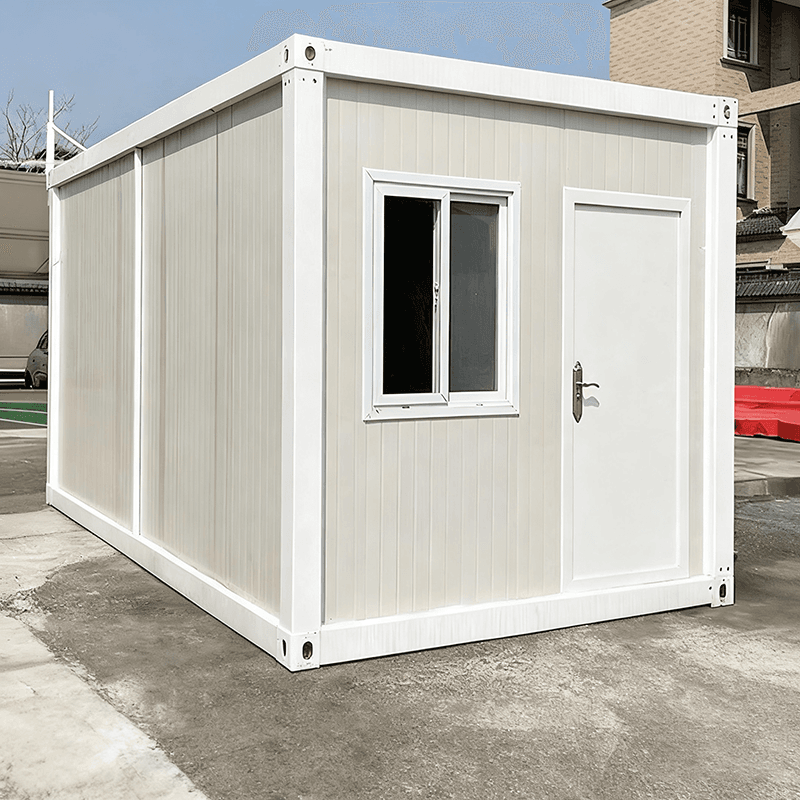
I. Material Quality Acceptance Materials
- Steel and Accessory Test Reports: Quality certificates and mechanical property test reports for steel are required to ensure compliance with the strength grades specified in the container house design (such as Q235B, Q345B, or weathering steel for welding GB/T 4171). Accessories (such as corner fittings and bolts) need to provide qualification certificates and corrosion resistance test data.
- Other Material Qualification Certificates: Enclosure structure materials (such as rock wool and glass wool) need to provide fire rating test reports (Class A non-combustible). Doors and windows need to provide air tightness and water tightness test data, and anti-corrosion coatings need to provide thickness and adhesion test records.
II. Product Factory Production Quality Acceptance Materials
- Production Process Records: These include welding procedure qualification reports, weld non-destructive test reports (such as ultrasonic testing), and anti-corrosion coating application records. The operating parameters and inspection results of key processes (such as chassis welding and door frame reinforcement) need to be clearly specified.
- Factory Inspection Reports: These should include measurement data on the dimensional deviations of the container body (length, width, and height errors ≤ ±5mm), calibration records of equipment foundation positions, and confirmation sheets for the consistency of openings and interfaces with the drawings.
- Quality Traceability Documents: Establish a full-process traceability system from raw material warehousing to finished product shipment, recording information such as steel batch numbers, welder ID numbers, and testing equipment numbers to ensure traceability of quality issues.
III. On-site Engineering Quality Acceptance Materials
- Installation Process Records: These include calibration records of lifting positions, bolt torque value test sheets (requiring more than 80% of the pre-tightening force specified in the design), and measurement data on verticality and elevation (errors ≤ H/1000 and ≤ 10mm).
- Hidden Engineering Acceptance Documents: These include re-measurement reports of embedded part positions, foundation bearing capacity test reports, and photos of waterproof node treatments (such as sealing construction records for ridges and gutters).
- Overall Performance Test Reports: These include air tightness test data (window perimeter leakage ≤ 1.5m³/m²·h), measured values of drainage slopes (slope ≥ 2%), and infrared detection spectra of the continuity of the insulation layer, with official reports stamped by a third-party testing agency attached.
- Qualification Marks and Acceptance Conclusions: All components need to be affixed with qualification certificates. The acceptance documents need to include sampling qualification certificates for main control items (such as structural safety and fire performance). The pass rate for general items should reach more than 80%, and they should be signed and confirmed by the construction unit and the supervision unit.



